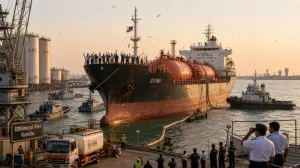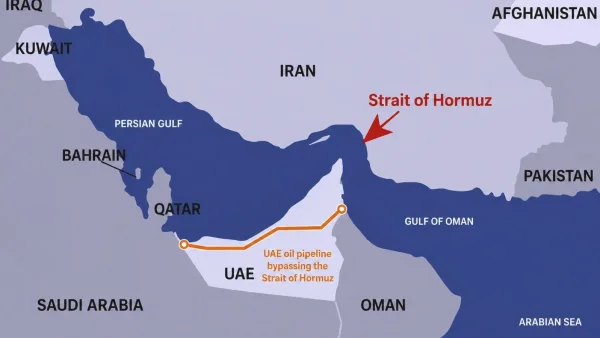
Iran is ratcheting up its grip on the Strait of Hormuz. The Persian Gulf Strait Authority, a new body, has put in place a controlled maritime zone where ships will have to get the green light before they can make their way through. The news came out on Wednesday, at a time when the waterway’s traffic is already at an all-time low due to the ongoing trouble in the region.
Passage rules and enforcement
According to the authority, any vessel in the area has to be in the clear with them. “Passage requires coordination with and authorization from the authority,” they put it, which is a plain way of saying there will be no more open sailing in one of the most important sea lanes on the planet.
For operators, the practical takeaway is direct and immediate. According to the authority, movement through the described area now hinges on formal coordination:
– Transit requires coordination and authorization
– Applies to vessels passing through the strait
Tehran is calling it an administrative step to put some order to where its watch is. It also puts a fine point on the rules for anyone making for the choke point that opens the Persian Gulf to the rest of the world.
Where the zone begins and ends
To be specific, the authority has drawn up the zone with reference to the coast on either side. On the eastern end, the line goes from Kuh-e Mubarak in Iran down to just south of Fujairah in the UAE. Over on the west, you have a line from the tip of Qeshm Island in Iran to Umm al-Quwain. In effect, it puts the strait’s entrance in a box under their eye.
It’s a way for Iran to be the gatekeeper. You don’t just go through; you ask permission. Whether a ship runs into trouble or has to be rerouted will come down to whether they’ve done their homework. The authority didn’t say how long the process takes or if there are any leeway.
Why the timing matters
This isn’t coming out of nowhere. Since the war with the U.S. and Israel got underway in late February, Iran has been keeping everyone but its own vessels out of the strait, and the U.S. has put a blockade on Iranian ports of its own. So putting a controlled zone on paper is a big deal. It makes the situation on the water official and lets shipowners and insurers know they’ll need to have their papers in order before they plan a trip.
The strait is narrow, so even a little bit of hold-up or an inspection can have a knock-on effect on everything from freight costs to supply lines. That’s why having the procedure spelled out matters.
Regional coordination and next steps
There is also some talk of working with Oman to keep things secure in the strait, as foreign ministry spokesperson Esmaeil Baghaei let on on state TV. He said they were open to setting up some kind of protocol for safe passage with other states along the coast, but he didn’t go into specifics. You could see this leading to some form of coordinated patrols, but there’s no framework in place yet. For the time being, the rule is the rule.
What we’re left with is a well-defined map and a requirement to get pre-cleared. We’ll have to see how they handle the actual authorizations and if some ships are given preference. But the bottom line from Tehran is hard to miss: if you want to cross the Strait of Hormuz, you call the Persian Gulf Strait Authority first.