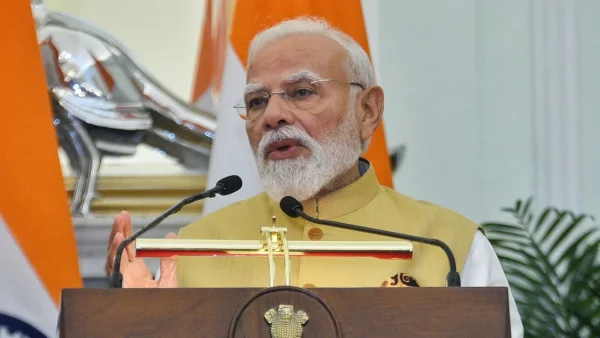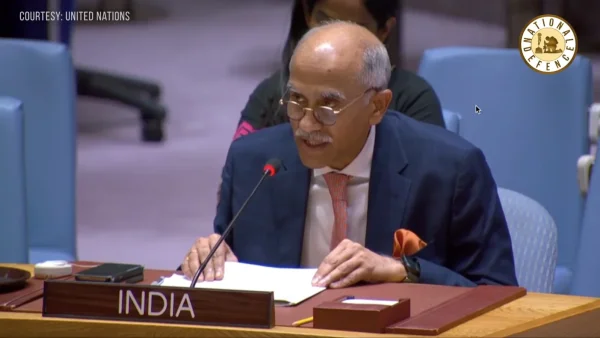
The back-and-forth came to a head on May 20, 2026, during the UNSC’s open debate on the protection of civilians in armed conflict. When Pakistan brought up Jammu and Kashmir, India’s Permanent Representative, Harish Parvathaneni, called out the irony. “It is for Islamabad to be invoking our internal affairs while you have a long and tainted history of such acts,” he told the members.
New Delhi saw this as a way to counter what it viewed as a diversion. The Indian position is that for years, Pakistan has been prone to externalise its own failings through force, and using global podiums to harp on Kashmir is part of that.
India’s case built on civilian harm
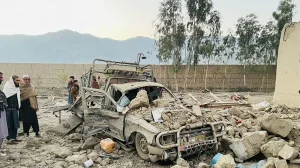
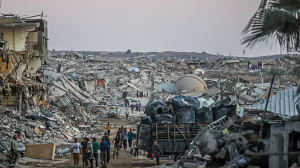
But India didn’t just deal in words; it put Afghanistan front and centre of its case. Parvathaneni zeroed in on a March incident in Kabul where a strike hit the Omid Addiction Treatment Hospital in the middle of Ramadan. He described it as a barbaric breach of the rules meant to put non-combatants out of harm’s way.
UN assessments cited by India
UNAMA’s numbers don’t lie, India pointed out. In that one attack, 269 were left dead and 122 wounded. It was a hospital, not a military objective. And according to the UN mission, it happened right after the evening tarawih prayers, when patients were making their way out of the on-site mosque.
Parvathaneni used UN reporting to show this wasn’t a one-off. In the first quarter of 2026 alone, 750 civilian casualties in Afghanistan were put down to cross-border violence by the Pakistani military. In fact, of 95 such incidents, 94 were on the door of Pakistan’s security forces. The human cost has been steep, with over 94,000 people uprooted.
Even the UN Secretary General has put member states on notice to do their duty when it comes to protecting civilians, including in the Afghan context. India says Pakistan has been deaf to that.
Historical context and allegations
To put today’s events in perspective, the envoy went back to 1971 and Operation Searchlight. He reminded the council of the systematic mass rape of 400,000 women by the Pakistani army. “A nation that can bomb its own and carry out genocide cannot come here and claim the moral high ground,” he said.
Why this debate matters
In some ways, the sparring is about more than just two neighbours. It puts a light on the UNSC’s own difficulty in keeping the focus on what matters: the safety of civilians. By leaning on UNAMA’s data, India was trying to move the conversation away from posturing and onto hard accountability for things like hospital strikes and the displacement of thousands.
Key assertions India placed on record
New Delhi also made it plain that Kashmir is not up for internationalisation in a forum like this. Wrapping up, India put forward a call for better compliance with humanitarian law and for medical facilities to be left alone.
India summarised its position with specific claims and data points:
– Pakistan raised Jammu and Kashmir at the UNSC debate.
– Kabul’s Omid Hospital strike killed 269 civilians.
– The attack injured a further 122 civilians.
– The strike followed tarawih evening prayers.
– UNAMA attributed 94 of 95 incidents to Pakistan’s forces.
– 750 civilian deaths and injuries were documented in early 2026.
– More than 94,000 people were displaced in Afghanistan.
– Operation Searchlight saw 400,000 women raped, India alleged.
What comes next
What you have here is a hardening of diplomatic lines. The question now is whether the Council will hold a line on consequences for these kinds of violations, or if they’ll let the agenda be co-opted for territorial squabbles. India’s stance is unambiguous: the norms are being chipped away, and there is no better way to expose that than with the UN’s own figures.