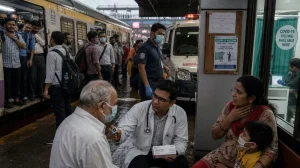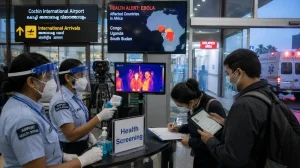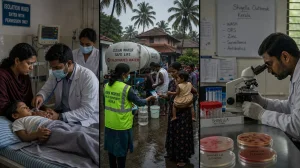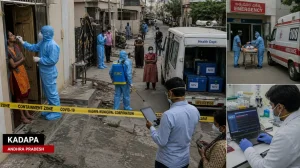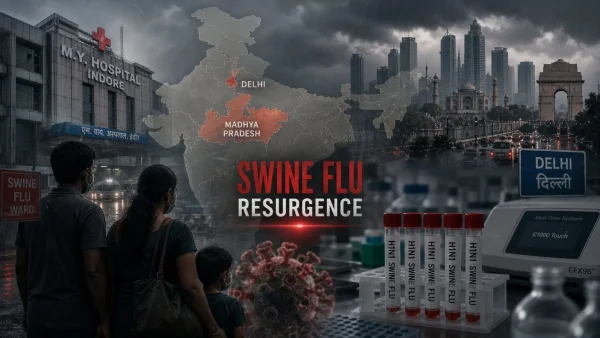
The focus on H1N1 this week comes after a sharp daily increase in Delhi and a fatality in Madhya Pradesh linked to swine flu. In Indore, a woman who had tested positive passed away a day after her discharge from hospital; meanwhile, 114 cases were put down in a single day in Delhi, leading J.P. Nadda to convene a review.
One can attribute the uptick in respiratory infections to the monsoon humidity, and with symptoms that are hard to distinguish from dengue or Covid, there is an overlap that makes testing and an early assessment imperative for the more vulnerable.
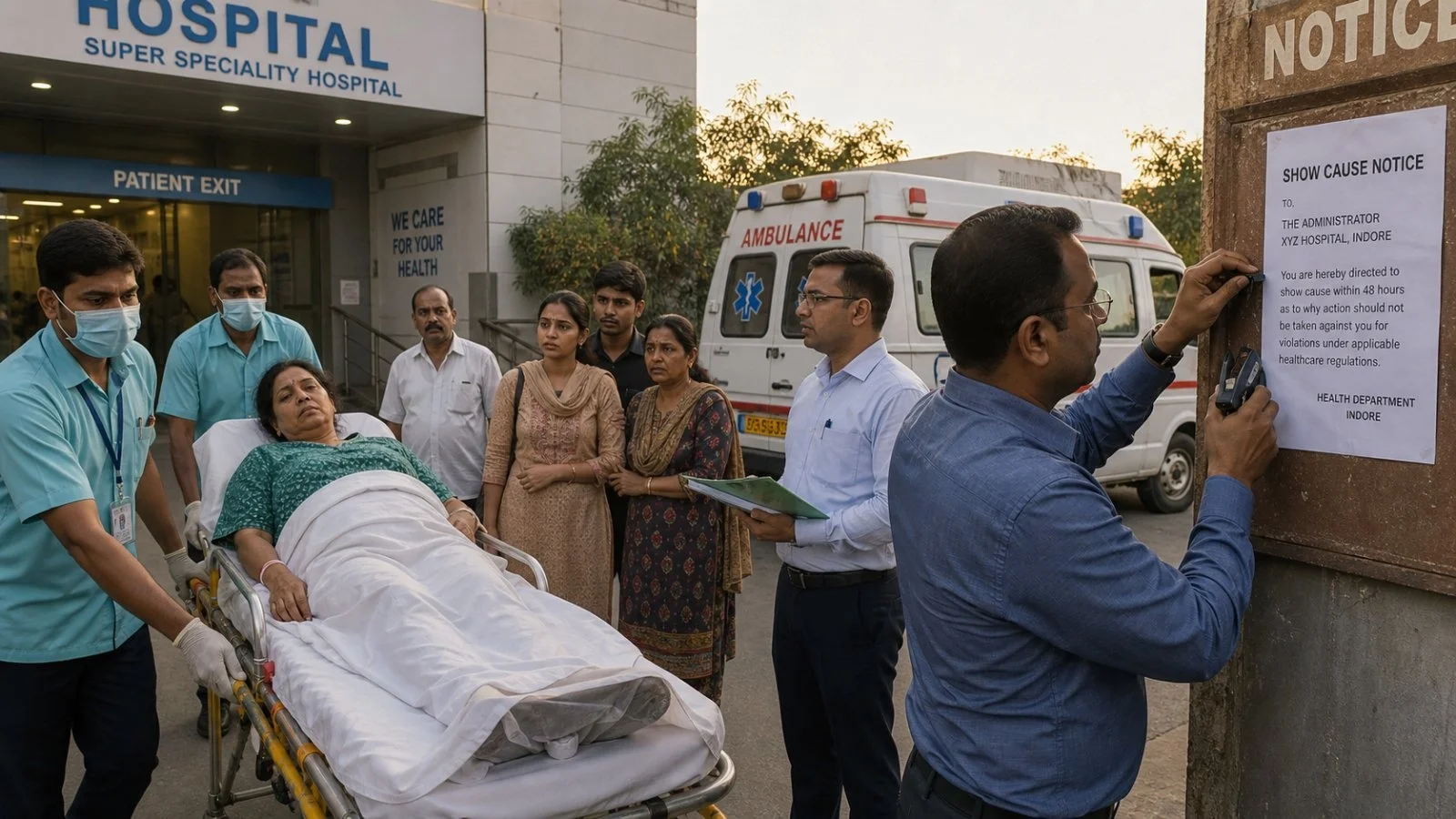
What happened in Madhya Pradesh
An Ujjain resident was being treated at a private hospital in Indore before she left on 18 August 2026 and died at home the following day. While some reports put her age at 62, officials have her down as 60.
In a notice, Indore CMHO Madhav Prasad Hasani pointed out the hospital’s failure to put the Health Department in the loop on the case. A show-cause notice is in order and an inquiry panel of three – Abhishek Nigam, Anshul Mishra and Virendra Rajgeer – has been put in place.
Her family says a lab in Ahmedabad confirmed H1N1 from swabs taken on 30 July, and that she was under the care of the Indore hospital for 16 days prior to her death at home. The Health Department is calling it the first swine flu fatality in the state for the season.
Delhi cases spur a high-level review
Concerns were heightened by 114 H1N1 cases in one day in Delhi amid the variable, humid weather. The Union Health Ministry has announced that on Friday, 21 August 2026, J.P. Nadda will sit down with the Delhi Health Minister and other senior officials to go over the situation.
They will be looking at the epidemiological data, how well hospitals are prepared and what surveillance is in place. There is an emphasis on Centre-state coordination here, much like in a July review on dengue which called for a more proactive approach.
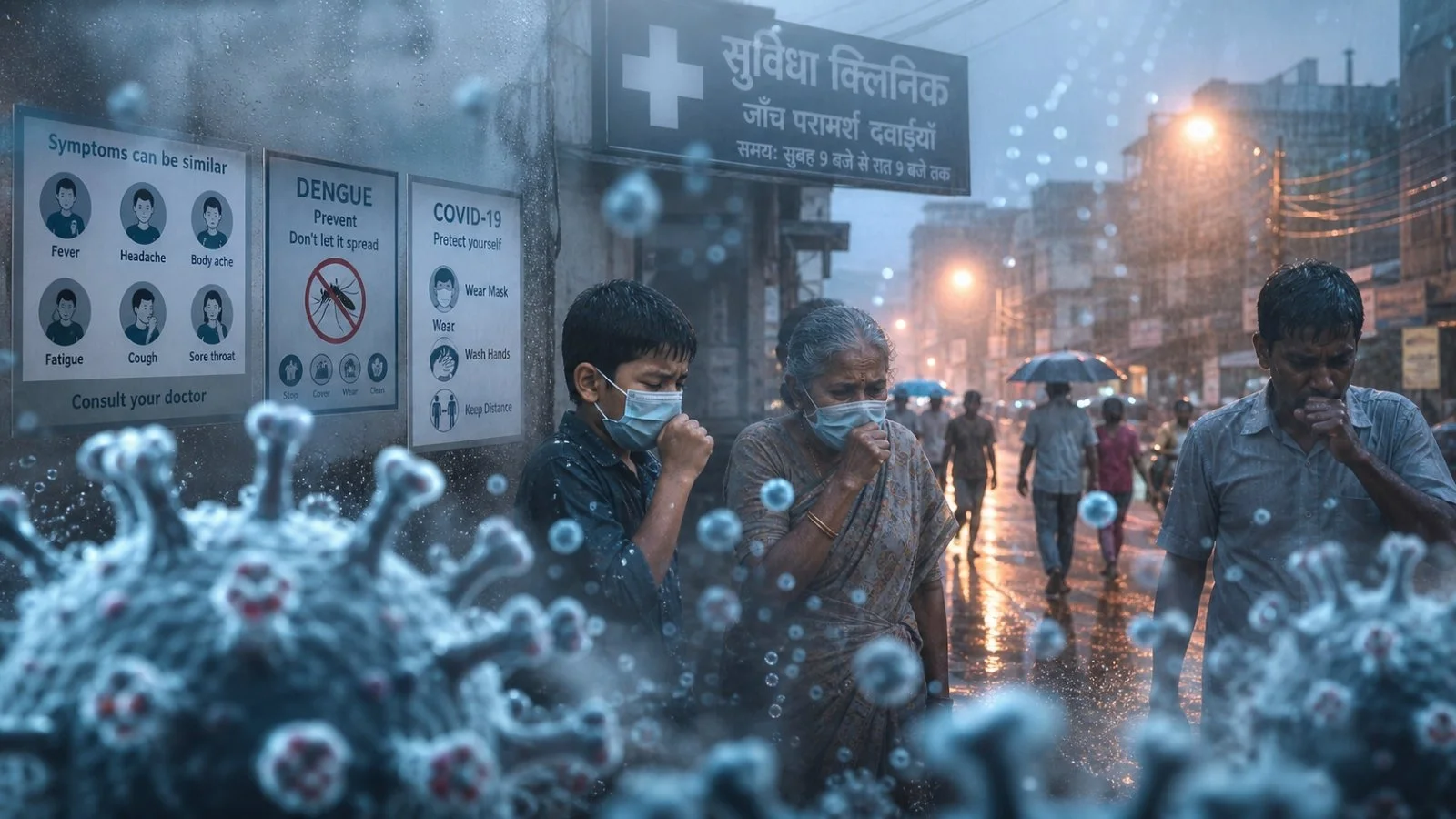
Why this surge demands attention
You do not need contact with pigs to contract H1N1 these days; it is spread from person to person through the droplets of an infected individual talking, coughing or sneezing.
The initial signs are much like the seasonal flu: fever, chills, body aches, a sore throat or headache, and fatigue. Children in particular may present with vomiting or diarrhoea. Since a fever is not a given in every influenza case, a lab test is often necessary.
Warning signs that cannot wait
Urgent medical care is warranted in the event of:
– Shortness of breath or trouble breathing
– Any persistent pressure or pain in the chest
– Sudden disorientation or confusion
– Fainting or being unusually drowsy
– Seizures
– Extreme weakness
– Dehydration
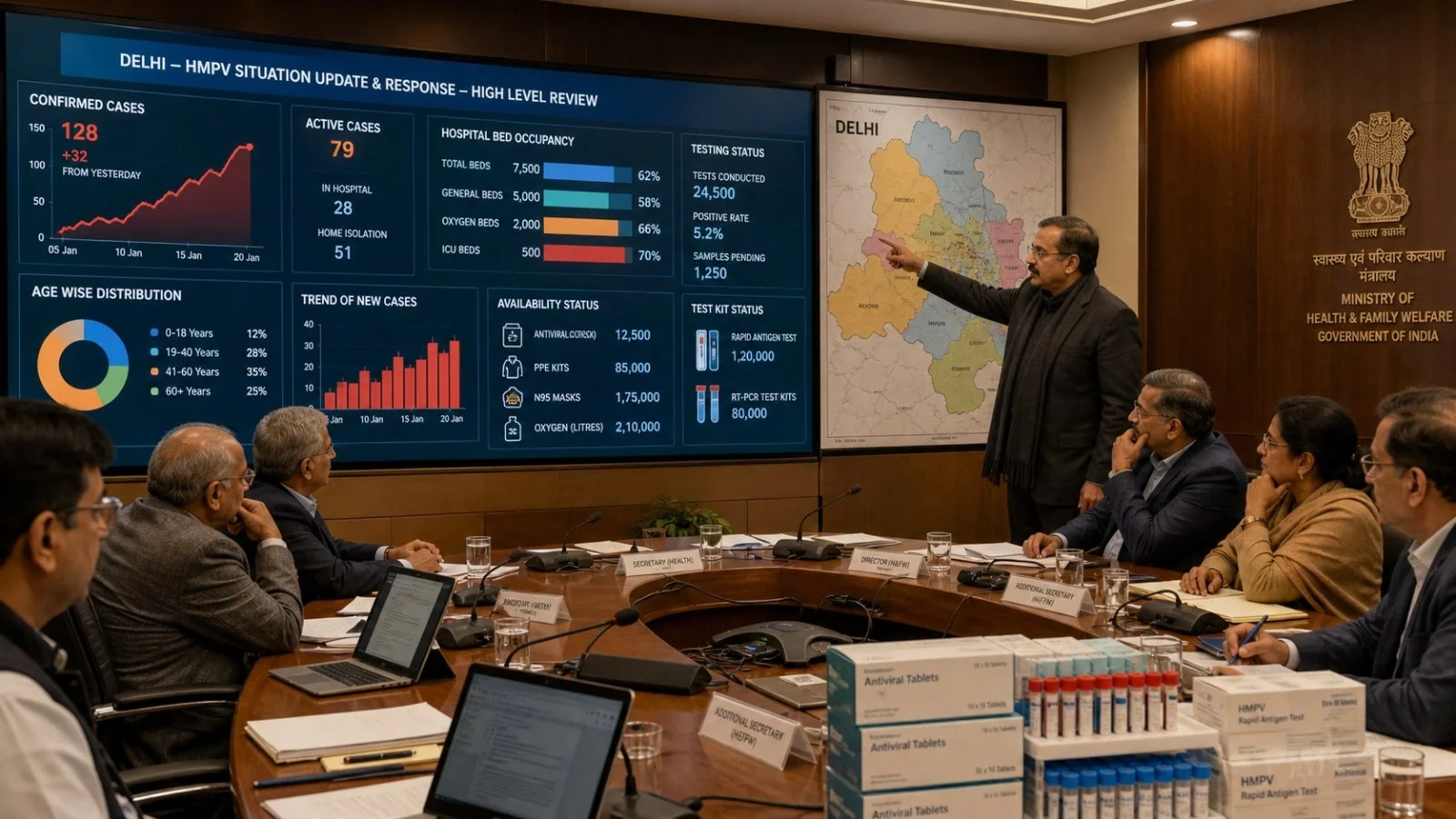
Who should act early and what comes next
There is a greater danger of severe influenza for the elderly, young children, pregnant women and anyone with pre-existing conditions. It is risky to put off care when flu-like symptoms make an appearance; a prompt consultation with a doctor is advised.
In Madhya Pradesh, the Health Department’s inquiry will look into the sequence of events and notification lapses to get the facts on record. In Delhi, the Centre’s review is set to concentrate on medicine and bed availability and to shore up surveillance.
For the household the message is straightforward: do not let persistent symptoms go unchallenged. As hospitals and officials ramp up their response, getting evaluated and treated in time is the surest way to guard against pneumonia, sepsis and acute respiratory distress.