
For anyone managing type 2 diabetes, sex is a factor in what one should be on the lookout for. A fresh PLOS Medicine study of 28,720 newly diagnosed adults has laid bare some starkly different risk paths: while men have higher odds of cardiovascular or renal complications, women are more open to mental health conditions. It is an argument for more specific screening and support.
What the study tracked and why it matters
To get their numbers, researchers put together primary and secondary healthcare records from across the UK for patients diagnosed in the 2010 to 2020 period. Over a median six and a half years, a multi-state analysis was used to see how and when hypertension, end-stage renal disease, cardiovascular disease and other conditions would present themselves after a diagnosis.
In charting the typical course of these problems, the study provides a workable guide for clinicians as to which checks to make first and how to time their support so that issues do not get out of hand before they are addressed.
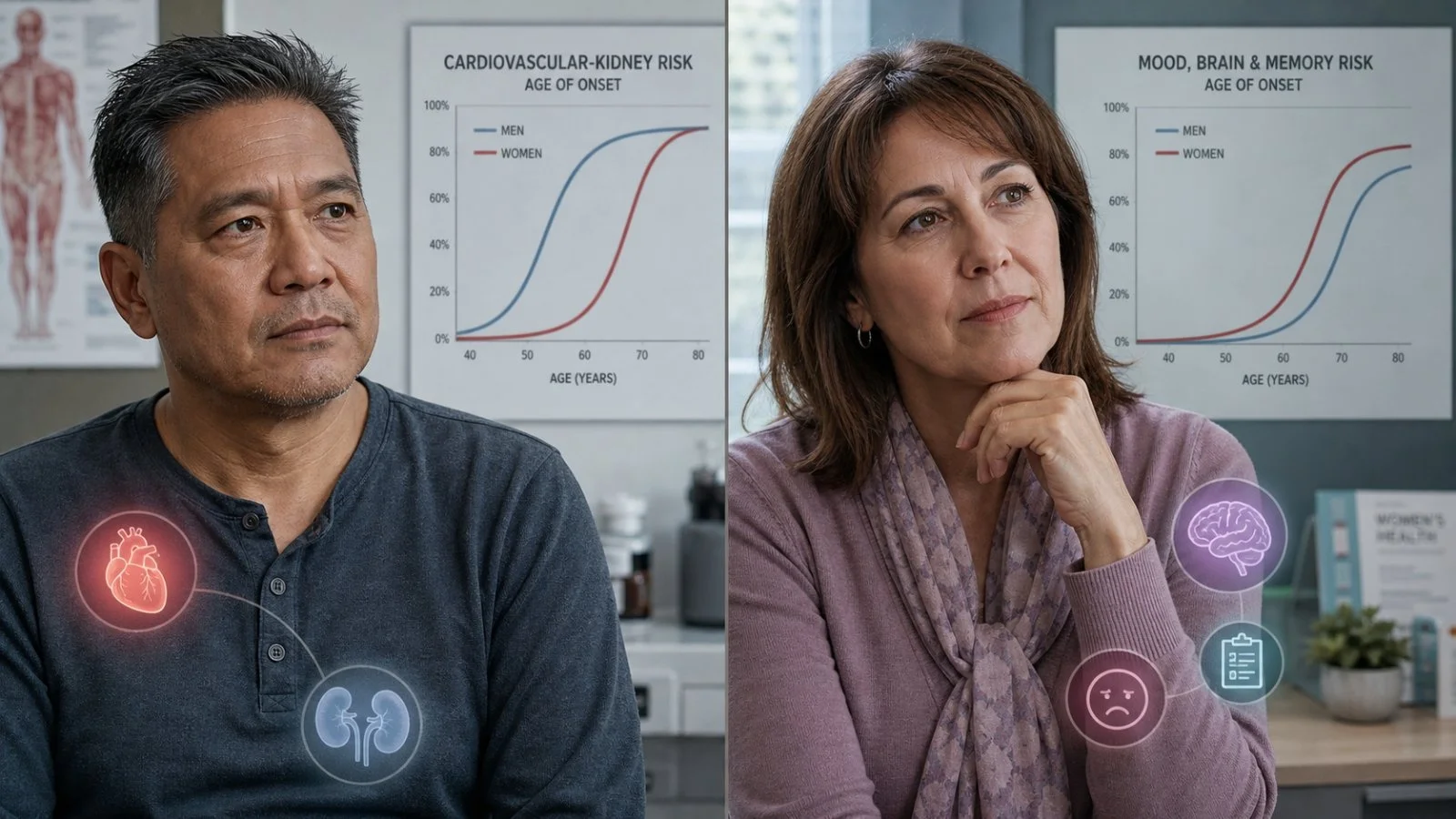
Different risks for men and women
Women were more likely to have a mental health condition following their diabetes. Some 8.1% of women had anxiety, depression or somatoform disorders on record, as against 5.3% of men. The researchers make much of the fact that these came after the diabetes, and say it is something that should be part of routine care.
The opposite holds true for cardiovascular and end-stage renal disease, where 8.4% of men were affected compared to 5.3% of women. Men tend to have their complications come on sooner. Then there is hypertension, the most common post-diagnosis affliction for both, at 21.1% in men and 20.2% in women.
Mortality and healthcare use
A link was found between diabetes, mental health and early death. Those who went down the path of developing a mental health condition did not live as long. And for patients on the same trajectory, men died on average nine years younger than their female counterparts.
Yet women made more use of healthcare services and long-term prescribing. The researchers wonder if the lower level of engagement with services among men in the high-risk mental health group is a gap that needs to be closed with some timely outreach.

Expert view from India
“Diabetes can play out differently in men and women,” says Prof Ravinder Goswami, a senior endocrinologist at AIIMS. He notes that men might develop it at a younger age, whereas a woman with diabetes no longer has the pre-menopause shield against heart disease. The study’s indication of elevated risks to memory and thinking in women is also of note.
Goswami is careful to point out that cognitive or neuropsychiatric troubles are simply more prevalent in women and may not be all down to the diabetes. His advice is for clinicians to be on the ball and intervene early when they see such signs.
What this means for care
The takeaway is that you cannot apply a blanket approach to diabetes care and expect to cover the key risks. The researchers are calling for earlier monitoring of the heart and kidneys in men and routine mental health screening for younger women. An awareness of the timing of complications will allow for earlier intervention with high-risk patients.
Clinics and individuals would do well to make these a priority:
– Make a point of asking about mood at your visit
– In men, do not put off heart and kidney checks
– Be vigilant with blood pressure once diagnosed
– See to it that follow-ups are consistent, in men especially

Important caveats
One must remember this is an observational piece and does not establish cause and effect. Part of the disparity in mental health diagnoses could be down to how men and women go about seeking care and having their conditions recognised.
The team left out anyone with a history of hypertension, cardiovascular disease or the like prior to their type 2 diagnosis to keep the focus on what comes after. But even with its limitations, the patterns identified here give clinicians some solid direction for a more responsive kind of care.