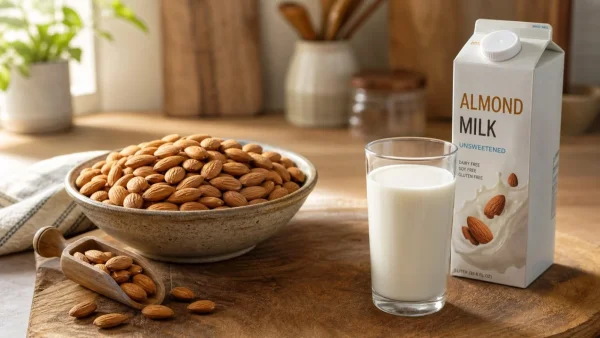
You will find almond milk in your lattes and smoothie bowls these days, but do not let experts tell you it is the nutritional equivalent of a handful of nuts. Put them head to head for health and the whole almond will usually come out on top when it comes to protein, fibre and real satiety.

Why the choice matters day to day
There is a tendency to think of almond milk as liquid almonds, but nutritionists would have you believe otherwise. Most of what is in the carton is water. “If I had to pick one, I would always choose whole almonds over almond milk,” says Richa Sharma, Consultant Dietetics at Kailash Deepak Hospital.
It is an outcome you can feel. Whole almonds give you a combination of protein, fat, vitamin E and minerals like magnesium that is good for the heart and keeps you fuller between meals. Almond milk is really just a dairy alternative, nothing more.
The nutrient gap, in plain numbers
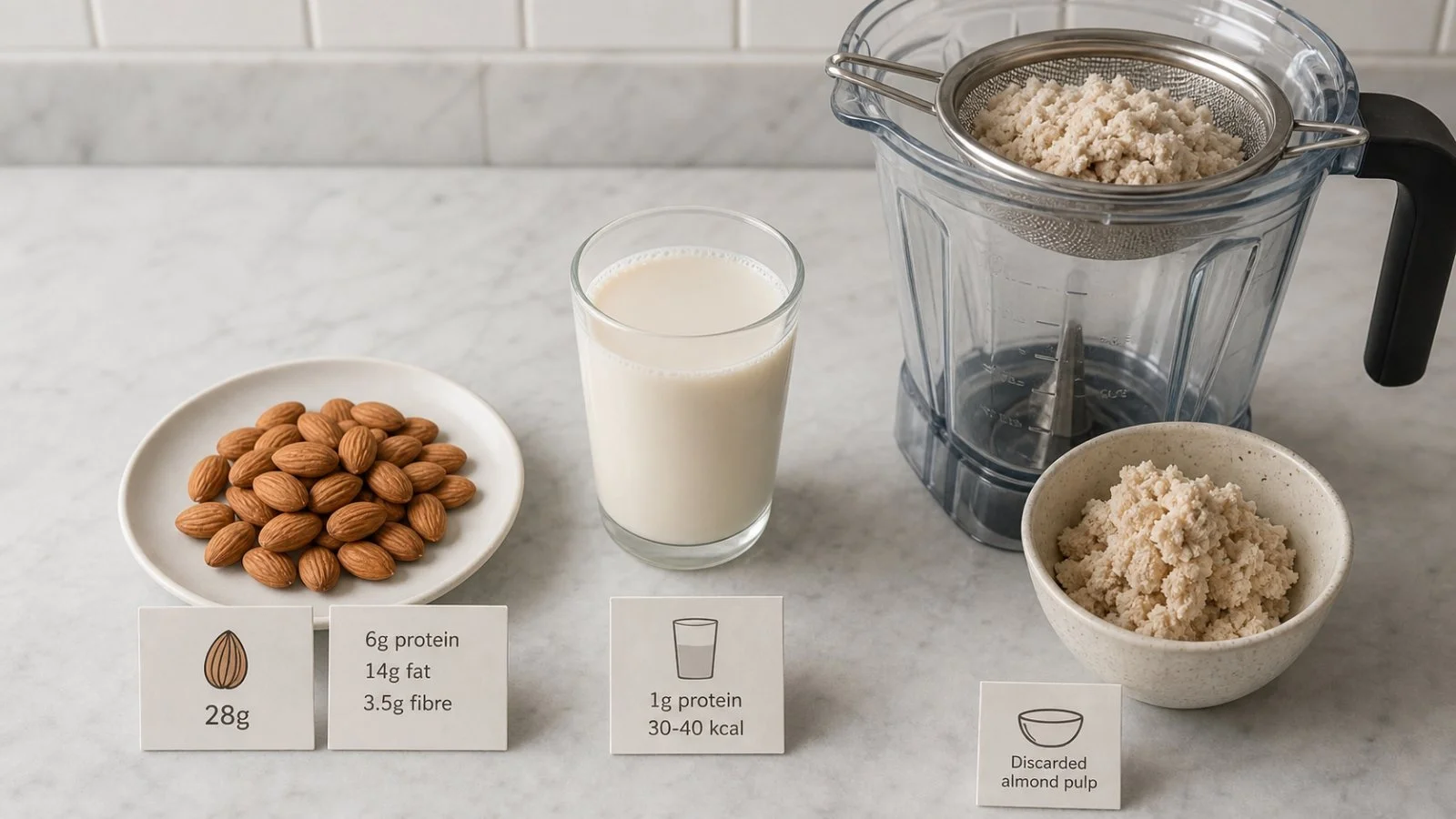
Lakshmi Kale, Head Nutritionist at Nutrition In Sync, puts the contrast in perspective with typical servings: “A handful (28 g) of almonds gives you around 6 g protein, 14 g healthy fats, 3.5 g fibre, plus vitamin E and magnesium.”
A cup of unsweetened almond milk is a different story. You are looking at 30-40 calories and about 1 g of protein with virtually no fibre since it is mostly water with perhaps 2 per cent or so of actual almonds. It is a light drink that will not leave you feeling full.
Much of that is down to processing. Blend some almonds with water and strain it, and the fibre is left in the pulp, not your glass. With so few almonds in the mix, the protein and healthy fats go with it, leaving only a trace of vitamin E.

When to pick almond milk, and when not to
Unsweetened almond milk has its uses. For those on a vegan diet or dealing with an allergy or lactose intolerance, a fortified carton can be worked into coffee or cooking without the calorie count. Some brands even add calcium and vitamin D to make up for the lack of cow’s milk.
But if you want to steady your blood sugar or manage hunger, whole almonds are the better option. “I would look at almond milk as a substitute for dairy milk, not as a substitute for almonds,” is how Sharma sees it.
Here is a quick way to decide:
– Go with whole almonds for the protein, fibre and satiety
– Make it almond milk when you need something dairy-free

How to read the carton label
One carton is not like another. Stick to the unsweetened ones to sidestep added sugar. If you are using it in place of dairy, check that it has been fortified with calcium and vitamin D to get the nutrition you are after.
The ingredient list is revealing. A few brands will use stabilisers or thickeners to get the right texture from very little almond. Carrageenan is best avoided if you have a sensitive gut, though most people do fine with gellan or guar gum. A short list is generally a good thing.
You can make your own for a cleaner product and put in a bit more almond if you like, but straining will still take away the fibre. And unless you do the fortifying yourself, you are not going to get the calcium or vitamin D that some store-bought versions offer.
Both have their place. Whole almonds are where you will find dense nutrition in a small portion. Almond milk is fine for a light, dairy-free addition to your everyday drinks.
Put simply: eat the nuts for the benefits of almonds, or pour the milk for a low-calorie dairy alternative.