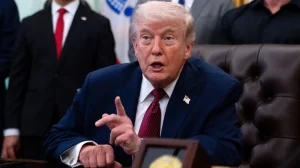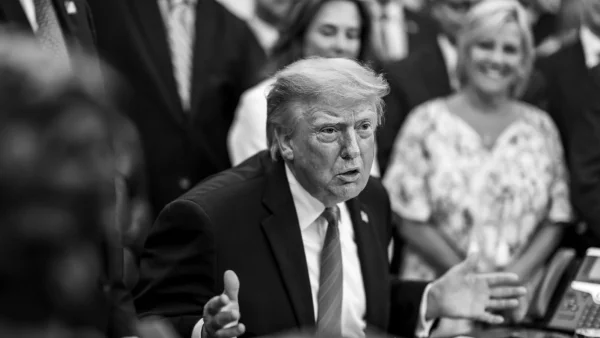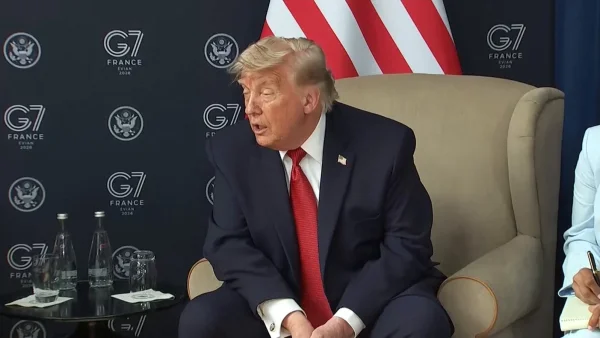
It’s an uncharacteristic bipartisan rebuke over the conflict with Iran, but one President Donald Trump has to deal with. He has put a request for $87.6 billion on the table, and in doing so has made for a high-stakes showdown in what is already a tempestuous election year. The White House will tell you it’s all about the work being done in and around Iran.
You can see the numbers in the supplemental plan the White House put out. There is $67.15 billion for defence to be added to the nearly $1 trillion they got last year and the $1.5 trillion they are after for the coming fiscal year. A sum like that is bound to draw some side-eye from everyone in Congress.
Capitol push collides with war powers revolt
The Senate has moved to pass a resolution telling Trump to stand down on any military moves against Iran, following in the House’s footsteps. You even had four Republican senators in on it, making for a rare kind of coalition to put up to the White House.
Things got heated at a GOP get-together, with reports of a run-in between Trump and Senator Bill Cassidy, who is among the Republicans for the resolution. On both sides, you have members of Congress saying they haven’t been given the full story and talking about the president overstepping when it comes to waging war.
What the $87.6 billion covers
Per the White House, this is to pay for the day-to-day of the conflict, keep the military in shape, top off weapons and handle some classified defence work. $21 billion of it is put aside for buying munitions and to make sure we can produce them here at home.
The way the administration sees it, you need this to keep things running without leaving other areas exposed. It’s a line of reasoning that will have to be sold to a Congress that has been in no mood to let up on oversight after the last round of authorisations for Iran.
Lawmakers will be looking at these figures in particular:
– Scale: $87.6 billion in supplements
– Defence: $67.15 billion of it
– Earmarked: $21 billion for munitions and production
– For what: operations, readiness, stockpiles and the like
Non-defence add-ons in the package
But it isn’t just for the field of battle. Tacked on are some domestic and international items that are sure to be argued over. We’re talking $1.4 billion for the Ebola crisis in Africa, $11.1 billion for our farmers and a billion to help out former Delphi workers with their pensions.
Then there is $500 million for some building in the D.C. area and a billion to fix up Penn Station in New York. Put all that in with the war chest and you can see how it muddies the waters for a vote in either chamber.
Political stakes before November
For the Republicans, it’s going to be a tough call. The public isn’t exactly behind the war and the midterms are right around the corner. Some in the room are concerned that if they sign off on more for the war they’ll rattle some swing voters; if they don’t, they risk a split in the party.
The Democrats would have the administration put the economy first. Chuck Schumer has come out and said as much. And while Patty Murray says you have to back your troops, she is also putting a word in for some due diligence before any more is approved.
Markets, energy friction and the road ahead
On the market side, you have US crude under $70 and Brent at about $73.50, so the inflation threat is lower for now. But the White House is ratcheting up the pressure on the oil companies. Trump has the Justice Department on the case to see if those lower prices are actually making it to the consumer.
Diplomatically, it’s a bit of a mixed bag. Secretary of State Marco Rubio has put out word that some technical discussions with the Iranians might pick up in Switzerland on 29 and 30 June. But he was quick to note that any easing of sanctions is only for show and that Trump can put them back in place if they don’t hold up their end.
From here it’s all about the committees, whether the GOP can stay in lockstep and if the White House will put on a good enough briefing to put to rest any constitutional qualms. Given the war powers row we’ve already seen, this is as much a political test for the funding as it is a matter of policy.