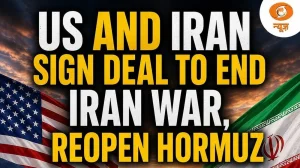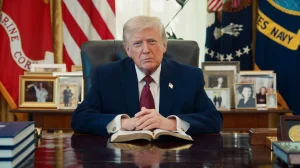
President Donald Trump has made it clear that under this deal, “Iran will never have a nuclear weapon.” He’s touting the agreement with Tehran as a way to steady not just the region but the world’s energy supply. According to him, it’s about fully opening up the Strait of Hormuz with some one-of-a-kind protections and closing the book on the US-Iran dispute.
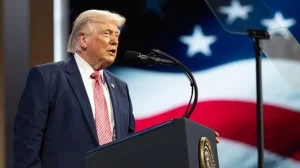
He’s been making his case in a number of venues, from a stop at the Great American State Fair to a post he put out last week. The point he makes is that the impasse is over; the terms of the deal make sure Iran doesn’t get a nuke.
What the deal changes on the ground
It comes down to access on the water. The two sides have put in place 60 days where you can pass through the Strait of Hormuz without being charged. That’s no small thing for a strait that funnels almost a fifth of the world’s energy. It’s a way to take the edge off shipping costs and show we’re de-escalating.
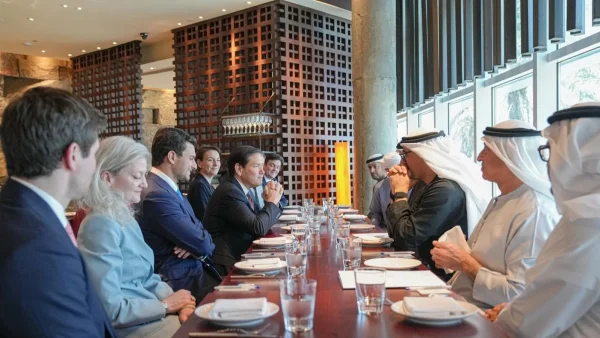
Marco Rubio, the Secretary of State, was in Abu Dhabi after the 28th of February to make the point that no one, Iran included, should be putting a price tag on an international waterway. Washington is going to stand by its word on the peace process and keep the sea lanes open as the law requires.
Rubio will be in Kuwait and Bahrain next. The trip is to let our allies in the Gulf know the US is there to back up the new arrangement, both in talk and in action, while the rest of the negotiations play out.
Here is what officials are putting forward as the main points:
– 60 days of toll-free passage in the Strait of Hormuz
– A way to put an end to the West Asia conflict
– The corridor is to be fully open again
– Guarantees that a nuclear-armed Iran is off the table
Signals from Tehran and the battlefield
On their side, President Masoud Pezeshkian has lauded his military for lashing out in a manner the US and Israel didn’t see coming. He says they thought they could be done with the Islamic Republic in three days, but they were mistaken.
In his view, Iran is now seen as a nation with power and standing. All of this as the two work to wrap up a more comprehensive plan to end the fighting in West Asia in the time they have left.
Maritime traffic shows early response
If you look at the numbers, things are starting to even out. We had 31 confirmed vessel crossings on June 23, which is in step with what we’ve committed to. It’s not a hard and fast rule, but it does seem like commercial interests are giving the new order of things a try.
You need to see a steady flow of ships to put any real stock in the deal. For the markets, having a reliable route through Hormuz is the only way to calm down the volatility and put some confidence back in the system.
Contested narratives and unanswered questions
There is some heat on the US military for how it’s dealt with the aftermath of a drone strike tied to Iran. Some of the soldiers and their kin say the damage has been minimised, which runs counter to what you’re hearing from the top, even with a ceasefire in the works.
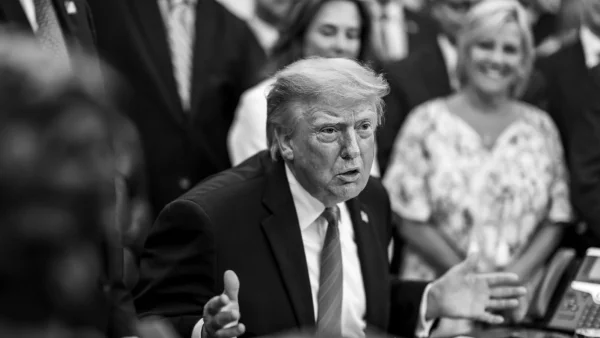
Then there is the matter of the girls’ school in Minab hit on February 28. Trump has been noncommittal on who to blame for that. He told the press it might be a mystery, pointing out there were missiles in the air and everywhere else on day one of the conflict.
Why the rhetoric matters now
It all boils down to whether people believe you. The way we talk about the nukes, the shipping, and what happens on the field will determine if anyone is willing to put in the work for a lasting peace.
What to watch next
In the weeks to come, we’ll be looking at how it’s put into practice. See if the tolls stay off for the full 60 days and if the number of vessels keeps going up.
Diplomats will be on to what Rubio is up to in the Gulf and any more promises from either side. But the bottom line is: can the deal do what Trump says it can, and make sure Iran is never a nuclear power while the Strait is wide open?