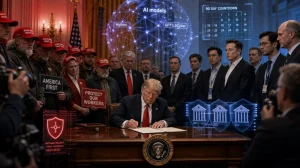
Word is the US has told OpenAI to put the brakes on the public launch of GPT-5.6. You could call it a strategic pivot. Rather than a wide-open release from the get-go, the model is likely to be introduced in stages to a select few, in light of the kind of concerns you have with top-tier AI.
US request slows GPT-5.6 rollout
OpenAI has been made to understand they should begin with a circle of vetted partners, not let everyone in on day one, if you ask those in the know. In a sit-down with his team, CEO Sam Altman is said to have put it plainly: we’ll be vouching for customers one by one in this first round of previews.
They’re looking to open things up in a week or two, once they see how the preview goes. You won’t hear any comment on it from the company or the White House, but behind closed doors, Altman has been telling his people to be in step with the administration on what’s needed for future safety protocols.
Those in on the plan say here’s what you can expect:
– First in line are the ones we trust
– The government will be signing off on access as it comes in
– A broader release is on the table in a couple of weeks’ time
Why Washington is stepping in
This isn’t out of the blue. We’ve seen another AI outfit rein in its most capable systems on the government’s say-so. Anthropic, for instance, had to put a stop to global use of Mythos 5 and Fable 5 after being told to keep foreign nationals at arm’s length, for national security reasons.
Then there was a letter from Anthropic to Senators Tim Scott and Elizabeth Warren back on June 10th that ratcheted up the tension. They claimed Alibaba was trying to get to Claude through some underhanded means. From late April to early June 2026, they found close to 25,000 fake accounts churning out over 28.8 million hits on the system.
The cybersecurity edge and its risks
What you have with Anthropic's Mythos and Fable is software built for the hard side of cyber work – they can spot a flaw in your code and put together an exploit in no time. Sure, it’s a boon for the good guys to patch up, but in the wrong hands it’s a problem. No one has put those claims to an independent test, though.
Officials want to keep a lid on that kind of dual-use potential by limiting who can use it. That same thinking is now at play with GPT-5.6; oversight is the name of the game before you think about scale.
Strategic impact on OpenAI and rivals
Going with a partner-first model rewrites the rules for OpenAI. It’s no longer just a product move, it’s a matter of policy. The partners you pick can set the tone for benchmarks and how enterprises adopt the tech, giving them a leg up before the general public gets in on it.
It might put a crimp in the plans for some developers and startups, forcing them to wait while those with special access do the experimenting. Inside OpenAI, folks are keeping an eye on how the government has been handling Anthropic to see where it might lead for their own releases.
What to watch next
We’re about to see if this new way of overseeing frontier AI works. If GPT-5.6 is put out with the government in the room, it could become the norm to have a controlled preview with some guardrails in place, rather than a free-for-all.
Here are the things to have your eye on:
– The number of partners they give the green light to
– How hard they are on the rules for deployment
– Whether they tinker with the policies on foreign access
If they stick to this customer-by-customer method, GPT-5.6 may well be a case study in how the big AI players come to market. It’s a lot to balance: from national security to the need for responsible innovation.