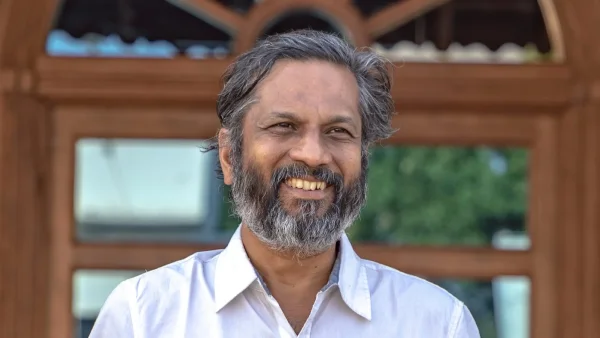
Sridhar Vembu, co-founder and CEO of Zoho, sees what Anthropic has done with its Fable 5 and Mythos 5 as a bit of a reality check for India. You can’t just take for granted that you’ll have a line to the kind of AI you need, he says. It’s time to get self-reliant so you don’t find yourself on the wrong side of an export control or some new security edict.
Anthropic made the call to follow a national security order from the US, and it has set off some talk about where we stand on AI sovereignty and how much we can trust cross-border tech. Vembu thinks this should give Indian firms and the people in charge a chance to re-evaluate their ties with foreign AI outfits.
He puts it down as a hard line being drawn by America, and his view is that India has to make its own way in technology instead of standing around for permission to come back.
Why the suspension matters for India
For Vembu, this is a turning point. It shows the kind of risk you run if you don’t have your own AI to fall back on. As he put it in a recent post: ‘Technology is the ultimate weapon. National sovereignty, national security, all of it is now about technology.’
‘Globalization is dead and Bharat must find her own way ahead,’ he said. There is a feeling in the tech community here that in the end, it’s not the contract that gets you in the door to these top-tier systems, but the ability to build them.
What Anthropic has paused and why
The US government came to Anthropic with an export-control order on national security grounds, and the company has since turned off the tap for Fable 5 and Mythos 5. That means no access for any foreigner, at home or abroad, and even for those who work for Anthropic but are not US citizens.
Fable 5, which came out on Tuesday, is the more restricted side of Mythos 5. The latter was kept under wraps because of some unease over its knack for spotting holes in software. The rest of the model line-up is fine.
Anthropic won’t say exactly what the government was after. But they believe officials had found a way to jailbreak Fable 5 to do some hacking. They’ve looked at it and say Fable 5 doesn’t really give a hacker anything you can’t get from other public models.
Scope of restrictions and timeline
They got the word on June 12th and moved to comply right away. The firm is clear that this is only for Fable 5 and Mythos 5; you can still use the others.
Vembu’s playbook for AI self-reliance
In the wake of this, Vembu is saying we have to insulate ourselves from foreign vendors and put some meat on our own AI bones. He knows it’s not easy to put together a frontier model – it takes a lot of capital and GPUs that are hard to come by with the current export climate.
His advice is to get to work on some of the smaller open-source models from here and overseas and make them fit for purpose. Why keep paying off vendors who might cut you off when the political winds change?
This is the approach he is calling for from Indian organisations:
– Get on with using smaller open-source AI
– Look at what’s available from both India and China in the open-source space
– Put more behind your own R&D
– Wean yourself off the ones who are putting up roadblocks
What comes next
You will see a lot of second-guessing in the industry over how these controls will affect AI availability once you leave the US. For us, it means a move toward open source, some in-house tweaking and more spending on local research in the months to come.
Vembu doesn’t mince words: whether or not you can get to Fable 5 and Mythos 5 again, you had better have your own sovereign capacity in place before the world decides who is in on the next generation of AI.