Paytm is officially now under the control of Indian owners. This change, revealed in a report to regulators for the period ending March 2026, is a key moment for both One97 Communications (the company that owns Paytm) and the fintech industry in India. Because Indian investors hold 50.3% of the company, Paytm has passed the IOCC (Indian Ownership and Control Certification) standard. This shows a change in the company’s plans, how it’s treated by the government, and its place in the market.
Having mostly Indian owners isn’t just about how things look. It can make it easier to get approval from regulators on sensitive things like payments, keeping data within India, and the basic financial systems. For Paytm, having Indian control solves worries about people from other countries having too much say, and might mean faster approval as the company moves into loans, insurance, and investments.
This also supports the Indian government’s plans for digital independence and "Atmanirbhar Bharat” (self-sufficient India). In a situation where having control of financial information and the core of the financial system is becoming increasingly important, being Indian owned and run strengthens Paytm’s ability to operate on a large scale.
How the shareholding flipped to domestic control
Paytm’s IOCC status is the result of changes to who owns Paytm over several quarters, as foreign investors sold off their shares and Indian investors bought more. The biggest factor was Ant Group, a Chinese investor, selling their last 5.8% of Paytm in August of last year for about Rs 3,800 crore. SoftBank also sold all of its shares in 2024.
Key shifts in ownership
At the same time, foreign investment firms reduced the amount of Paytm they owned. In the December quarter of the 2024 fiscal year, these firms sold Paytm shares worth Rs 7,441 crore, decreasing their total value of Paytm shares in One97 Communications from Rs 33,148 crore to Rs 25,706 crore. This created a chance for Indian institutions to buy shares.
More Indian institutions are investing, which gives Indians more control and a wider range of shareholders.
Domestic investors now own 50.3 percent of Paytm’s shares. Institutional investors (like funds) now own 23.1 percent as of the fourth quarter of the 2026 fiscal year, up from 14 percent a year before. Indian mutual funds have 16.6 percent, with Mirae Asset and Bandhan Mutual Fund being significant shareholders. Insurance companies, including Tata AIA Life Insurance and SBI Life Insurance, have increased their holdings to reah 5.1 percent.
Regulatory backdrop and why Indian control matters
This IOCC approval comes after Paytm Payments Bank had a difficult time with regulatory compliance. In January 2024, the Reserve Bank of India shut down the bank because of mistakes it had made. This caused problems for Paytm’s users; the number of monthly active users went down to about seven crore (70 million) by December 2024, from ten crore eight million (108 million) in January of the same year. By December 2025, the number of monthly active users had gone back up to approximately seven crore six million (76 million).
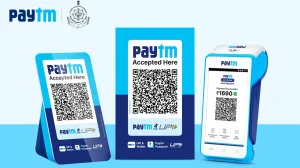
Having Indian ownership of the company’s shares can give regulators confidence as Paytm works to get back people’s trust and start growing again. It may also make it easier to get permission for new products and partnerships in areas that are heavily regulated, where there is a lot of focus on who owns and runs the company. In the Indian financial world, who controls a platform is often as important as what the platform does. Paytm has put all of its payment workings into Paytm Payments Services Limited (PPSL) which is part of One97 Communications and run by Vijay Shekhar Sharma. All payments, whether in stores or online, are now with PPSL and bringing in new customers, providing the equipment for payments, using QR codes, and the payment gateway are all handled together. This will make things run more smoothly and allow Paytm to control costs more effectively.
Strategy reset: payments, merchants, and new licenses
This change is happening because of progress with regulators. In November of last year, Paytm Payment Services received a license to be a payment aggregator from the Reserve Bank of India (RBI), after getting an initial approval in August. Before that approval, Paytm could continue to serve businesses already using their system, but couldn’t get new businesses to use it. With the full license, Paytm can get many more businesses to sign up and make more money from its network.
This new way of doing things has three benefits. First, responsibility for the product and following regulations is now in one place, which is particularly important after the issues with Paytm’s payments bank. Second, all the data and systems for managing risk are now with PPSL, allowing for better control of fraud and more accurate assessment of risk. Third, it makes it much easier to create partnerships with both banks and other financial companies regarding how payments are accepted and settled.
Beyond payments: wealth, lending, and profitability
Paytm is also looking at other related areas where they can make more money from each transaction than with basic payments. With Paytm Money (their investment business), they aim to be one of the top five brokerage firms in three years. This means they are now directly competing with Angel One, Groww and Zerodha and will allow them to offer investment products to their many customers and businesses.
As for how much money Paytm is making, things are looking up. In the third three months of the financial year 2026, Paytm made a profit, where they had a loss of 208 crore rupees during the same three months of the previous year. They earned 2,194 crore rupees in operating revenue, an increase of 20 percent from the 1,828 crore rupees they earned previously. Analysts who follow these companies say Paytm is doing a better job of making money than PhonePe and is controlling costs better, resulting in a profit, while PhonePe is still losing money.
The financial markets have noticed this improvement. Over the last month, One97 Communications’ stock price has gone up by more than 12 percent, and is currently around 1,137 rupees. Although stock prices can change quickly, this shows that investors are gaining more confidence in how Paytm is run, the quality of its income, and how likely it is to continue to succeed as a business.
Risks, open questions, and what to watch
Having Indian ownership isn’t a simple solution to everything. There’s still a big risk that things won’t go as planned as Paytm recovers from shutting down the payments bank and starts getting new businesses to use the payment aggregator system. Competition is strong, with other companies spending a lot of money on payment devices, growing the use of UPI (Unified Payments Interface), and payments linked to credit.
How much money Paytm has available is another thing to keep an eye on. Because investors from other countries are less involved now, Paytm might have to rely more on money from Indian sources for future funding. This reduces the danger from world political situations, but getting the money could be more expensive if Paytm needs a lot of investment for new products or to buy other companies.
Important things to follow include how many businesses Paytm signs up after getting the payment aggregator license, how much the more profitable things like subscriptions and lending are growing, and how Paytm Money is doing with brokerage services, SIPs (Systematic Investment Plans), and demat accounts. Whether they get their users back, how many payment devices they are using, and how much they are earning from in-person payments will also show if they are making money from their large number of users without slowing down growth.
In short, because the majority of Paytm is owned by Indians, it has a simpler relationship with regulators and a clearer plan for doing business in India. If Paytm combines that with careful and efficient work in payments, investments and lending partnerships, changing to Indian ownership could be the beginning of a longer period of solid growth for the fintech industry in India.