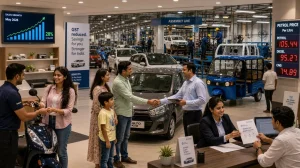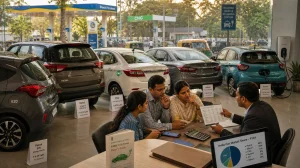
In many ways, August 2026 was a turning point for the Indian car buyer. Even as auto retail numbers hit their highest ever for an August, passenger vehicle share for the first time went to CNG, hybrids and EVs over petrol. FADA figures back this up: at 41.95%, alternative fuels have overtaken petrol’s 40.85%, a move that is all about the running-cost maths.
Why buyers switched in August 2026
According to dealers speaking with FADA, it was the lower operating costs of CNG, hybrids and EVs that did the trick, not to mention some uncertainty surrounding E20 petrol. In a high-volume month where affordability was front and centre at the showrooms, shoppers made the switch.
‘August’26 was the biggest we have seen in Indian Auto Retail,’ says FADA President Sai Giridhar. ‘We put 24,23,201 units through the system, a 17.51% rise year-on-year.’ He notes, however, that retails were 6.48% down from a record July, owing to the monsoon lull and a festival calendar that has pushed Ganesh Chaturthi and Onam-related buying into September.
The move to alternatives has been rapid. A year ago in August 2025, petrol/ethanol had an 11.11 point lead (46.37% to 35.26%). By July 2026 the margin was slimmer at 41.68% to 40.59%, only to be turned on its head in August by 1.10 points.
Fuel mix by the numbers
While petrol is still the top category, CNG/LPG has done much of the work in redefining the mix. In August CNG/LPG was at 25.28%, with hybrids at 9.04% and EVs 7.63%. Diesel made up 17.21%. Year-on-year gains for CNG/LPG, EVs and hybrids were 3.81, 1.80 and 1.08 percentage points respectively, while petrol/ethanol was down 5.52.
Record month, softer than July
It is not just the fuel mix that has changed in India’s passenger vehicle market; volume milestones have been reached. PV retail is up 16.14% year-on-year to 4.02 lakh units, the first time August has gone past 4 lakh. But compared to July 2026, there was a 3.40% let off as the monsoons and calendar quirks took their toll.
Total auto retail across the board is 24.23 lakh units, a 17.51% increase on last year, though 6.48% less than July’s peak. FADA would have you note that some of that annual growth is relative to a weak August 2025 when buyers held off for the GST 2.0 cut.
A few key shifts stand out:
– Alternatives 41.95%, petrol 40.85%
– PV volume of 4.02 lakh units
– 24.23 lakh in total retail
– PV up 16.14% YoY but 3.40% down MoM
Rural buyers took the lead
You see it in the numbers: rural momentum has left the cities behind. Overall rural retail is up 19.79% year-on-year against 15.17% in urban markets. For PVs the disparity is even starker with a 24.99% surge in the country versus 10.93% in the city, where the demand for fuel economy is most keenly felt.
Tractors are an exception. The segment is virtually flat on the year with a 0.84% gain and down 25.03% from July. FADA sees a 13% rural-urban deficit here, a sign of monsoon pressures that have yet to abate.
What to watch this festive season
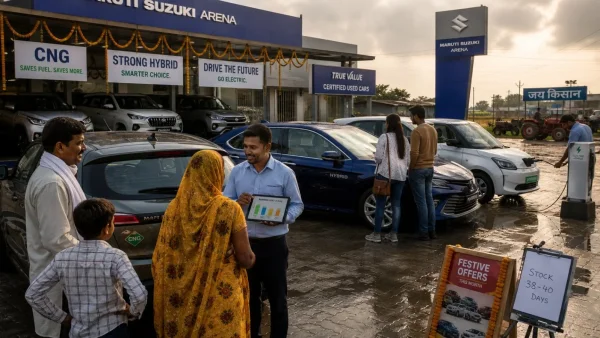
Inventory is the sticking point now. PV stock at dealerships ran to 38-40 days in August, well in excess of FADA’s 21-day recommendation. Some 56 per cent of PV dealers say they have more on hand in anticipation of the festivities.
FADA is advising manufacturers to be disciplined with dispatches so as not to create a glut. The opening of the festive period has not met expectations, dealer feedback indicates. The real test will be in the showroom conversions from September to November.
There is an element of bargaining power for the buyer if stock is there. Still, do not expect to find every popular CNG or hybrid model in certain markets; the pull of lower running costs gives them a strong heading into the quarter.
Sentiment is constructive enough. Going into September, 67.09 per cent of dealers are calling for retail growth, if with a bit less confidence than before. Should supply be in check and the rural appetite hold, the alternative-fuels trend may well dictate the year-end picture.
Some takeaways for the season:
– Where inventory is heavy, deals should be sharper
– Lower running costs make alternatives the logical choice
– Model availability could be at the mercy of rural demand