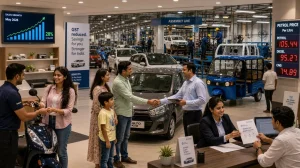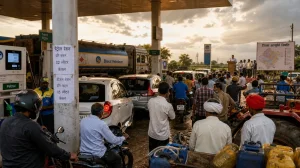
You can see it in the numbers: easier access to loans and more affordable cars have made people in India ready to part with their money. The result is the best Q1 the sector has ever had in FY27. SIAM, the industry body, sees no reason why this kind of broad-based growth won’t extend into the festive period.
It is a welcome turn of events given the unease around the war in West Asia and the fact that some input costs are holding firm. But SIAM says the market has been propped up by home-grown demand, a slate of new products, and a bit of help from lower GST and a friendly lending climate.
What this means for buyers
At the end of the day, it comes down to the price of ownership. With the 2.0 version of the GST in play, overall vehicle pricing has been kept in check, and you can still get a loan at a decent rate. That mix is what is keeping demand on an even keel as we head into the holidays.
There are a few things to keep an eye on. The monsoon is one; it has a way of dictating rural spending. We have seen some rain in late June and early July which has made up for some of the shortfall, and with inflation in a reasonable place, there has been no let-up in Q1, per SIAM.
The scorecard for Q1 FY27
Take two-wheelers, for instance. They are the lifeblood of transport here, and they moved 56,28,675 units in the quarter – a 20.3 per cent increase on the 46,77,990 from last year. You could call it a return of the need to get around, whether in the city or out in the semi-urban areas.
Then there are the passenger vehicles. Dispatches were up 25.9 per cent to 12,73,811 units, compared with 10,11,884 in the same time frame last year. To put it in perspective, the old record for a Q1 in the PV space was 10.3 lakh in 2024-25, and that has been put in the rear-view mirror.
Three-wheelers, for all that last-mile work, saw 2,14,339 units go out the door, up nearly 30 per cent. And for the first time, commercial vehicles had a top-tier first quarter with 2.65 lakh units, an 18.3 per cent gain on the year before.
June snapshot keeps the tempo
If you look at the monthly figures for June, there is no softening of the pace. Passenger vehicle offtake at the dealer level is solid, with 3,88,144 units moving, a 24.1 per cent year-on-year rise from 3,12,851 in June 2025.
Two-wheeler numbers for the month were 18,51,400, up 18.6 per cent. Three-wheelers were up 26.1 per cent to 77,951. All of it points to continued movement of both people and goods.
Why the surge happened
Shailesh Chandra, president of SIAM, would have it that it is a confluence of factors: the base was low to begin with, there is a lot of new metal on the road, and financing is not as onerous as it used to be. He makes a point of saying this was done in spite of the situation in West Asia.
But there is a fine print to it. Commodity costs are still a concern. A ceasefire in the region did open up the supply of gas and fuel for a while, but the industry is watching the latest news with care.
How to read the road ahead
With Q2 upon us, the association is of the opinion that demand will hold its ground. The 2.0 GST and the kind of rates financers are putting on the table are enough to whet the retail appetite, they say.
For those who want to time their purchase, here is what to be looking at:
– Lending rates on offer
– Any give and take in commodity and input costs
– How the monsoon is faring and what the mood is in the hinterland
– When the next round of models come out
Rural buying power is inextricably linked to the weather. Some of the monsoon’s earlier deficiency has been made up for by the rains in late June and the start of July, and with inflation being what it is, it has not put a crimp in Q1.
Bottom line
The auto market is heading into the second quarter with a record under its belt. As long as the monsoon is on side and we do not see any further geopolitical trouble, the steady demand SIAM is forecasting for the festive run-up should materialise.
The message for the consumer is plain. There is a lot of activity in every segment, more to choose from with the new product lines, and the terms for a loan are right. That is the story behind the kind of Q1 we have just seen in FY27.