The controversy surrounding E20 petrol and fuel contamination has taken a dramatic turn.
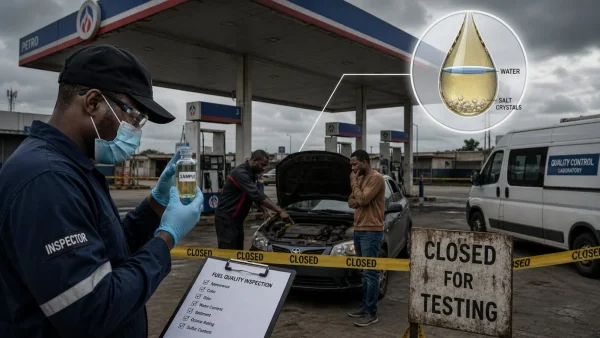
After weeks of assurances from oil marketing companies and government authorities that there was no evidence of widespread contamination, a nationwide quality-control drive has reportedly resulted in petrol sales being stopped at 2,573 retail outlets found to be non-compliant, according to Autocar Professional.
The development has raised an uncomfortable question:
If concerns were merely exaggerated or fear-mongering, why are thousands of outlets now being subjected to action?
From “no widespread problem” to thousands of outlets stopped
The controversy began after concerns emerged over possible chloride and moisture contamination in E20 petrol.
On August 4, the Petroleum Ministry said that fuel quality was being regularly monitored and that enhanced checks had been introduced. At the time, the government said more than 2,000 samples had been tested and only two cases of chloride contamination had been detected nationwide, with sales at those outlets suspended.
Oil marketing companies subsequently conducted broader testing.
In a report published on August 10, Autocar India reported that Indian Oil, BPCL and HPCL rejected claims of widespread contamination, saying their nationwide testing had found chloride levels within prescribed limits. The companies said they had tested samples across refineries, ethanol plants, storage depots, tanker trucks and retail outlets.
But the latest reported enforcement figures paint a more complicated picture.
As of August 25, petrol sales had reportedly been stopped at 2,573 outlets following the nationwide quality-control exercise, with Indian Oil accounting for 1,257 outlets, HPCL for 915 and BPCL for 401, according to Autocar Professional.
So what exactly happened?
The numbers need to be interpreted carefully.
The 2,573 outlets were reportedly stopped because they were found non-compliant during the quality-control drive. That does not mean that all 2,573 outlets were proven to have supplied contaminated petrol that damaged vehicles.
This distinction is important.
Nevertheless, the scale of the action inevitably raises questions about the adequacy of previous quality controls and whether problems were identified quickly enough.
Automakers had already raised concerns
The controversy did not emerge from social media alone.
Earlier this month, Reuters reported that internal communications involving major Indian automakers showed concerns about chloride and moisture levels in E20 fuel samples collected across the country.
More than 250 samples reportedly tested by Maruti Suzuki, Tata Motors and Mahindra showed elevated chloride levels in samples from multiple states. The manufacturers had privately raised concerns even while the industry publicly supported the E20 programme.
At the same time, the Society of Indian Automobile Manufacturers (SIAM) withdrew an earlier communication after saying that some figures cited in media reports required further verification. The organisation reiterated its support for the E20 programme.
The result has been a confusing picture for consumers:
Industry concerns. Government assurances. Withdrawn warnings. Nationwide testing. And now thousands of outlets facing restrictions.
What about motorists who claim their vehicles were damaged?
This may ultimately become the most important question in the entire controversy.
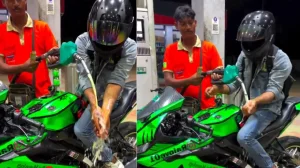
Some motorists have reported problems with fuel systems and vehicle components, while industry reports have linked contamination concerns to components such as fuel injectors and fuel pumps. (Autocar)
But establishing that a particular vehicle was damaged specifically because of contaminated fuel requires technical examination.
That means consumers need a transparent mechanism for determining:
Where the fuel came from
Whether contamination was present
Whether the vehicle was affected by that contamination
Who was responsible for the contaminated supply
Who should bear the repair or replacement cost
Simply shutting down a retail outlet does not automatically compensate the motorist whose vehicle may already have been damaged.
Who is accountable when the consumer pays the price?
This is where the controversy moves beyond E20 itself.
If a petrol pump violates fuel-quality standards, action against the outlet is necessary.
But the supply chain is much larger than the pump.
Fuel passes through refineries, ethanol producers, storage facilities, transport systems, depots and retail outlets before reaching a customer’s vehicle.
If contamination occurs somewhere along that chain, responsibility should not automatically end at the last point where the consumer purchased the fuel.
The public deserves to know where the failure occurred and who was responsible for detecting it.
The consumer should not become the weakest link
For an ordinary vehicle owner, the situation is particularly frustrating.
A consumer buys petrol believing that the product meets government-mandated quality standards.
If the fuel subsequently causes damage, the customer can potentially face a substantial repair bill.
The obvious question is:
Why should a consumer bear the financial consequences of a failure somewhere in a regulated fuel-supply chain?
There needs to be a clear and accessible compensation and grievance mechanism for cases where contaminated fuel is conclusively established as the cause of vehicle damage.
The government has also defended E20
The government has strongly rejected claims of widespread engine damage caused by ethanol blending.
In a July 30 clarification, the Petroleum Ministry said there was no verified evidence of widespread engine failure attributable to ethanol blending and pointed to extensive testing, field experience and manufacturer consultations supporting the E20 rollout.
That is an important part of the story.
The current controversy should therefore not automatically be interpreted as proof that E20 itself is responsible for every reported vehicle problem.
The more specific issue is fuel quality and contamination—and whether quality controls throughout the supply chain have worked as intended.
The accountability question is now unavoidable
When authorities say there is no widespread problem, consumers naturally expect that confidence to be backed by rigorous testing.
When thousands of outlets subsequently face restrictions following a nationwide quality-control campaign, consumers are entitled to ask what changed, what was discovered and whether earlier assurances were sufficiently supported by evidence.
The public also deserves clarity on the distinction between:
E20 itself,
poor-quality or contaminated E20,
problems caused by inadequate storage infrastructure,
and vehicle compatibility or maintenance issues unrelated to contamination.
Lumping all four together only creates more confusion.
The way forward
The priority now should be transparency rather than competing narratives.
Authorities and oil companies should publish clear, independently verifiable information on:
How many outlets were tested;
How many failed and for what specific reason;
What contaminants were detected;
Where in the supply chain the contamination originated;
How many consumer complaints have been verified;
What compensation mechanism is available to affected vehicle owners; and
What action is being taken against responsible parties.
The public does not need political blame games.
It needs answers.
Because shutting a petrol pump is the easy part
If a retail outlet fails a quality test, shutting sales is an immediate and necessary safety measure.
But that is only the first step.
The harder question is:
Who allowed the problem to reach the consumer in the first place?
And if a motorist can demonstrate that contaminated fuel damaged their vehicle, who will pay for the consequences?
The fuel-quality controversy has now moved beyond social-media arguments and public statements.
Thousands of outlets have reportedly faced restrictions as authorities intensify testing.
That makes one thing clear:
Consumer confidence cannot be restored merely by telling people not to worry. It can only be restored through transparent testing, clear responsibility and fair compensation when consumers are genuinely harmed.