From Mileage Complaints to Conflict-of-Interest Questions: Why Gadkari’s Ethanol Policy Is Facing Criticism.
What Triggered the Current Controversy?
India’s nationwide rollout of E20 petrol, a fuel containing 20% ethanol and 80% petrol, has sparked one of the biggest public debates over fuel policy in recent years. While the government has promoted ethanol blending as a way to reduce crude oil imports, support farmers, and lower emissions, many vehicle owners have reported noticeable reductions in fuel efficiency after switching to E20.
The controversy intensified in early July 2026 when social media platforms, automobile forums and consumer groups were flooded with claims of lower mileage, particularly from owners of motorcycles, scooters and older petrol cars. While individual experiences varied widely, the volume of complaints was significant enough for the Ministry of Petroleum and Natural Gas to issue a detailed FAQ addressing common concerns, including mileage, vehicle compatibility and pricing.
Timeline of the Recent Controversy
2023: India accelerated its roadmap for nationwide E20-compatible vehicles.2025–26: E20 became the standard petrol available across most retail fuel stations.Late June 2026: Consumer complaints regarding reduced mileage gained traction on social media and automotive forums.Early July 2026: Automobile manufacturers and the government issued clarifications stating that some reduction in fuel economy is expected but that E20 is considered safe for compatible vehicles.July 2026: Union Minister Nitin Gadkari acknowledged that E20’s lower calorific value can marginally affect mileage while rejecting claims that the fuel damages compatible engines.
Public Complaints
The most common complaints raised by motorists include:
Reduced kilometres per litre compared with previous fuel blends.Higher fuel expenditure despite similar pump prices.Lack of consumer choice, as pure petrol or lower ethanol blends are no longer widely available.Concerns about older vehicles that were not originally designed for E20.Confusion arising from widely varying mileage reports shared online.Although thousands of anecdotal reports have appeared on social media and automotive communities, these should not be treated as scientific evidence because driving style, traffic conditions, tyre pressure, maintenance and fuel quality also influence fuel economy. However, the widespread nature of these complaints has significantly increased public scrutiny of the policy.
The Mileage Debate
The debate is not about whether mileage can decrease—it is about how much it decreases under real-world conditions.
The Ministry of Petroleum and Natural Gas has acknowledged that E20 petrol may reduce fuel economy by approximately 3–5% in some vehicles. Several automobile manufacturers have also stated that a modest reduction in mileage is expected because ethanol contains less energy per litre than petrol.
Many vehicle owners, however, claim they have experienced larger reductions. These reports remain anecdotal and have not been independently verified through standardized testing.
Gadkari’s Response
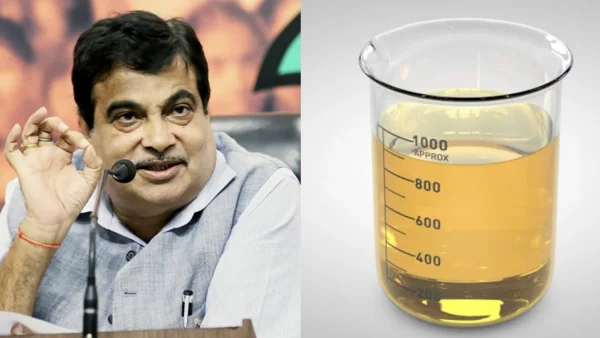
Road Transport and Highways Minister Nitin Gadkari has defended the ethanol blending programme, stating that a slight reduction in mileage is expected because ethanol has a lower calorific value than petrol. At the same time, he rejected claims that E20 causes engine damage in vehicles designed to use the fuel and argued that misinformation has exaggerated consumer concerns. He has also pointed to Brazil’s long experience with ethanol as an example of successful large-scale adoption.
What Is Verified and What Remains Disputed?
Verified Facts
E20 contains 20% ethanol and 80% petrol.Ethanol has significantly lower volumetric energy content than petrol.Lower energy density can reduce fuel economy.India has adopted E20 as the standard petrol blend nationwide.The government acknowledges that some vehicles may experience a 3–5% reduction in mileage.Still Under Debate
The exact mileage reduction across different vehicle models and driving conditions.The long-term ownership costs for vehicles that were not originally engineered for E20.Whether consumers ultimately save or spend more on fuel when measured on a cost-per-kilometre basis rather than pump price alone.
What Exactly Is E20 Fuel?
Ethanol-blended petrol is classified according to the percentage of ethanol mixed with conventional petrol. The “E” designation simply represents the ethanol content by volume.
FuelEthanol ContentPetrol ContentTypical UseE55%95%Common in many European countries for older vehiclesE1010%90%Standard petrol in many developed countriesE2020%80%India’s current nationwide standardE2727%73%Used in Brazil as the regular mandatory blend (recently increased temporarily to E32)E85Up to 85%15%Designed for flex-fuel vehicles, widely available in the United StatesE100Nearly 100% ethanol0%Used only by specially designed flex-fuel vehicles, mainly in Brazil
Petrol vs Ethanol: Energy Content
One of the most important differences between petrol and ethanol is their energy density.
Approximate lower heating values:
Petrol: ~32–34 MJ/LEthanol: ~21–24 MJ/LThis means one litre of ethanol contains roughly 30–35% less usable energy than one litre of petrol.
This difference is a fundamental property of the fuel itself and does not depend on vehicle manufacturer or government policy.
Social Media Reacts: Satire, Criticism and Public Frustration Over E20
As the debate over E20 petrol intensified, social media platforms such as X (formerly Twitter) became a major forum for public discussion. The reactions ranged from serious criticism and consumer complaints to satire and political commentary. While these posts do not constitute evidence, they illustrate the public sentiment surrounding the policy.
One widely shared post by X user @theskindoctor13 used satire to mock the government’s promotion of ethanol. The post humorously suggested that “one day a Maruti Alto running on 100% ethanol will beat Ferrari in an F1 race” and joked that “the first human-manned rocket to Pluto will run on 100% ethanol,” before sarcastically calling Nitin Gadkari “India’s answer to Elon Musk.” The post was intended as political satire rather than a factual claim.
Another viral post by @tehseenp alleged that some people in Nagpur were filing police complaints against individuals questioning the E20 blending policy. The post also criticized the minister’s earlier public challenge regarding finding people adversely affected by E20 fuel. These claims have not been independently verified by this publication.
These posts reflect the increasingly polarized nature of the debate. Supporters argue that ethanol blending is a long-term strategic policy aimed at improving energy security and supporting farmers, while critics question whether consumers are bearing higher fuel costs through reduced mileage without having meaningful alternatives.
Note: Social media posts represent the opinions of their authors and should not be interpreted as verified facts. Readers should distinguish between documented evidence, government statements, technical research and public opinion when evaluating the ongoing debate.
Why Lower Energy Density Affects Mileage
An engine converts the chemical energy stored in fuel into mechanical work.
Because ethanol contains less energy per litre:
More fuel must be burned to produce the same amount of work.The engine management system compensates by injecting a slightly greater volume of fuel.As a result, litres consumed increase and kilometres travelled per litre generally decrease.This does not necessarily mean the engine has become less efficient. Rather, the fuel itself contains less energy per litre.
Mileage: Physics vs Government Claims
Much of the public debate has focused on whether E20 reduces mileage. From an engineering standpoint, some reduction is expected because of ethanol’s lower energy density.
Why the Reduction Occurs
Approximate energy content:
Petrol: 34 MJ/LEthanol: 21 MJ/LAn E20 blend combines fuels with different energy contents. The resulting blend therefore contains less energy per litre than pure petrol.
This is a matter of thermodynamics rather than political opinion.
Expected Theoretical Reduction
If all other factors remain unchanged, engineering calculations suggest that E20 should deliver a modest reduction in fuel economy compared with pure petrol. Actual results vary because modern engines continuously adjust ignition timing, air-fuel ratios and fuel injection to optimise combustion.
Real-World Performance
Actual mileage depends on many variables:
City trafficHighway cruisingAmbient temperatureDriving styleEngine calibrationVehicle weightTyre pressureMaintenance conditionConsequently, two drivers using the same fuel may record different fuel economy.
Flex-Fuel Vehicles vs Conventional Vehicles
Flex-fuel vehicles are specifically engineered to operate on fuels ranging from low ethanol blends to E85 or even E100. Their engines use sensors and adaptive engine control systems that optimise combustion for varying ethanol concentrations.
Conventional petrol vehicles compatible with E20 can safely use the fuel but are generally optimised around lower ethanol blends. As a result, they may experience a somewhat greater reduction in kilometres per litre than purpose-built flex-fuel vehicles.
Why Brazil’s Model Cannot Simply Be Copied to India
Brazil is often cited as the world’s most successful ethanol economy. However, its success is the result of nearly five decades of policy evolution rather than a rapid transition.
Brazil launched its Proálcool (National Alcohol Program) in 1975 following the global oil crisis. Over the next 50 years, the country gradually built an integrated ecosystem involving sugarcane cultivation, ethanol refineries, flex-fuel vehicles and dedicated retail infrastructure.
Today, Brazilian motorists typically have a choice between gasoline and hydrous ethanol at fuel stations. Most new petrol vehicles sold in Brazil are flex-fuel models capable of operating on a wide range of ethanol blends, allowing consumers to select whichever fuel is more economical based on prevailing prices.
Brazil’s ethanol market is also supported by conditions that differ substantially from India:
Higher sugarcane productivity.Tropical climate favourable for sugarcane cultivation.Long-established ethanol distribution infrastructure.Mature flex-fuel vehicle market.Consumer choice at the pump.By contrast, India’s E20 rollout has occurred over a much shorter period. Most filling stations now primarily offer E20 petrol, and consumers generally have little or no choice between different blend levels. Flex-fuel vehicles remain a small part of the Indian passenger vehicle fleet.
These structural differences mean Brazil’s experience cannot be directly replicated without considering differences in agriculture, climate, vehicle fleet composition and fuel retail infrastructure.
How Other Countries Actually Use Ethanol
CountryEthanol Programme BeganCommon BlendHigher Blend AvailableConsumer ChoiceFlex-Fuel VehiclesLower Blend AvailableBrazil1975E27–E30 (temporarily E32 in 2026)E100YesExtensiveYesUnited States1970s–80sE10E15, E85YesMillionsYesCanadaProvincial programmesE10E15, E85YesLimitedYesUnited Kingdom2021E10—YesLimitedE5 retained as premium gradeEuropean UnionVaries by countryE10Mostly E10YesLimitedMany countries retain E5JapanEarly 2000sE3–E10 (limited)Pilot projectsLimitedVery limitedYesThailand2000sE10E20, E85YesYesYesParaguayLong-standingE24–E30Higher blendsYesGrowingYesOne notable difference is that several European countries continue to sell E5 petrol alongside E10, primarily to accommodate older vehicles that are not certified for higher ethanol blends. Similarly, the United Kingdom retained E5 as its premium petrol grade after introducing E10 as the standard fuel, ensuring that owners of incompatible vehicles still have an alternative.
Did India Roll Out E20 Too Quickly?
India’s ethanol blending programme has progressed at one of the fastest rates among major economies. While the country deserves credit for rapidly increasing ethanol blending—from virtually negligible levels a decade ago to around 20% in regular petrol—the pace of fuel rollout has sparked debate among consumers, automobile experts and industry observers.
Unlike Brazil, which took nearly five decades to build an ecosystem of flex-fuel vehicles, dedicated ethanol pumps, pricing mechanisms and consumer awareness, India’s transition has largely focused on changing the fuel available at retail outlets. As a result, many consumers feel the infrastructure and public education have not kept pace with the policy.
Vehicle Age Matters
India has one of the world’s largest fleets of ageing two-wheelers and passenger cars. According to government vehicle registration data, millions of petrol vehicles currently on Indian roads were manufactured before manufacturers began certifying models for E20 compatibility.
Although automakers have progressively introduced E20-compatible engines, a significant number of vehicles currently in service were originally designed around E5 or E10 fuel. This has led many owners to question whether higher ethanol blends could affect long-term durability, seals, fuel hoses and fuel-system components, particularly as these vehicles age.
Older Motorcycles and Hatchbacks
Two-wheelers account for nearly three-fourths of India’s registered vehicles. Many commuters ride motorcycles or scooters that are five to fifteen years old and rely on them for daily transportation.
Similarly, older hatchbacks such as the Maruti Alto, WagonR, Hyundai Santro and similar models form a substantial part of India’s passenger vehicle fleet. While many of these vehicles can operate on E20, owners often remain uncertain about long-term compatibility because they purchased their vehicles before E20 became the national standard.
Consumer Awareness
Perhaps the biggest criticism of the rollout is not technical but informational. Many motorists were unaware that E20 contains less energy per litre than conventional petrol, making some reduction in fuel economy a predictable outcome. Others assumed reduced mileage indicated a mechanical problem with their vehicle.
Greater consumer education—through dealerships, fuel stations and owner’s manuals—could have reduced confusion and helped set realistic expectations before nationwide implementation.
Limited Consumer Choice
Unlike countries such as Brazil, the United States and the United Kingdom, Indian consumers generally have limited choice between different ethanol blends. At most fuel stations, E20 has effectively become the default petrol available to motorists. Critics argue that offering multiple blend options during the transition period could have eased consumer concerns, especially for owners of older vehicles.
Is Ethanol Really Cheaper for Indian Consumers?
One of the government’s principal arguments for ethanol blending is that it reduces India’s dependence on imported crude oil. However, from a consumer’s perspective, the more important question is not the cost of producing fuel but the cost of travelling one kilometre.
Pump Price vs Cost per Kilometre
The retail price of E20 petrol is broadly similar to conventional petrol. Since consumers pay nearly the same amount per litre, any reduction in mileage increases the effective cost of travelling the same distance.
The following examples illustrate this concept.
Example 1: No Mileage Reduction
Petrol Price: ₹100/litreFuel Purchased: ₹1,000Fuel Received: 10 litresMileage: 20 km/litreDistance Travelled: 200 kmCost per km: ₹5.00
Example 2: 5% Mileage Reduction
Fuel Purchased: ₹1,000Fuel Received: 10 litresEffective Mileage: 19 km/litreDistance Travelled: 190 kmCost per km: ₹5.26
Example 3: 8% Mileage Reduction
Distance Travelled: 184 kmCost per km: ₹5.43Although these differences may appear modest over a single tank, they accumulate over thousands of kilometres annually. For commuters travelling 15,000 to 20,000 kilometres each year, even a small reduction in fuel economy can translate into several thousand rupees in additional fuel expenditure.
This is why many consumers focus on kilometres per litre rather than the price displayed at the fuel station.
Why Ethanol Economics Look Different in India
At first glance, producing ethanol domestically appears economically attractive because it reduces crude oil imports. However, ethanol production involves a complex supply chain with costs that extend well beyond the price paid at the pump.
India’s Dual Challenge
India imports a large proportion of its crude oil requirements, making fuel imports a significant burden on the country’s trade balance. Ethanol offers one way to replace a portion of these imports with domestically produced fuel.
However, unlike crude oil, ethanol is an agricultural product. Producing it requires land, water, energy and extensive processing infrastructure.
Hidden Costs of Ethanol Production
Producing fuel ethanol involves multiple stages:
Cultivating sugarcane, maize or other feedstocks.Irrigation.Fertilizer application.Electricity for irrigation pumps.Harvesting.Transportation to sugar mills or distilleries.Fermentation and distillation.Dehydration.Storage.Transportation to oil depots.Blending with petrol before retail distribution.Each stage carries financial and environmental costs that are not always reflected in discussions focused solely on crude oil savings.
Opportunity Costs
Land used to grow ethanol feedstocks could alternatively produce food crops, oilseeds or export-oriented agricultural products. Economists describe this as an opportunity cost—the value of the best alternative use of the same resources.
Similarly, capital invested in distilleries, storage facilities and blending infrastructure represents long-term investments that must eventually generate economic returns.
Could Ethanol Increase Water Stress in India?
One of the most significant concerns surrounding ethanol production is water consumption.
Sugarcane is among India’s most water-intensive crops, requiring substantially more water than cereals such as wheat, millets or pulses. Although irrigation requirements vary depending on climate, soil conditions and farming practices, sugarcane generally demands large quantities of water throughout its growing season.
Water-Stressed Regions
Several of India’s leading sugar-producing states already experience groundwater stress:
MaharashtraKarnatakaWestern Uttar PradeshParts of TelanganaIn Maharashtra, sugarcane occupies a relatively small share of cultivated land but consumes a disproportionately large share of irrigation water. This has been the subject of debate among agricultural economists for many years.
Does Ethanol Cause Drought?
No. Droughts are driven primarily by rainfall patterns, climate variability and groundwater management rather than ethanol production alone.
However, if rising ethanol demand encourages further expansion of water-intensive crops into semi-arid regions without improvements in irrigation efficiency, it could increase pressure on already stressed water resources. Many experts therefore argue that future ethanol growth should rely increasingly on higher crop productivity, wastewater reuse, micro-irrigation and second-generation biofuels rather than simply expanding sugarcane acreage.
Food vs Fuel Debate
The “food versus fuel” debate has accompanied biofuel policies around the world for decades.
The central question is simple: should agricultural land and food crops be used to produce fuel when they could instead contribute to food supplies?
Crop Diversion
Ethanol can be produced from several feedstocks, including:
SugarcaneMaize (corn)Damaged food grainsRiceWheat (in some countries)When demand for biofuel feedstocks increases, farmers may allocate more land to these crops if they offer better financial returns. This can influence crop patterns over time.
Global Experience
The United States has long faced criticism over the use of maize for ethanol production. Critics argue that diverting a significant share of the corn harvest to fuel can influence livestock feed costs and global grain markets, while supporters contend that co-products such as distillers grains continue to support animal feed industries.
International organisations have generally concluded that the impact of biofuels on food prices depends on multiple factors, including weather conditions, energy prices, crop yields and government policies. Ethanol is only one of several influences affecting food inflation.
Does Ethanol Actually Reduce Carbon Emissions?
Ethanol is often described as a cleaner fuel, but the answer is more nuanced than a simple yes or no.
Tailpipe Emissions
Ethanol contains oxygen within its molecular structure, which can promote more complete combustion and reduce emissions of carbon monoxide and certain hydrocarbons under many operating conditions.
Lifecycle Emissions
Climate scientists increasingly evaluate fuels using lifecycle analysis rather than tailpipe emissions alone.
Lifecycle emissions include:
Crop cultivation.Fertilizer production.Irrigation.Harvesting.Transportation.Distillation.Electricity consumption.Fuel distribution.These emissions vary significantly depending on the feedstock and production methods.
For example, sugarcane ethanol produced using renewable energy can have a substantially lower carbon footprint than ethanol produced using fossil-fuel-intensive processes. Consequently, modern research emphasises that ethanol’s climate benefits depend heavily on how it is produced rather than assuming all ethanol is equally “green.”
Hidden Issues Rarely Discussed
Public discussions about ethanol often focus on mileage, but several technical considerations receive relatively little attention.
Storage Stability
Ethanol-blended fuels generally have a shorter storage life than pure petrol because ethanol can absorb moisture from the atmosphere. This is usually not an issue for frequently used vehicles but may affect equipment stored for extended periods.
Water Absorption
Unlike petrol, ethanol is hygroscopic, meaning it attracts water. Excessive moisture contamination can affect fuel quality under certain storage conditions.
Older Fuel Systems
Older vehicles not originally designed for higher ethanol blends may contain rubber seals, hoses or fuel-system materials that are more susceptible to long-term wear. Manufacturers generally specify compatibility in owner’s manuals.
Marine Engines
Many marine engines are operated seasonally and may remain unused for extended periods. Fuel storage stability therefore becomes more important than in daily-use passenger vehicles.
Small Generators and Agricultural Pumps
Portable generators, irrigation pumps and other small petrol engines often operate under different conditions from passenger vehicles. Owners should consult manufacturer recommendations regarding maximum ethanol blend compatibility.
Vintage Vehicles
Classic and vintage automobiles frequently use fuel-system materials that predate modern ethanol-compatible components. Enthusiasts in several countries continue to seek lower ethanol blends where available.
Which Indian States Produce the Most Ethanol?
India’s ethanol industry is concentrated in states with strong sugar and grain-processing sectors.
The leading ethanol-producing states include:
Uttar PradeshMaharashtraKarnatakaBiharGujaratPunjabHowever, the feedstocks vary considerably.
Sugarcane-Based Ethanol
Predominant in:
Uttar PradeshMaharashtraKarnataka
Grain-Based Ethanol
Increasingly important in:
BiharPunjabGujaratHaryanaGrain-based ethanol often uses maize as well as surplus or damaged food grains permitted under government policy. The regional mix of feedstocks influences production costs, water use and environmental impacts.
Who Benefits Financially?
The ethanol economy creates both winners and trade-offs across different sectors.
Sugar Mills
Higher ethanol demand provides an additional revenue stream beyond sugar production and can help reduce dependence on volatile sugar prices.
Grain Processors
Companies processing maize and other approved grains gain access to a growing biofuel market.
Farmers
Stable demand for ethanol feedstocks can improve farm incomes, particularly during years of surplus production.
Oil Marketing Companies
Blending domestically produced ethanol allows oil companies to reduce dependence on imported petrol components while helping meet national blending targets.
Automobile Manufacturers
The transition encourages manufacturers to develop engines compatible with higher ethanol blends and flex-fuel technologies.
Government
Lower crude oil imports can improve energy security, reduce foreign exchange outflows and support rural industries.
Consumers
Consumers may benefit indirectly through improved energy security, but whether they experience direct financial savings depends largely on changes in fuel economy and retail pricing.
Could India Have Followed Another Path?
Ethanol is only one of several pathways available for reducing dependence on imported fossil fuels.
Alternative or complementary approaches include:
Accelerating electric vehicle adoption.Expanding incentives for strong hybrid vehicles.Increasing the use of CNG where infrastructure permits.Scaling up Bio-CNG production from agricultural waste and municipal waste.Investing in second-generation (2G) ethanol produced from crop residues rather than food crops.Developing compressed biogas as a transport fuel.Supporting research into synthetic fuels for sectors that are difficult to electrify.Continuing long-term investment in green hydrogen for heavy transport and industrial applications.Most energy experts agree that no single technology is likely to replace petroleum on its own. Instead, a diversified strategy combining multiple low-carbon fuels may provide greater resilience and flexibility.
Frequently Asked Questions
Does E20 damage engines?
E20 is considered suitable for vehicles specifically certified by manufacturers for E20 compatibility. Owners of older vehicles should refer to their vehicle manufacturer’s recommendations.
Why does mileage reduce with E20?
Ethanol contains less energy per litre than petrol. To produce the same amount of engine power, a slightly larger volume of fuel is typically required, resulting in lower kilometres per litre.
Should I use premium petrol instead?
Premium petrol primarily offers a higher octane rating and may not necessarily improve mileage in engines that do not require it. Follow the fuel specification recommended by your vehicle manufacturer.
Can older cars use E20?
Compatibility depends on the vehicle’s design and manufacturer certification. Older vehicles built before E20-compatible standards may require checking the owner’s manual or consulting the manufacturer.
Is ethanol cheaper for consumers?
Not necessarily. While the price per litre may be similar to conventional petrol, reduced fuel economy can increase the cost per kilometre travelled.
Why has Brazil succeeded with ethanol?
Brazil invested nearly five decades in developing flex-fuel vehicles, dedicated ethanol infrastructure, consumer choice at fuel stations and a mature sugarcane-based ethanol industry before achieving widespread adoption.
Which countries still sell E5 petrol?
Several European countries continue to offer E5 alongside E10 for older vehicles. The United Kingdom also retains E5 as its premium petrol grade for vehicles not compatible with E10.