Let’s put it this way: an ITR that is in after the due date is more than a compliance oversight. It can put a strain on cash flow. The real sting is not the fee but the 1% per month in interest on any tax left to pay. Come July 31, 2026, you will want to make sure your side of the ledger is even.
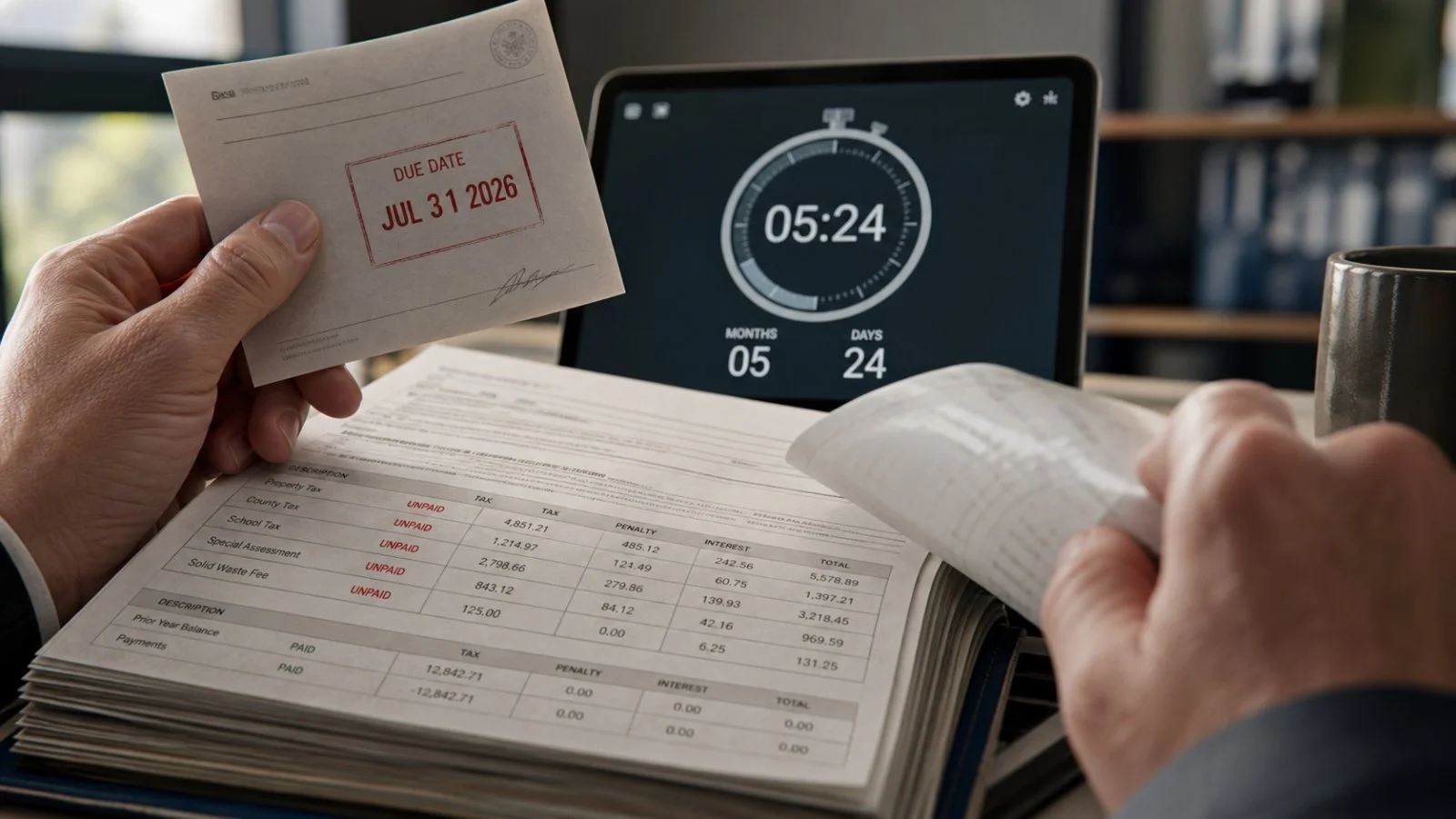
What is really at stake for late filers
File late and two things come into play. You have the 1% interest from Section 234A, which is levied on any tax not yet paid as of the due date. And then there is the late filing fee of Section 234F, which is tacked on to most belated returns with or without an unpaid balance.
But the consequences are not only financial. A late return can mean you can’t carry forward some losses, which in turn makes future gains harder to offset. Refunds can be put on the back burner. In the end, it is a hit to liquidity and can put a hold on other plans.
Should you have made good on your full liability via TDS, advance or self-assessment tax before the due date, the 234A interest is off the table. But if you do not file by July 31, 2026, the 234F fee is still a possibility.

Who pays the 1% interest and who avoids it
Section 234A is for those who have let the due date pass and still have tax to pay. From the day after July 31, 2026 until the return is in, the clock is ticking. Even a minor outstanding amount will draw interest for each month or part of one.
Here is where it can get expensive: a few days’ delay past the end of a month is treated as a whole month when it comes to interest. Get the return in as soon as you can to stop the meter. CA Chandni Anandan of ClearTax has seen small miscalculations lead to this kind of unnecessary cost time and again.
Anandan puts it in figures. A salaried employee with a Rs 5,000 shortfall from un-covered interest income who is two months behind would see a Rs 100 charge under 234A. A freelancer with Rs 25,000 to go and three months of lateness is looking at Rs 750.
Keep in mind the math is done on the net tax left to be paid, once TDS, reliefs and credits are factored in. Some think it is on the gross figure; it is not. It is on what is actually outstanding.
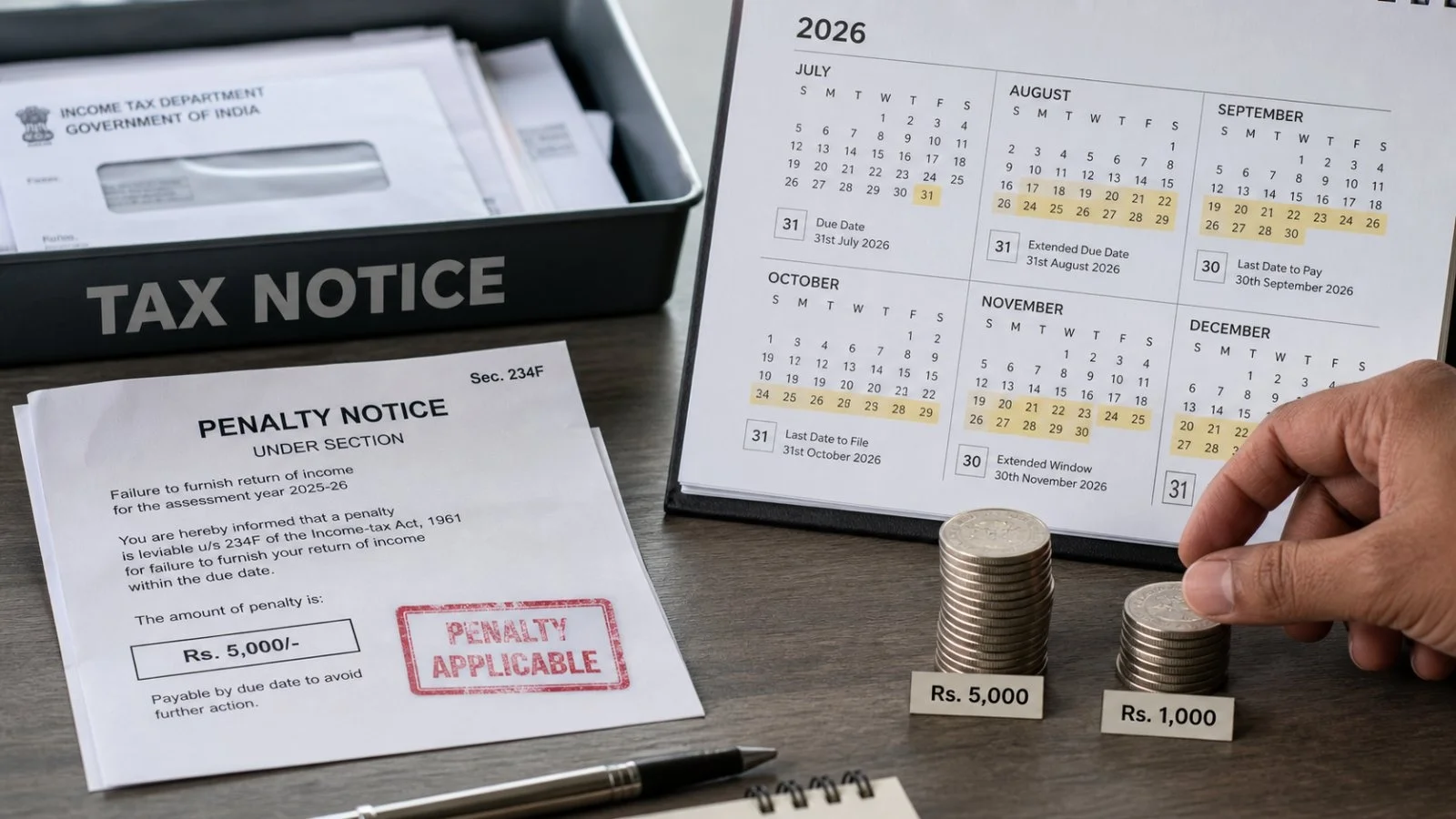
Late filing fee under Section 234F
July 31, 2026 is the line in the sand for most. If it is missed, a belated return can be put in by the end of December. That comes with a 234F fee, no matter if there was any tax left to pay on the due date or not.
In 2025-26, the tab is Rs 5,000 for anyone with total income over Rs 5 lakh. For those at or below that mark, it is Rs 1,000. The top-end penalty of Rs 5,000 is for those over the threshold who file in the window between July 31 and December 31.
You can view it like this: for a belated filer, the 234F fee is a given. There is a way to sidestep the Section 234A interest, provided the total tax bill is in full by July 31, 2026. It is a common enough error for some to mix up the two and miscalculate what it will cost.

More than just the numbers
Compliance is another matter. When a taxpayer puts off filing despite being put on notice, the authorities have the option to prosecute. A report from ClearTax puts the stakes in perspective: for willful non-filing, a fine and a term of three months to two years is possible, with sentences going as high as seven years in cases of large sums.
Then there is the impact on tax planning. Filing late can close some doors. A belated return, for instance, generally means you cannot carry forward certain losses to offset what comes later. For an investor or someone running a business, that is a lost shield and higher taxes in the end.
Even if one is in line for a refund, the math is the same. No outstanding tax means no Section 234A, but a late file will put a drag on how quickly a refund is processed. Hitting the due date makes for a more straightforward verification and a quicker credit.

Where costs are needlessly incurred
It is not unusual for salaried employees to think their employer’s TDS has them covered. But there is often income left over from bank deposits, side work, or capital gains. If that is not put in the return, the small balance is what will draw the 234A interest after the fact.
Freelancers and the like have their own pitfalls. Not making advance tax payments on time, or misjudging the bottom line, can leave a lot of money on the table when the due date arrives. The best defense is to have your receipts and costs in order so there are no surprises at filing.
Business owners should be on top of their reconciliation. It is wise to have the books, GST data, and TDS credits all in agreement well before the deadline. We also see value in a review of Form 26AS and the Annual Information Statement to iron out any discrepancies.
A few things to keep in mind:
– Run through Form 26AS and AIS
– Make sure all income, including gains, is accounted for
– Settle any self-assessment tax before July 31, 2026
– Put in the return; do not put it off to the wire
– Have your expense records in hand
– Reconcile your TDS, GST and books early
The way forward
Take stock of where you stand for 2025-26. If there is a net amount to be paid, do so before July 31, 2026. That in itself will take care of the 234A interest, even if something comes up and the actual filing is a little behind.
For those with a refund in the offing, an on-time return is the best way to get it and hold on to the right to carry forward any eligible losses. One can always file by December 31, 2026, but the 234F fee is part of the package, and it may curtail some of the room for manoeuvre in future planning.
Put simply, the choice is to pay now or to pay later with a 1% monthly charge on top of a late fee. View July 31, 2026 as a hard line for cash management.
The reasoning for 234A and 234F is plain: one is for the delay in paying up, the other to nudge people to be on time. There is an opportunity here to plan around it. Get the dues out of the way and file early to preserve some flexibility.
When in any doubt, go back to the figures. It is the little things – a bit of unreported income or a gap in TDS – that add up to a bill once the clock runs out. Dealing with it before the 31st is the surest way to save and make for a clean financial year.