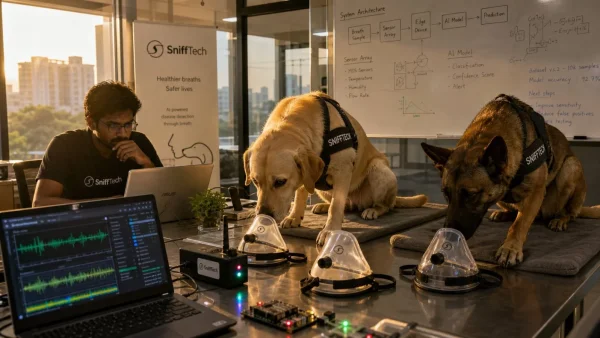
It’s an odd pairing, but this Bengaluru outfit is making it work to put faster, more affordable cancer checks in reach. Dognosis is their name, and they put forward a case for their breath screening with about 90 per cent accuracy in Phase-2. For a nation where too many patients come in after the fact, it may well alter the course of when they get the help they need. The doctors on the project put it simply: it’s an early, no-fuss and low-cost option. They will tell you the sensitivity and specificity are high – 90 per cent – for telling a cancerous sample from one that isn’t. But make no mistake, it is meant to be an aid to what’s already there, not to supplant it.
Why this is significant
You see several lakh new cases of cancer in India each year, and all too often they are found once things have moved on. That kind of lag has a price for the family and the hospital. If you can put in place a screen that is non-invasive and puts a flag up on risk before the disease has a chance to run its course, you can make a difference. “It’s a good concept for catching things early,” says Dr Swaratika Majumdar, an oncologist who has been with them for a year or so. She sees the 90 per cent mark in both sensitivity and specificity; the dogs will pick up on most of the positives, and the AI is there to keep those results in line.
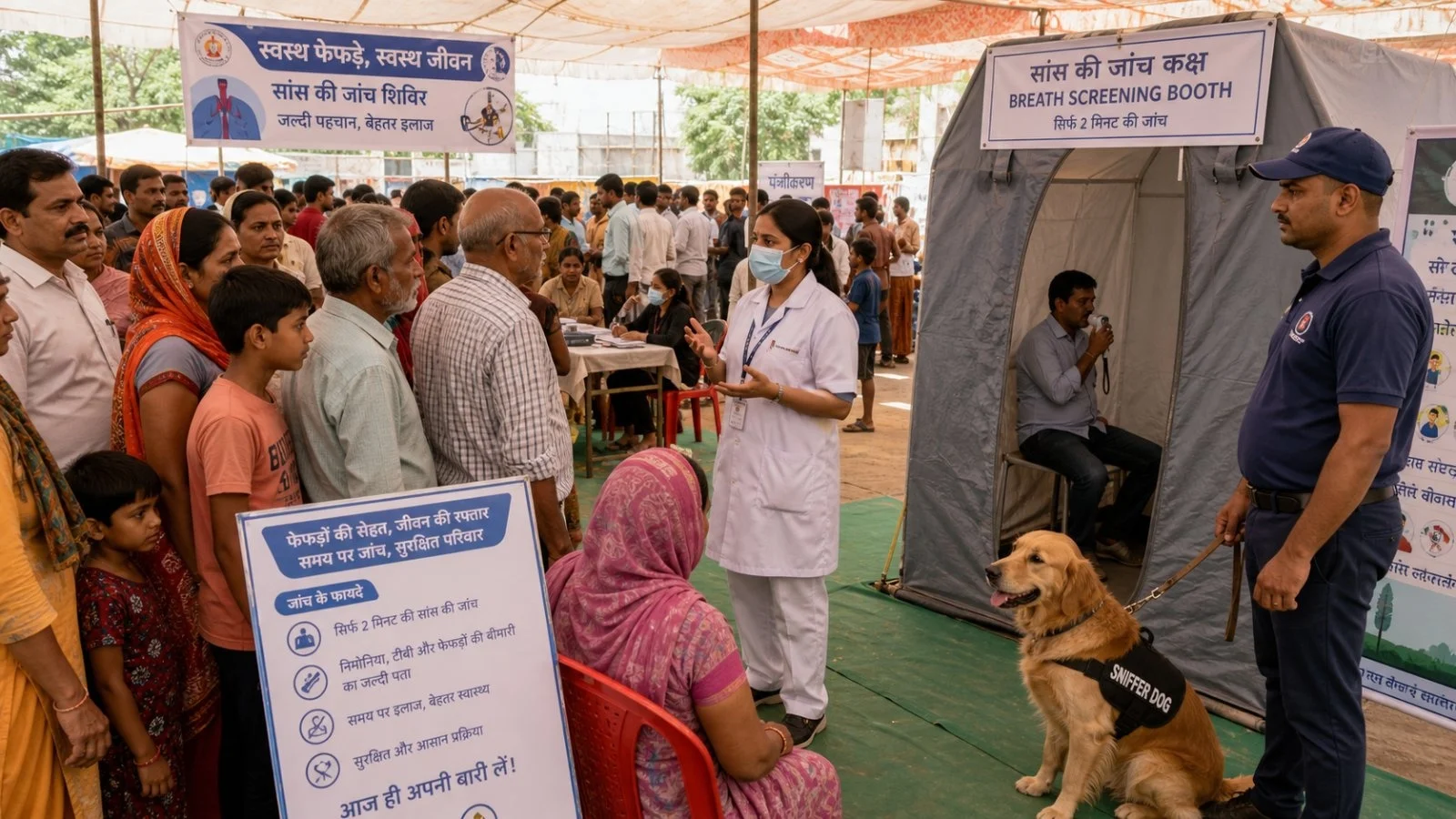
How the test works
Forget the scanners and the needles for a moment. You have a volunteer put on a mask we’ve made for the job to let us in on any volatile organic compounds, or VOCs. Cancer and other conditions can put a spin on these, and your breath becomes something of a chemical map. Back at the lab, the dogs have a look at each mask in a room we have set up with the right sensors. We record what they do as they go through the samples. Then our algorithms take over and make sense of the behaviour, converting it into hard data the machine can read.
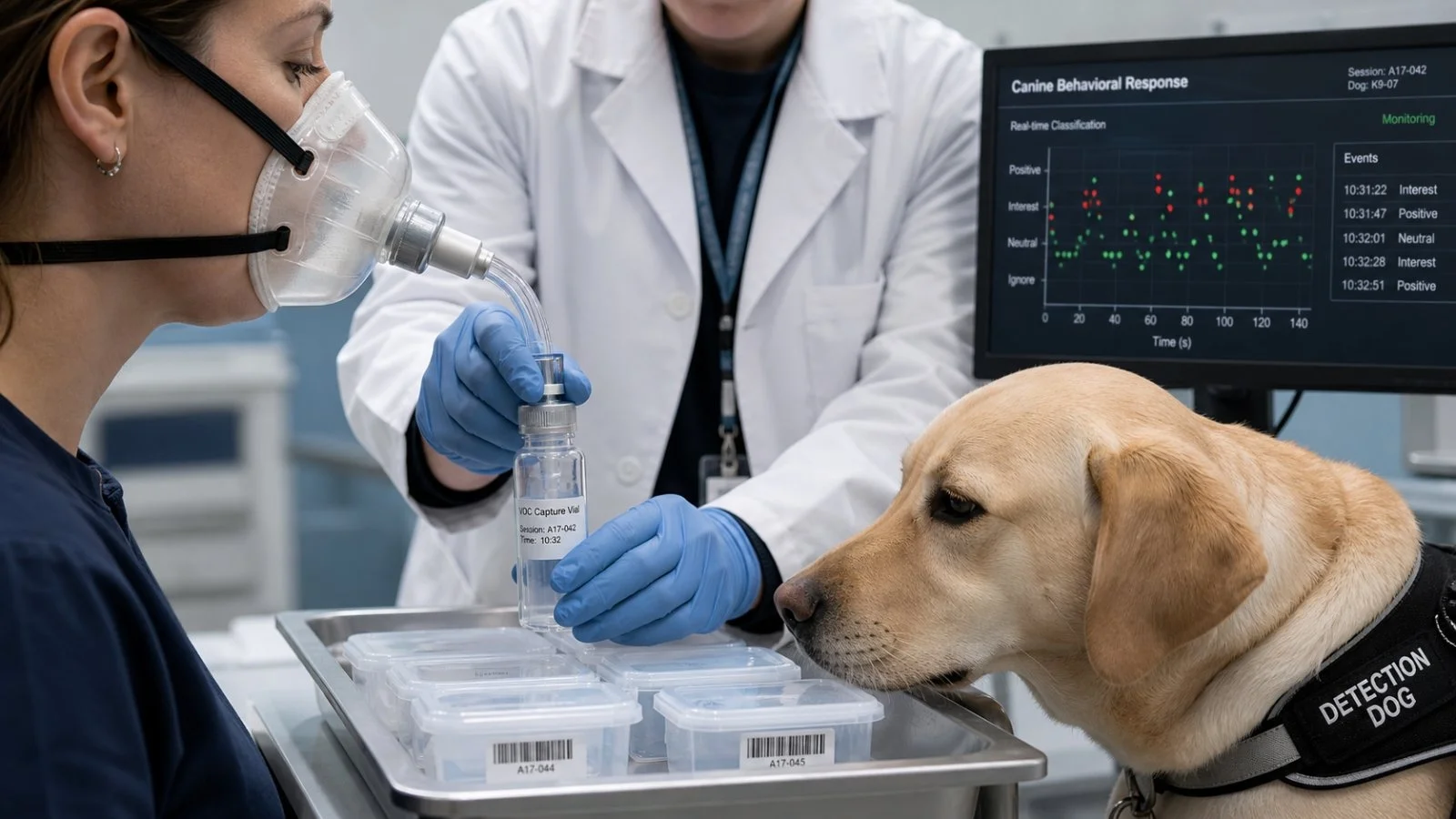
A matter of canines and code
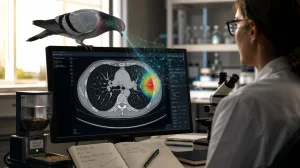
The dogs are taught to zero in on the VOCs that are tied to disease, according to Akash Kulgod, our CEO. Every mask has its tells, he says, and we train the hounds to be sure of what they’re seeing. Then there is Suba, head of R&D, for whom consistency in testing is not up for debate. We put the dogs to the test in a uniform way with each sample, so we can record their reactions and have an AI make sense of them. It’s about taking what might be a subjective read from a dog and turning it into hard numbers. To get the animals ready for this kind of work, we’ve had some top trainers from abroad come on board. Edo, one of them, says what we’re doing in India is something you don’t see every day – he puts it down as one of the more unique detection projects in the world, which speaks to how much people are watching this model.
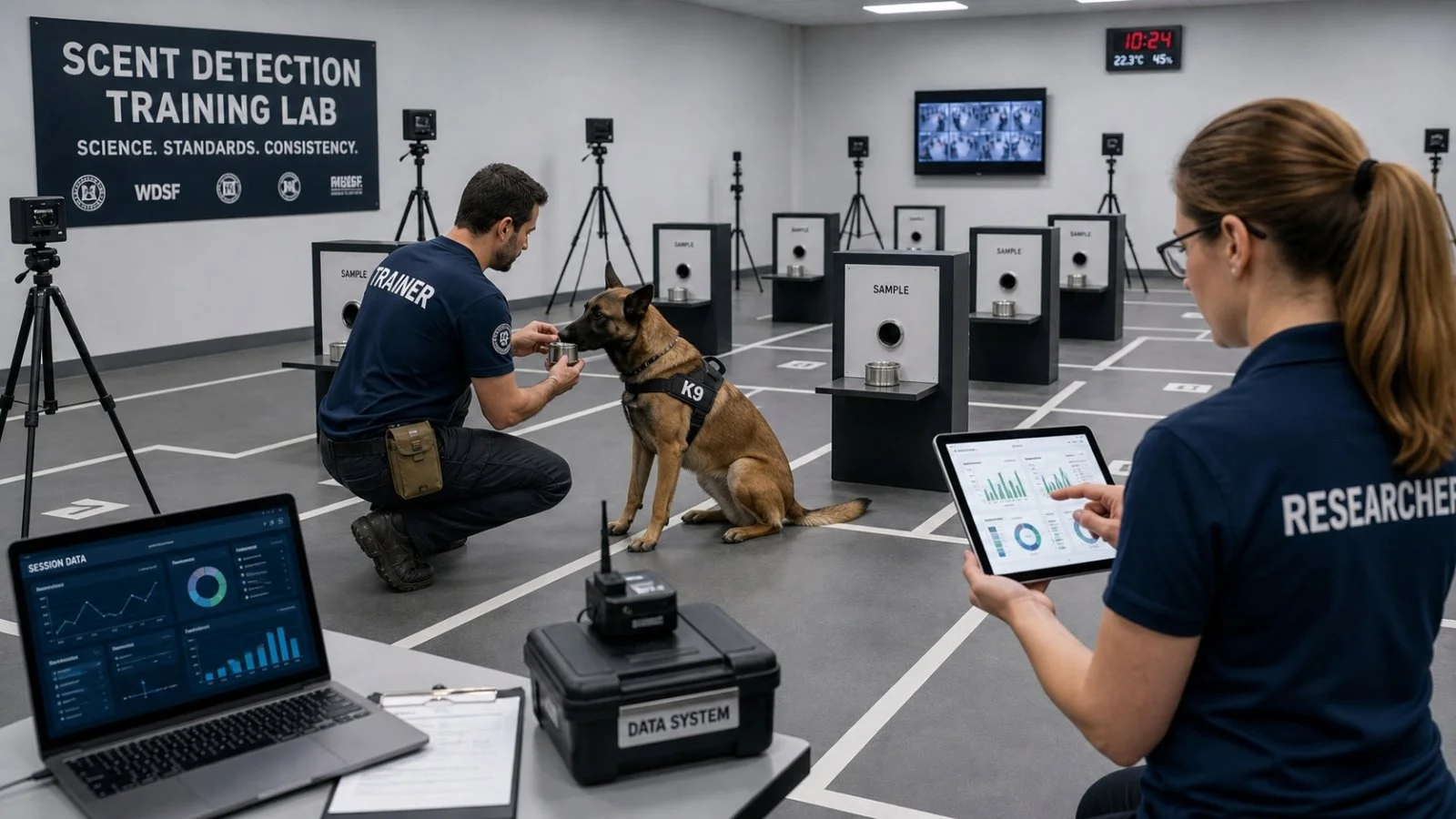
What the trials show so far
Dognosis has been at it for two years with its Phase-2 studies, running through close to 1,500 cases. The company says they were able to tell cancer from non-cancer in a breath sample with about 90 per cent accuracy. The team would have it like this: – We put in 2 years of testing – Almost 1,500 people were part of it – We’re seeing 90 per cent or so in terms of accuracy – All of it is to back up the way doctors already work Srishti, who is with us at Dognosis, will tell you the data is there to show that homegrown tech can make a difference in early detection on a global level. And the numbers back up the idea that there’s enough in a person’s breath to raise an early flag.
Cost, speed and access
You don’t need as much overhead for a screen based on a breath as you do for some of the more invasive or imaging-heavy tests. For a hospital that is maxed out or in an area without a good lab, it’s a no-brainer. You can spot the higher-risk patients and act on it. Don’t get me wrong, it’s not a new blood test and it isn’t going to put your scanner out of a job. It’s for triage. When the dog and the AI pick up on something, it’s a nudge to get the patient in for the real deal. If you can trust the signal, you can get from “I have a hunch” to “we know” in less time.
What comes next
There is still some legwork to do before this becomes policy. We need to put it to the test in bigger, more varied studies and set some clear rules of the road before any health system is going to go all in. But if we get there, the ones who will be best served are the folks who put off making a trip to the hospital. A quick screen can take the edge off and let us in on things sooner. What we’re building here in Bengaluru is a way to do that with tools that are easy to put in place. Our goal is straightforward: we want to get more patients in front of a doctor while we still can. So we are being methodical with our trials, making sure the dogs are up to par and the algorithms don’t waver. It’s simple in the end. A dog can smell what we can’t, and AI can make a dataset of it. If the 90 per cent we’re talking about stands up to closer inspection, this could be a new way of looking at first-line screening for cancer.