When eight-year-old Rosie, a dog saved from a bad situation, was given only months to live, Sydney, Australia, business person Paul Conyngham turned a really bad time into a very modern test. Using AI tools – including ChatGPT – and current gene study, he assisted in making a special mRNA cancer vaccine that made Rosie’s tumors smaller and brought her energy back, with careful watching by vets.
A hard situation and a plan based on facts
Rosie, a Staffordshire terrier and Shar-Pei mix taken in 2019, was found to have quick-growing mast cell cancer in 2024. Operations and chemo slowed the disease, but new growths kept showing up. Things didn’t look good.
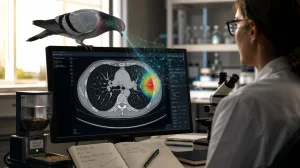
Sydney businessman Paul Conyngham, who had worked for a long time in data science and machine learning, thought Rosie’s tumor genes might show where to look for ways to treat her. He went to AI, using ChatGPT to make a plan, step by step, and get a team of different kinds of experts working together.
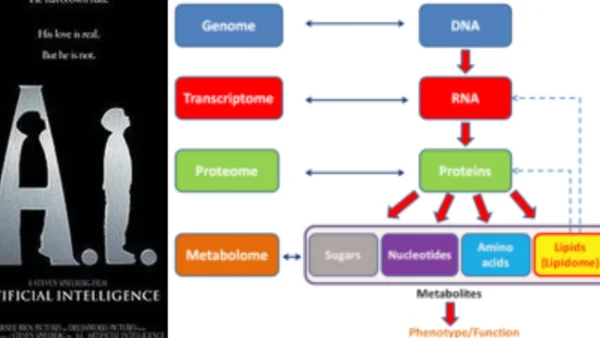
With normal choices used up, he turned to exact cancer treatment. The goal was simple to understand, but hard to do: change tissue into facts, find the changes in genes that were causing growth, and get Rosie’s body to fight against them.
From tissue to facts: figuring out a dog’s cancer
Conyngham got researchers at the Ramaciotti Center for Genomics at the University of New South Wales to work with him. Scientists read the DNA from Rosie’s good blood and from the tumor to find the changes in genes that were making the cancer grow.
The work made a lot of sets of facts. Using computer programs to study genes, AI-assisted looking at the facts, and careful checking, the team traced how the tumor was changing and which changes in genes seemed best to use for treatment with the body’s own defenses.
To give the most important changes in genes first place, Conyngham also used AlphaFold to make models of proteins made by the changed genes. What the structures showed helped find new antigens – things the body’s defenses could see – a very important step for making a cancer vaccine for just Rosie.
One person who worked with them later said that the people on the project kept at it without giving up. There was constant trying new things, from finding changes in genes to choosing what to target, with AI speeding up looking at what had been written and making design choices.
Making a special mRNA cancer vaccine
When trying to get a treatment with the body’s own defenses that already existed didn’t work, the group looked at making something special: a cancer vaccine based on mRNA. Conyngham worked with scientists at the UNSW RNA Institute, led by chemist Pall Thordarson, to change what the genes showed into an RNA thing.
mRNA vaccines give directions that make cells make proteins linked to the tumor. Those proteins act like signs, teaching the body’s defenses to see and attack cancer cells with the same changes in genes. The time of COVID-19 showed this could be done; cancer treatment is now making more of it.
AI didn’t take the place of scientists, but it made the work go faster. ChatGPT helped make a list of steps in the tests, give a short look at new research, and test design choices, while experts in the field took care of the immunology, making the vaccine, and safety issues.
What is right, watching carefully, and early results
Because this was a test, the vaccine needed very strong approvals and watching by vets. It was given through a University of Queensland research program run by vet cancer doctor Rachel Allavena, which already had watching for similar treatments.
Rosie got her first shot in December 2025, and then boosters in early 2026. Within weeks, a large growth on her leg got much smaller. The team said that the amount of all the growths fell by about half, and Rosie’s activity went up a lot.
Conyngham remembers going to a dog park and seeing Rosie jump over a fence to go after a rabbit. He is clear about it: this is not a cure. But the vaccine seems to have made both the time she had and the quality of her life better, which was the whole idea.
Researchers warn that one case can’t prove something works. Still, the pattern of growths getting smaller and her acting better shows that her body’s defenses had a good reaction to the vaccine made for her.
What Rosie’s story means for AI in medicine
The case shows how AI, the study of genes, and treatment for just the person are coming together in cancer treatment for animals. It also shows how people with strong skill in technology can help by working with scientists and staying within what is right and safe.
Experts note that mRNA vaccines made for just the person are already being studied for human cancers, including melanoma and cancer of the pancreas. If the results hold in bigger studies, AI-assisted design could make the time from reading the genes to treatment shorter.
But changing this to normal care needs more than a good story. It needs tests done with control, making the vaccine in a way that can be done again, checking by groups that control things, and watching for a long time to see if it is safe and helps people live longer.
Good things with safety, not a do-it-yourself plan
Rosie getting better is inspiring, but it is not a set of directions for treating yourself. Every step, from reading the genes to giving the right amount, was done under review by a group and watching by a vet. The lesson is working together, not making things up.
Even so, this moment feels like the best time for AI to be used in a clinic. With the right experts, facts, and approvals, AI can be a force that makes exact cancer treatment much more powerful, giving patients – and in this case, a dog much loved – more days that matter.