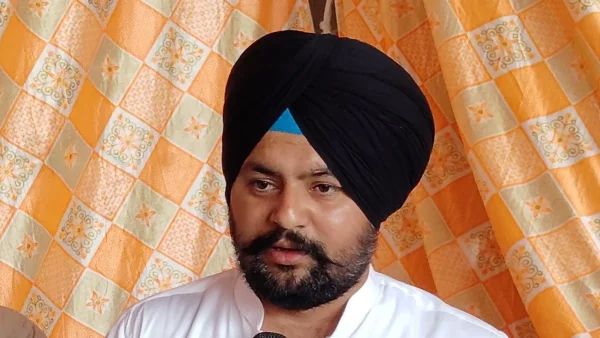
The Punjab and Haryana High Court cleared AAP MLA Manjinder Singh Lalpura and seven others of charges of molestation and assault in 2013, bringing a long legal fight to a close after all sides reached a compromise that the court approved. The decision, made on Monday, March 30, 2026, also cancelled the FIR and a previous conviction and four year prison sentence.
Justice Tribhuvan Dahiya and his court allowed a request from Lalpura and the other accused. They had a legal agreement made on February 4 and confirmed by the Chief Judicial Magistrate of Tarn Taran on March 25. The Magistrate said the agreement was entered into willingly, without any pressure, being forced or inappropriate influence.
Because of this ruling, the High Court cancelled the March 2013 FIR filed at the Tarn Taran police station. That FIR had used many sections of the Indian Penal Code, and parts of the Scheduled Castes and Scheduled Tribes (Prevention of Atrocities) Act.
The court also cancelled a conviction from September by a Tarn Taran court. That court had sentenced the eight accused, including Lalpura, to four years in jail. Both the state’s lawyer and the complainant’s lawyer didn’t argue against cancelling the conviction, the sentence and the FIR.
Background of the 2013 Tarn Taran incident
The case started with a claim that a woman from the Scheduled Caste community was attacked in Tarn Taran on March 3, 2013. The complaint mentioned Lalpura and several others, even some police officers. This happened during a family trip to a wedding.
At the time of the incident Lalpura was a taxi driver. He now represents Khadoor Sahib in the Punjab Legislative Assembly for the Aam Aadmi Party. There was a trial and a conviction in 2023, but this week he has been found innocent.
In the full details of its decision, the High Court pointed out that the people asking for this outcome had no previous criminal record. It said the alleged crimes weren’t terrible, didn’t show a disturbed mind, and shouldn’t be considered crimes against all of society.
The court said the incident happened around 13 years ago and nothing else bad has happened between the parties since. It said that continuing the legal proceedings would make the relationship worse after they’d honestly sorted things out and would stop the goal of living together peacefully.
High Court reasoning and reliance on Supreme Court precedents
Based on previous rulings from the Supreme Court, the High Court mentioned Gian Singh vs State of Punjab (2012). This case says criminal cases that are mostly about a civil or personal issue can be stopped if the people involved have settled their problems in a friendly way. It also mentioned Shiji alias Pappu vs Radhika (2012), where legal action under Sections 354 and 394 of the Indian Penal Code was dropped when a compromise was made and there wasn’t much chance of getting a guilty verdict. The court’s decision was strongly supported by the Ramgopal vs State of Madhya Pradesh decision from 2022. That prior case said courts can overturn guilty verdicts (even for crimes you can’t just pay to settle) using their general powers to achieve fairness, if a genuine agreement has been reached and the public isn’t negatively affected.
The judges in this case decided the issue was largely between individuals and could be stopped under Section 482 of the Criminal Procedure Code. The fact that both the government and the person who complained had accepted the settlement was a good reason to end the lawsuit.
What the acquittal means for the parties
This order completely clears all eight people accused of anything, and removes the criminal record that started with the 2013 police report. Because the guilty verdict and sentence have been cancelled, the people involved won’t be going to prison, and won’t have to worry about a higher court reversing the ruling from Tarn Taran.
The court explained that because of the agreement the people involved had made, fully considering the appeals would actually prevent the parties from moving on with their lives in peace. The report from the Chief Judicial Magistrate also showed that the people asking to have the case dropped weren’t involved in any other criminal cases and hadn’t been declared fugitives.
Wider legal and political implications
As for how the legal system works, this case shows how Section 482 of the Criminal Procedure Code acts as a way to provide relief. Used carefully, it allows High Courts to stop someone from misusing the legal process and to help with justice when people settle disputes honestly and without harming the community.
The ruling makes clear an important line in Indian criminal law: cases that are mostly about a dispute between people can be dismissed if there’s a settlement, as long as the court is sure the agreement was entered into willingly, nobody was forced into it, enough time has passed, the people involved haven’t been in trouble with the law before, and a guilty verdict is unlikely.
By dismissing the police report which also included parts of the SC/ST Act, the court effectively said that this specific problem, based on what it had been shown, didn’t cause a wider problem for the public. Courts are careful in these kinds of situations and think about whether the alleged actions are a problem for society as a whole before allowing a settlement to end the case.
In terms of politics, Manjinder Singh Lalpura, the AAP MLA for Khadoor Sahib, no longer has this legal issue hanging over him. Even though he is no longer criminally responsible, people will probably continue to discuss and judge him. Discussion will likely now focus on how well he is doing his job, rather than this lawsuit.
Key takeaways and next steps
This ruling confirms that High Courts can stop criminal cases, and even overturn guilty verdicts for crimes you can’t settle with money, if a sincere agreement will achieve fairness. Previous, important cases to refer to are Gian Singh, Shiji alias Pappu, and Ramgopal, together with Section t482 of the Criminal Procedure Code.
For those who are suing or being sued, the ruling shows how important it is to have a settlement written down and approved by the court. For the lawyers representing the government and the accused, it shows how if both sides agree, stopping a case that is mostly a private matter and continuing to pursue it isn’t in the public interest.
Because the police report has been dismissed and the guilty verdict overturned, the case is now finished for all eight accused. Unless the Supreme Court decides to review the ruling, this decision is the final conclusion to a case that has been going on for over ten years.