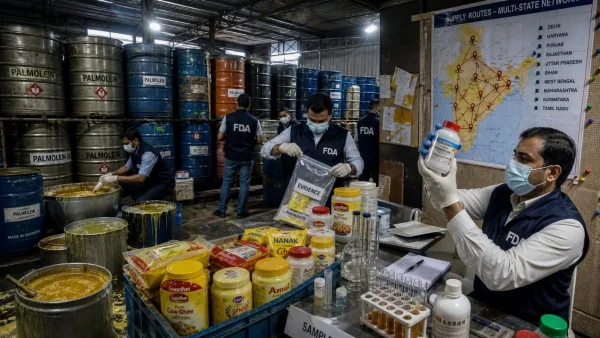
In a major crackdown on food adulteration, authorities in Gujarat have uncovered an alleged fake desi ghee manufacturing unit, seizing nearly 30,000 litres of suspected adulterated ghee during a raid.
According to officials, the factory was allegedly producing ghee by mixing palmolein oil with chemical additives, instead of using pure milk fat. Investigators also recovered a chemical reportedly imported from China, which authorities claim had the capacity to produce the equivalent of around 50,000 litres of imitation ghee.
The Food and Drugs Administration (FDA) has launched a detailed investigation into the manufacturing unit, while tracing the distribution network that allegedly supplied the product to multiple states.
What Did Officials Find?
According to preliminary findings from the raid, authorities allegedly recovered:
Around 30,000 litres of suspected fake desi ghee.
Large quantities of palmolein oil.
Chemical additives allegedly used to imitate the colour, texture, and aroma of desi ghee.
A chemical reportedly sourced from China.
Packaging material of different brands.
Officials suspect the adulterated product was marketed under multiple brand names and supplied to states including:
Punjab
Rajasthan
Maharashtra
Gujarat
The investigation is expected to determine the full extent of the supply chain.
How Was the Fake Ghee Allegedly Made?
Investigators claim the unit did not use genuine milk fat in the manufacturing process.
Instead, the alleged process involved:
Palmolein oil as the primary ingredient.
Chemical compounds to mimic the appearance and smell of desi ghee.
Blending and packaging the final product as pure ghee.
Authorities allege the finished product closely resembled genuine desi ghee, making it difficult for consumers to identify the difference.
Laboratory analysis will determine the exact composition of the seized material.
Officials Reportedly Surprised by the Chemicals Used
One of the most concerning aspects of the raid was the alleged recovery of a chemical that officials believe could produce a product resembling desi ghee on a large scale.
According to preliminary reports, investigators were informed that the adulterated product was difficult to distinguish through routine inspection methods. Authorities are expected to rely on laboratory testing to confirm its composition and compliance with food safety standards.
These claims are part of the ongoing investigation and await scientific verification.
A Threat Beyond Financial Fraud
Food safety experts say adulteration is not merely an economic offence.
Consumers purchasing desi ghee expect a product made from milk fat with defined nutritional standards.
If substitute oils or unauthorised additives are used without disclosure, it may amount to misbranding and, depending on the ingredients involved, could also pose health risks.
Potential concerns include:
Consumption of undeclared ingredients.
Allergic reactions in sensitive individuals.
Nutritional deception.
Exposure to non-permitted additives if used.
The actual health impact will depend on laboratory findings.
Food Adulteration: A Growing Challenge
The Gujarat case has once again highlighted the persistent problem of food adulteration in India.
Over the years, enforcement agencies have uncovered alleged adulteration involving:
Milk
Ghee
Edible oils
Turmeric
Chilli powder
Sweets
Honey
Experts say rising demand, price differences between genuine and counterfeit products, and the lure of high profits continue to drive such illegal activities.
What Does the Law Say?
The manufacture and sale of unsafe or adulterated food products are governed by the Food Safety and Standards Act, 2006.
Depending on the results of laboratory testing and the nature of any violations established, authorities may initiate legal proceedings, including penalties and prosecution as provided under the law.
The seized samples have reportedly been sent for analysis.
Consumers Urged to Stay Alert
Food safety experts advise consumers to:
Purchase ghee from trusted manufacturers and authorised retailers.
Check FSSAI licence details on packaging.
Avoid unusually cheap products that appear significantly below market prices.
Preserve purchase receipts.
Report suspected adulterated food products to food safety authorities.
While consumers can be vigilant, experts note that sophisticated food fraud often requires laboratory testing to detect.
Investigation Continues
Authorities are now examining:
The source of the raw materials.
Distribution channels across multiple states.
Packaging and branding used for the products.
Whether additional manufacturing units are connected to the operation.
Further action will depend on laboratory reports and the outcome of the investigation.
The Bigger Question
The Gujarat raid is a reminder that food adulteration is not just about counterfeit products—it is about public trust.
When staple food items such as desi ghee are allegedly replaced with cheaper substitutes and marketed as genuine, consumers are deprived not only of value for money but also of confidence in the food they bring home.
As the investigation progresses, the case underscores the importance of regular inspections, strong enforcement, and robust testing systems to ensure that products sold as “pure” truly meet the standards promised on their labels.