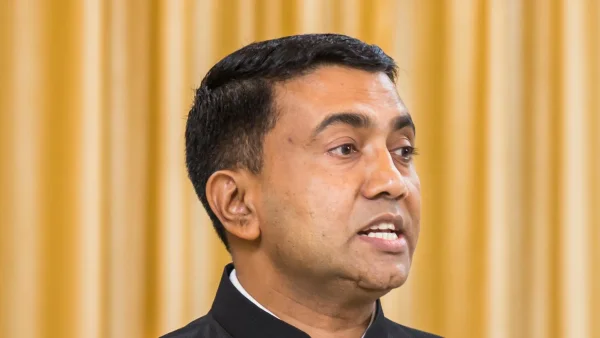
Goa has moved its most recognisable local ride to the smartphone era. Chief Minister Pramod Sawant on Monday unveiled the ‘Mhaje Driver App’, a booking platform for the state’s motorcycle taxi service, signalling a digital push that aims to boost convenience for riders and earnings for motorcycle pilots.
Riders and pilots: what changes now
Commuters can now find and book the nearest motorcycle pilot online, rather than waiting at the traditional pickup points known locally as pilot stands. The promise is speed and certainty at the tap of a screen.
Crucially, the state has kept the pricing model intact. Sawant clarified that the tariff for customers remains the same and payments will be collected directly by the pilot. He added that pilots do not have to pay anything to be on the app.
The rollout has been designed to be inclusive. Registration is not mandatory for pilots at this stage because the app is provisional, and those without smartphones will be given one by the app operator, Sawant said.
For quick clarity, here are the operational basics announced so far:
– No fee for pilots to join now
– Tariff remains unchanged for riders
– Payment goes directly to pilots
– Smartphones provided to pilots without one
Trust and safety record
Sawant leaned on the sector’s reputation to frame the launch. ‘Even today, parents trust motorcycle pilots to drop and pick up their children from school. There has not been a single incident of motorcycle pilots misbehaving with customers,’ he said.
Motorcycle pilots are a distinctive part of Goa’s public transport, offering pillion rides where buses or other options are sparse. That local familiarity is a strength, and the app attempts to convert it into digital discoverability without diluting community trust.
A tech layer over a legacy service
The launch brings a Portuguese-era mode of transport onto a technology-driven platform. Rather than reinventing the service, the state is adding a modern transaction layer to a long-standing system.
Functionally, the app shows the nearest pilot and lets a commuter book before the pilot reaches the pickup point. That could trim waiting times and reduce uncertainty at busy tourist stretches and residential clusters alike.
By placing the technology behind an existing network, the government sidesteps the usual friction that accompanies platform-led changes. It aligns the app to the way pilots already work, with the tariff and cash collection remaining unchanged.
Earnings and discoverability
The government is framing the move as livelihood-positive. Sawant said the initiative would help motorcycle pilots increase their earnings by expanding their customer base. Digital discovery is the lever here, not higher fares or commissions.
For riders, a single window to find pilots could mean more predictable commutes in pockets where other public transport is limited. For pilots, visibility to new customers is the most tangible gain.
Signals on the road ahead
Sawant also outlined ideas that could reshape the fleet mix over time. The state is toying with providing e-bikes to pilots at a 50 per cent subsidy, a shift that could lower operating costs and reduce noise and emissions if adopted at scale.
Benefits are not limited to active riders. The state will also reintroduce a pension scheme for pilots who have completed 50 years in the profession, formalising support for a workforce that has long operated with minimal safety nets.
Taken together, the ‘Mhaje Driver App’ sets a strategic course: keep the tariff and community ethos intact, digitise discovery, and explore cost-saving hardware in the future. If execution matches intent, Goa’s motorcycle pilots may find themselves more visible, more accessible, and better protected, without losing what made the service iconic.