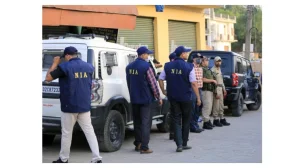
India’s counter-terrorism push escalated today as the National Investigation Agency named Lashkar-e-Taiba chief Hafiz Saeed in a supplementary chargesheet for the Pahalgam attack that killed 26 people. Filed before the NIA Special Court in Jammu, the case directly alleges a cross-border conspiracy and waging war against India.
The move shifts the focus from ground operatives to alleged planners across the border, sharpening accountability for the April 22, 2025 massacre. For security agencies in Jammu and Kashmir, the naming of Saeed signals an attempt to target leadership networks said to enable on-ground strikes.
Why naming Hafiz Saeed matters
The NIA has chargesheeted Saeed in his individual capacity and as head of the banned Lashkar-e-Taiba and its proxy, The Resistance Front. By formally indicting a UN-designated global terrorist, investigators seek to tie operational violence in the Valley to strategic direction from Pakistan.
According to the agency, Saeed conspired from Pakistan to wage war against India and played a key role in planning the Pahalgam killings. The attack left 25 tourists and one local civilian dead, making it one of the deadliest assaults in Jammu and Kashmir in recent years.
What the supplementary chargesheet alleges
The agency says Saeed faces charges under multiple sections of the Bharatiya Nyaya Sanhita (BNS), 2023, and the Unlawful Activities (Prevention) Act (UAPA), 1967. The case invokes penal provisions for waging war and hatching a conspiracy from across the border.
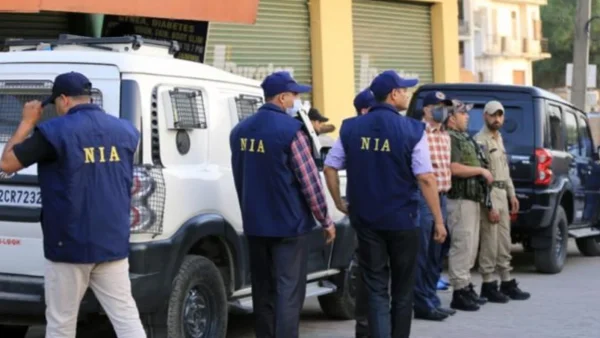
This filing continues the NIA’s original 1,597-page chargesheet. Investigators state it details Pakistan’s conspiracy, Saeed’s alleged role, and supporting evidence developed through scientific methods and on-ground examination. The NIA adds that its investigation is ongoing.
The attack and the investigation so far
The massacre on April 22, 2025, targeted civilians in Pahalgam. An FIR (no. 25/2025) was initially registered at Police Station Pahalgam, district Anantnag. After preliminary work by Jammu and Kashmir Police, the Ministry of Home Affairs transferred the case to the NIA.
The probe connected the incident to LeT/TRF after two posts on TRF’s digital platforms were traced to Pakistan, the agency said. One message claimed responsibility shortly after the attack; a subsequent post denied the group’s involvement.
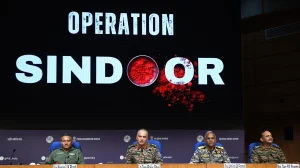
In December last year, the original chargesheet named seven accused, including LeT and TRF. The NIA had also chargesheeted Pakistani handler terrorist Sajid Jatt, identified three terrorists killed by security forces during Operation Mahadev in July 2025, and cited two arrested accused. The proscribed LeT/TRF was charged as a legal entity for planning, facilitating, and executing the attack.
Legal process and next steps
For now, the case advances within the NIA Special Court, Jammu, as the agency continues to pursue the wider conspiracy matrix. Officials have not indicated a timeline, but they underscore that the investigation remains active.
Key procedural milestones in the case are as follows:
– FIR no. 25/2025 registered in Pahalgam
– Case transferred to the NIA by MHA
– Case number RC-02/2025/NIA/JMU assigned
– NIA states the investigation is continuing
Implications for security in J&K
By elevating alleged masterminds into the charge frame, the NIA aims to disrupt leadership pipelines that support violence in Jammu and Kashmir. Establishing links to LeT/TRF leadership could influence how intelligence, law enforcement, and prosecutorial strategies converge in future operations.
Families of victims and the wider tourism-dependent economy have sought accountability since the attack. A clearer attribution, if sustained in court, may shape public confidence and guide future preventive actions on the ground. The NIA maintains that it is working to unravel the complete conspiracy.