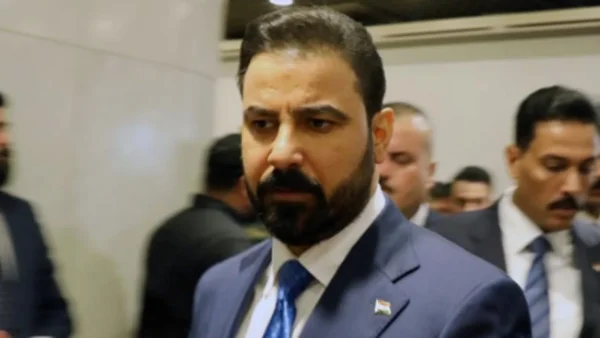
Iraq’s new prime minister Ali al-Zaidi meets US President Donald Trump in Washington on 14 July 2026, seeking investment and political backing while facing US pressure to curb Iranian influence. The trip unfolds amid renewed US-Iran escalation and a hard deadline in Baghdad to disarm Tehran-aligned armed groups.
Economics set the tone in Washington
Zaidi is betting that economic wins will stabilise Iraq and rebalance its foreign ties. He has pitched Iraq as open for business and asked leading American companies to back infrastructure upgrades with measurable impact.
He is expected to sign new agreements, including a fund where Iraq will deposit half-a-million barrels of oil per day in exchange for help to boost the country’s electricity supply.
Oil dominates Iraq’s fiscal base, making up about 90 percent of budget revenues, and much of that crude moves through the disputed Strait of Hormuz. Any regional shock is felt immediately in Baghdad’s accounts.
Cash, credibility, and energy security
Washington has resumed cash shipments for Iraq’s oil revenue handled from the Federal Reserve Bank of New York since 2003, a signal of support tied to Baghdad’s security steps. The payments had been suspended earlier this year as the US pressed for action against pro-Iran armed groups.
Zaidi arrived in Washington on Monday for a week-long visit that includes meetings with US officials and oil company representatives. He has already met US Special Presidential Envoy to Iraq Tom Barrack to review economic progress and deepen the strategic partnership.
A security reset with a deadline
Zaidi says his government is committed to ensuring the state holds the legitimate monopoly on the use of force. Baghdad has ordered armed factions designated by Washington as terrorist organisations to disarm by September 30, the date that coincides with the end of the US-led anti-jihadist coalition’s mission.
Some groups signalled cooperation. Others flatly refuse to lay down arms. Pro-Iran factions have accrued political and financial clout and targeted US facilities in Iraq more than 600 times during the Middle East war.
Iraqi officials argue that a state monopoly over arms is essential to attract long-term investment and lower risk premiums for projects.
War clouds and political optics
Trump has formally informed lawmakers that the country is once again at war with Iran, giving his administration 60 days to use the military in the region without congressional approval. That announcement sharpens the stakes of Zaidi’s outreach in Washington.
At home, a loose alliance of Iran-backed groups, the Islamic Resistance in Iraq, opposes the visit. They vow to strengthen their capacities and warn against replacing military occupation with what they call an economic occupation.
Balancing allies without breaking ties
A senior Iraqi politician said a more US-friendly track, prioritising the economy, does not mean Iraq is turning against Iran. Iraq must maintain the long-standing balance between its allies, he added.
The symbolism is raw. Last week, Iraq’s holy cities hosted a massive funeral procession for Iran’s late supreme leader Ali Khamenei, who was killed in a US-Israeli strike on Tehran.
Zaidi insists Iraq stands apart from regional alignments and conflicts, choosing the path of development. That positioning aims to protect Baghdad from spillovers while keeping both Washington and Tehran engaged.
Power, politics, and the PM’s mandate
Zaidi’s Washington trip is his first international visit since taking office in April. A businessman who rose to power this year with US blessing after Trump vetoed another candidate, he has promised to repair Iraq’s fragile economy and confront armed factions that operate outside state control.
Several oil and gas agreements with US companies have been signed in recent months, and more are expected during this visit as Baghdad tries to lock in energy and grid upgrades.
Here are the flashpoints investors and diplomats will track next:
– Whether groups disarm by September 30
– Continuation of US cash shipments
– Terms of the oil-for-electricity fund
– The future of US troops as the coalition winds down
What comes next
If Zaidi returns with financing and firm timelines, he strengthens his argument that security reform drives growth. Failure would embolden opponents who reject both US troops and deeper economic ties.
A senior politician cautioned that as long as there is a war in the region, some groups will not disarm. That reality may define how much room Iraq truly has to manoeuvre after Washington.