US stock futures edged off as oil spiked and the prospect of a rate move in September was priced in by the market, making for a tense lead up to the session on September 1st. With Middle East unrest stoking worries over energy-led inflation, swaps now imply a 60% chance of a hike, a marked increase from the 34% figure before last week.
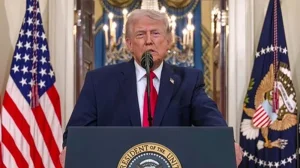
Kevin Warsh lent some edge to the policy debate with his Jackson Hole comments that inflation is too high and interest rates are still the instrument of choice, noting financial conditions are not restrictive. He did not go so far as to back a September hike, but that did not stop the markets from reacting.
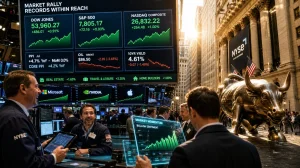
That caution was evident in index futures: S&P 500 and Nasdaq-100 contracts were 0.3% lower and the Dow was off 0.2%. Monday’s cash trade saw the S&P 500 and Nasdaq Composite give up 0.5% apiece and the Dow lose 346 points, or 0.7%. The three benchmarks are nonetheless set to close out August in positive territory.
Oil spike tests Fed path as futures dip
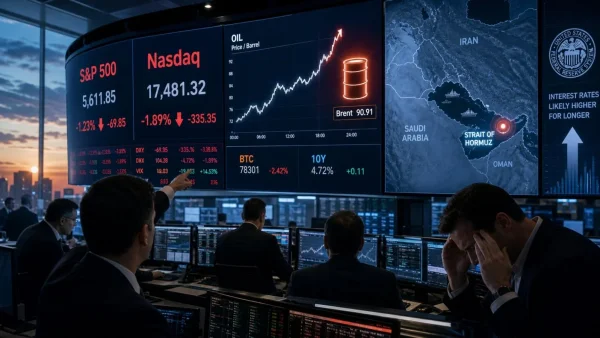
Geopolitical risk has come back to the oil heartland and crude has surged. Brent for November put in a 3.2% gain to $90.91 and West Texas Intermediate for October was up 3.5% at $86.28. It is a complication for the inflation picture at a time when investors are rethinking the Fed’s next step.
The oil market has been whipsawed this month; Brent has covered a range of nearly $17 a barrel in August and is up some 50% year to date. Should those gains hold, one can expect rate expectations to harden heading into the September meeting.
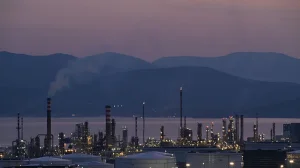
Middle East flashpoint puts supply routes in focus
The most recent upswing came on the heels of the first military exchanges between the US and Iran in a month. According to US Central Command, American forces made strikes on Islamic Revolutionary Guard Corps units after they appeared to be getting ready to put mines in the Strait of Hormuz.
Iran responded with missile and drone fire on US bases in Jordan and the UAE military had to contend with an Iranian drone in its waters. Media in Iran put it that a supertanker was hit by two mines in the strait’s southern route and a bulk carrier taken near Bandar Abbas.
For the global supply chain the Strait of Hormuz is key, with traders putting daily crude flows through the waterway at 6 to 8 million barrels. A sustained risk of disruption would see a security premium written into prices.
Rates, currencies and crypto: the cross-asset read
Outside of equities and oil the signals have been mixed. The US 10-year Treasury yield was steady at 4.72% and the dollar spot index was down 0.1%. The yen gave way to past 160 to the dollar, a point that has in the past fuelled talk of intervention.
Haven assets were no more than steady. Spot gold was flat. In the digital space Bitcoin was down 0.4% to about $78,301 and Ether fell 1.9% to $2,444. European natural gas was higher on the back of spreading energy risk.
There was some contrast in regional growth numbers. India’s GDP put in 7.8% in Q1 FY27, well ahead of the 7.5% call and an acceleration from 6.8% a year ago, a sign of solid investment and domestic demand.
What to watch into September 1st
As the earnings season winds down, macro catalysts will be front and centre this week. The Fed narrative will be driven by what comes out of the US labour and manufacturing sectors:
– Tuesday brings the ISM manufacturing PMI
– 7.33 million is the number for July’s JOLTS openings
– Friday is the day for the US monthly jobs report
– Tomorrow’s global docket has Palo Alto Networks, Medtronic, NIO, GitLab, MongoDB, Swiss Life and Bunzl
An upside in jobs or PMI, tighter conditions or a firmer energy market could make a September move a done deal. Then again, if demand cools there may be room for patience, though the bar is higher with oil feeding price pressures once more.