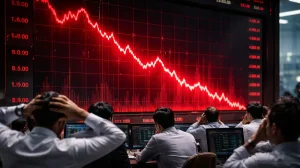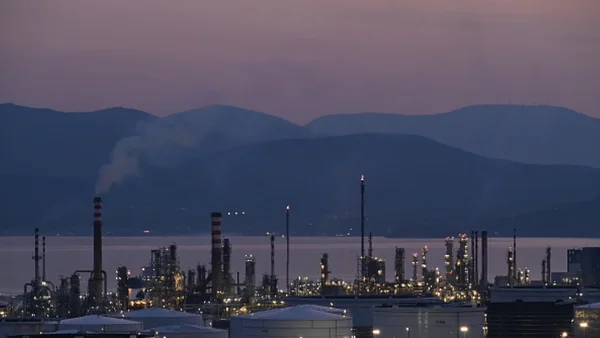
On Monday, oil became more expensive and stock futures decreased as more issues with Iran worried global markets. News that the Strait of Hormuz had closed again caused people to rush into safe investments and pushed up the price of energy. Brent crude oil increased by around 17% to $96.85 a barrel, and S&P 500 futures fell about 0.9%.
Geopolitical whiplash around the Strait of Hormuz
Over the weekend, the markets went up and down because of mixed messages. Iran first said the important shipping route would reopen, causing crude oil prices to fall and stocks to rise. But within hours, indications it was closing again, problems with ships in the area, and tougher statements from people involved, made energy prices go back up and riskier investments go down.
Iran also said no to new peace talks, according to what the state news reported, after U.S. officials talked about people who might be sent as messengers and what conditions would have to be met. Reports of an Iranian cargo ship being taken and warnings of further attacks continued to make traders anxious. These things happening and then stopping, then happening again, have made oil, stocks, and currencies more unstable.
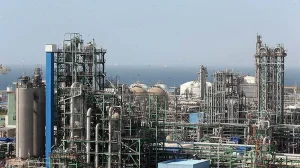
The Strait of Hormuz is a very important route for oil and gas from many countries. Even a short stop in the flow of oil and gas can affect the whole process of getting them to customers, insurance costs, and the price of shipping. Because the ceasefire isn’t going to last long (it will expire in the middle of the week), traders are preparing for more news and quick changes in price.
Flight to safety lifts the dollar, dents euro and yen
Investors favored the U.S. dollar as a safe place for their money, so it became stronger. In early trading in Asia, the dollar index went up about 0.2%, partly making up for the fall it had last week. The euro fell to $1.1735 (by 0.3%) and the yen went down to about 158.95 per dollar. This shows the difference in interest rates between the countries, even with the overall mood of avoiding risk.
These currency movements happened after a week where the dollar got weaker as oil prices went down and people were more hopeful that the situation would calm down. Now that the political situation has changed again, investors have changed their approach. If the problems continue and oil prices continue to rise, countries that import a lot may have trouble with their trade and currencies.
Stocks wobble as earnings meet macro risk
Stock markets went up to new highs on Friday, helped by falling oil prices and good expectations for company reports this week. But now that looks like it went too far. Experts warn that the market might lose a big portion of those gains if the Strait of Hormuz remains closed and peace talks fail.
Bond markets gave some support to the nervousness in the stock market. The return on a standard 10-year Treasury bond fell to its lowest point since mid-March on Friday as investors looked for safety. Expectations for interest rates in Europe also went down late last week, though these expectations could change quickly if higher energy prices cause inflation to increase.
Energy shock reaches consumers and businesses
U.S. oil went up about 6.4% to $87.88 in early trading, and Brent crude got close to $96. Crude oil was near $70 before the conflict, then went above $119 at times, and finished Friday at around $82.59 for U.S. oil and $90.38 for Brent. This new increase shows how easily the supply of oil is affected by problems in the Gulf.
People are paying more for gas. On Sunday, the average price of gas in the U.S. was almost $4.05 a gallon, which is 8 cents less than a week ago, but much higher than the roughly $2.98 it was before the fighting began. Costs for jet fuel and diesel are also hurting airlines, shipping companies, and factories, and the effects are most strongly felt in Asian and European countries that import a lot.
Even if a lasting agreement to reopen the Strait of Hormuz is reached, things won’t go back to normal quickly. A backlog of tankers waiting, ship owners being careful, and damage to the buildings and systems used for shipping could slow down getting oil exports back to where they were before the conflict. This delay could keep energy prices from falling too much and make it harder for central banks to manage economic growth and inflation.
Key scenarios and market watchpoints
Here’s what could happen: if peace talks start again, Brent crude could fall to the low $90s. But if the talks break down, it could go up to $100 or even higher.
The safety of shipping, the cost of insurance, the way ships are escorted (convoy protocols), and reports of incidents in the Strait of Hormuz will cause the market to go up and down in the short term.
What companies say in their reports about how much fuel costs and demand will affect their profits will be important to understand the risks to their income.
If oil stays expensive, people will expect inflation to increase, which will limit how much central banks can lower interest rates.
Energy companies and those that refine oil usually do well when oil prices go up, but airlines, transportation companies, and chemical companies will have difficulties.
Right now, the market is responding to the latest news. Because the ceasefire will soon end and everyone is giving different information, traders are ready for quick changes in the price of oil, currencies, and how willing people are to take risks with stocks. Keeping the Strait of Hormuz stable is the most important factor in determining the direction of the market in the near future.