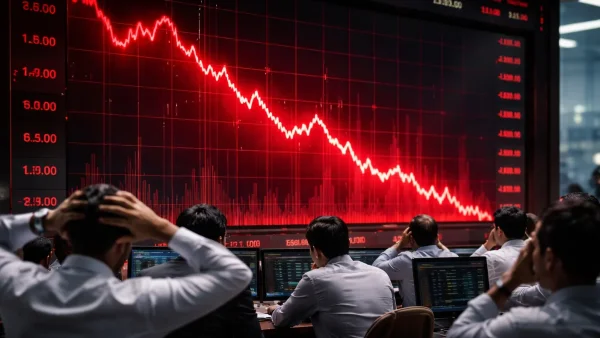
Indian stocks seem likely to start Thursday lower as investors around the world become more averse to risk. The Gift Nifty was down around 213 points at about 23,726 early on, suggesting the Nifty 50 will start below where it closed yesterday, continuing the losses from the day before. The large increase in crude oil prices, new international political issues, and continued selling from foreign investors are all contributing to the negative outlook.
Opening snapshot and market mood
Early signs say Dalal Street (the Indian stock market) will open with investors preferring to avoid risk. The drop in the Gift Nifty suggests the Nifty 50 will open lower than Wednesday’s closing price, and continue the previous day’s downward trend. The market will probably stay volatile all day, and traders will be keeping an eye on oil prices, stocks in other countries, and news from the Middle East.
Global cues: Oil shock, geopolitics, and yields
In Asia, stocks all went down following reports of attacks on ships in the Strait of Hormuz and the waters around Iraq. Japan’s Nikkei fell over 1.5%, and the Hang Seng and Kospi each dropped almost 1%. The overall situation with global stocks is unsteady, mostly because people are worried about inflation being pushed up by energy costs.
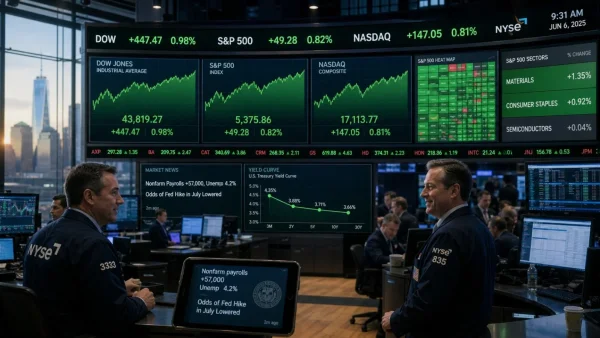
In the U.S. last night, stocks had mixed results. The Dow Jones Industrial Average went down about 0.61%, and the S&P 500 fell 0.08%. The Nasdaq did manage a very small increase of 0.08%. Investors didn’t seem too concerned about the inflation rate being fairly calm and instead were focused on political risks around the world and how they might cause prices to increase again.
The price of crude oil went up significantly after Iraqi officials stated that two fuel oil tankers were damaged by boats carrying explosives. This, along with the larger issue of potential supply problems because of the conflict between the United States, Israel and Iran, caused prices to jump. Brent crude oil futures went up about 7.7% to nearly 99 dollars a barrel, and WTI crude oil went up around 7.5% to almost 94 dollars.
If oil prices continue to rise, it could slow down the growth of the world economy and make it harder for central banks to decide what to do. The U.S. dollar, which is usually seen as a safe place for money, stayed near its highest point of the year, showing that investors are seeking safety and think interest rates might go up. Government bond yields increased around the world as concerns about inflation became more important than the desire for safe investments.
Efforts to lessen the impact of higher oil prices by releasing oil from reserves and through diplomacy haven’t calmed the markets. Traders will continue to watch news about oil supplies and inflation figures in the next few days; how energy prices move will probably be the main factor in how willing people are to take risks.
Technical outlook: Key levels for Nifty and Sensex
In the short term, the technical indicators for Indian stock market indices have gotten worse after they clearly fell below key levels. On a daily chart, the Nifty 50 formed a long dark candlestick and continues to make lower highs, indicating that prices will struggle to go up and that people will tend to sell when prices briefly increase.
For the Nifty 50, the first level where it might find some resistance (and stop going up) is between 24,000 and 24,050. If it gets above 24,000, it could go up to 24,150. Support (a level where it might stop going down) is around 23,750 and 23,700. If it falls firmly below 23,800, it could quickly drop to 23,500, especially if the global situation doesn’t improve.
Indicators of momentum also suggest being careful. The Nifty is below its 10-day exponential moving average, which reinforces the idea that it’s going down in the short term. The RSI is near 30, which means it’s almost oversold. This can cause small increases, but whether those increases continue depends on oil prices becoming stable and the global risks decreasing.
Regarding the Sensex, resistance (where it might stop going up) is between 77,500 and 78,000. On the downside, the first support level is near 76,300, and further down are 76,000 and 75,800 if selling gets more intense. The price is likely to go up and down quickly around these levels, so managing risk carefully is very important. Banking stocks are still the main focus of what’s happening in the market because how much banks have to pay for funds, bond yields, and what people expect from the credit cycle are all changing with risks around the world. Nifty Bank recently went below 56,000 and showed a large “bearish” pattern (meaning prices went down), indicating a new wave of selling and that earlier price increases aren’t continuing.
Nifty Bank: Levels and setup to watch
Right now, prices will probably have trouble going up past 56,100 to 56,200, as sellers might become active again. Support (a price level where buying is expected) is at 55,400 to 55,300. If the price falls firmly below that area, then 54,900 and then 54,500 could be reached. If it goes under 55,200, there’s a higher chance we’ll see the price move towards 54,300 to 54,000 in the next few trading days, if the market remains unstable.
Flows, breadth, and near-term volatility
Expect the market to go up and down a lot as news events from around the world happen. High oil prices and increasing bond yields will likely put pressure on areas of the market that are sensitive to interest rates, including banks and non-banking financial companies, and will also create more difference in how well different stocks within the overall market are doing.
Foreign portfolio investors (those who invest in India from other countries) have continued to sell. Initial figures show they sold approximately 6,267 crore rupees worth of stocks on Wednesday, because they are worried about global economic risks and the dollar becoming stronger. Domestic institutions (investors within India) bought about 4,966 crore rupees worth, which softened the fall in price but didn’t change the overall downward trend.
So far this month, foreign portfolio investors have been big sellers of stocks, while domestic institutions have consistently bought. This back and forth has caused prices to swing during the day, less certainty, and less widespread buying when prices go up. The number of stocks going up versus going down can get worse quickly with bad world news, but can improve just as quickly if there’s a temporary recovery.
With oil prices going up and the dollar remaining strong, the likelihood of a volatile market continues. Rising bond yields make things even more difficult for investments considered risky, especially for areas of the economy that depend on spending within India or a lot of debt. Until oil prices become more stable, investors may choose safer, high-quality investments over those that are more likely to rise and fall with the market.
Trading playbook: Risk control, sector watch, and scenarios
Considering the overall economic situation and the way prices are behaving, it’s still wise to be careful. Don’t put too much money into any one investment, have “stop losses” (orders to sell if the price falls to a certain point) set at a tight level, and focus on stocks that are easy to buy and sell. During the day, traders could sell when the price goes up near the resistance levels and buy back when the price falls near the support levels, and keep an eye on oil news for any sudden changes in the market mood.
Here are some price levels to watch today:
Nifty 150: Resistance from 24,000 to 24,050; support from 23,750 to 23,700; if it goes below 23,800, the risk of falling to 23,500 increases.
Sensex: Resistance from 77,500 to 78,000; support at 76,300; further support from 76,000 to 75,800.
Nifty Bank: Resistance from 56,100 to 56,200; support from 55,400 to 55,300; if it goes below 55,200, the risk is 54,300 to 54,000.
Looking at different parts of the market, investments related to energy are likely to be unstable. Companies that produce oil will likely benefit from higher prices, but companies that use oil (airlines, paint manufacturers, and some chemical companies) might have their profits squeezed if oil stays expensive. Banks are impacted by bond yields and how confident investors are; during a downturn, it’s better to choose banks with strong finances and a good reputation.
More stable investments like certain fast-moving consumer goods companies, healthcare, and utility companies can help to offset losses if selling continues. Information Technology might move with global investor confidence and the strength of the dollar; the stronger IT companies could offer some stability if prices fall sharply. Metal prices are tied to economic data from China and the dollar, and expensive energy is a factor that can change things.
If oil prices go down, bond yields become calmer, and the dollar doesn’t get any stronger, the market could see a recovery to 24,000 to 24,150 for Nifty 50 and 56,100 to 56,200 for Nifty Bank. However, if things get worse or oil prices jump again, we might see Nifty 50 tested at 23,500 and Nifty Bank at 54,900 to 54,500.
In short, the market is likely to open cautiously today, because Gift Nifty is showing weakness and there’s increasing risk of inflation because of oil prices. Pay attention to the important price levels for Nifty, Sensex, and Nifty Bank, manage your risk carefully, and wait for the price to show* that a downward trend is ending or that a price increase is actually happening. In a market that is so affected by news, sticking to a plan is your biggest advantage.