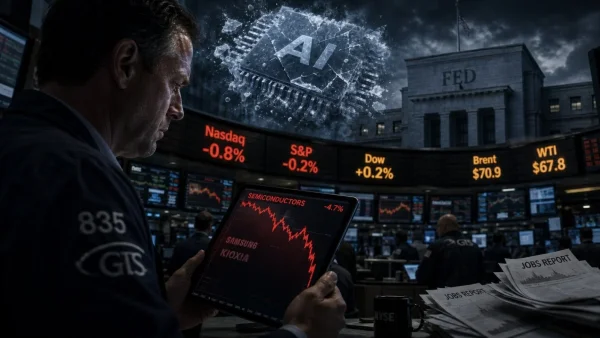
It’s a moment to catch one’s breath. As the AI fervor cools, investors are getting ready for some new US employment data with the potential to change the way we think about the Fed. Futures were all over the place, tech was unsteady, and oil made its way to multi-month lows, putting a fine point on where we stand on policy and positioning.
AI trade hits turbulence
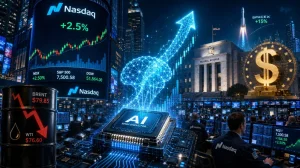
You could see the strain in the growth-stock futures. The Nasdaq 100 was 0.8% in the red, the S&P 500 gave up 0.2%, and the Dow Jones inched 0.2% higher as some made a move to get out of the pricier chip names and into something more defensible.
This was no surprise after a lacklustre close on the Street. The S&P 500 and the Nasdaq both put in losses of 0.2% and 0.7% respectively. The Dow even had a record high for a time, up 423.46 points, before the semiconductor sell-off put an end to it and the index closed a bit lower.
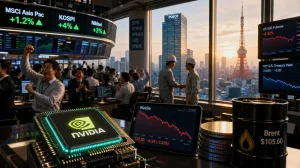
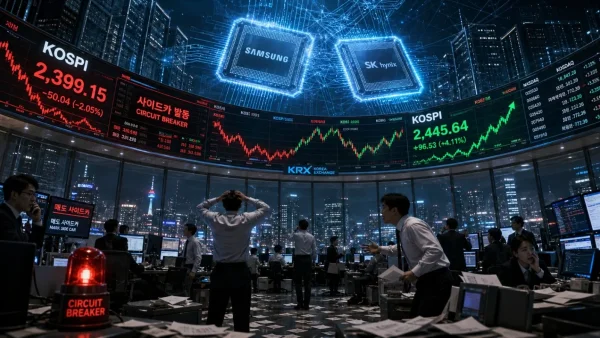
Things got uglier in some of our neighbours’ markets. In Seoul, you had SK Hynix and Samsung each down by more than 8%. Then there was Kioxia in Japan, which took a 14% nosedive. After a year that saw it climb 650%, it’s a case study in how fast the AI high can wear off and be replaced by cold hard valuation math.
Policy signals and the jobs test
Some of the calm came from what officials have been saying rather than any earnings reports. Speaking at the ECB’s forum in Sintra, Fed Chair Kevin Warsh put it this way: the inflation risks are in better balance and the hawks have quieted a bit. He made it clear the Fed is still on about price stability, which does a number on the talk of a July rate hike.
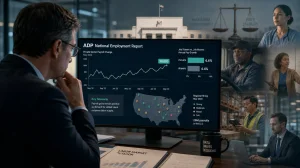
So when the nonfarm payrolls come out Thursday, everyone will be looking. We’re talking 115,000 jobs for June and 4.3% unemployment, if the economists are right. Warsh made a point of telling us to let the data do the talking, not the central bank, so this report is going to be felt.
‘If the numbers are strong, it’s more proof the US economy can take it. A weak showing, though, might ease the pressure for more tightening and give some of these hard-pressed growth stocks a reprieve,’ is the word from Vested Finance.
What the desk is keeping an eye on today:
– 0.8% drop in Nasdaq 100 futures
– S&P 500 futures off 0.2%
– A 0.2% gain for the Dow
– More than 8% off for SK Hynix and Samsung
– 14% fall for Kioxia in the wake of its 650% run
– Brent under $71
– WTI under $68
– Crude flow over 10m bpd
– 40% drop in the Q2 2026 Brent
Oil sinks as supply risks ebb
Then you have the energy side of things, which has put in a macro curveball of its own.
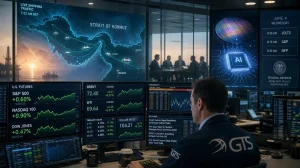
With the Strait of Hormuz seeing a steady return to normal, the supply risk that once hung over the market has all but evaporated. That’s one reason you see crude down to a four-month low. Brent has given up ground to under $71, not this weak since before the Iran conflict in late February, and WTI is no better off, having dropped under $68.
The numbers are telling a bearish story. You have major producers in the Middle East ratcheting up output and, with the US naval blockade gone, Iranian exports have made a comeback. A US put it at 10 million barrels a day moving through the waterway. Then there’s Saudi Arabia, which has been uncharacteristically open about offloading millions of barrels to its Asian clients as it gets back to shipping from the Gulf, per Bloomberg. It was enough to make for a rough second quarter for 2026; Brent futures are 40% in the hole, the kind of performance we haven’t seen since the 2020 crash.
Market positioning: from exuberance to discipline
It’s been a big change of tune. For the first half of 2026, it was all about piling into chip and memory names, some of which put up 300% returns. Now the market is taking stock of where valuations are and whether AI can keep up the demand. We’re seeing less of a chase for momentum and more of an eye on the earnings.
The slide in Asia’s chip sector is a case in point. The trade was too crowded, and when you have those kinds of gains, profit-taking can turn into de-risking in a hurry, especially with something like a key US jobs report on the horizon. These days, you can’t separate the rate talk from the AI story.
Tech sentiment and policy intersections
What’s in the news still has a way of moving the needle. The Financial Times has OpenAI in the headlines for a possible 5% stake to the US government as they try to get in good with policymakers.
On the energy side, some of the risk premium has bled out. President Trump says he’s seeing some good will in the talks with Iran, which only adds to the sense of calm in the Strait and the latest drop in oil.
What to watch next
The jobs number is going to be the guide for the rest of the month, for rates and for the likes of growth and cyclical stocks. Warsh has already put a damper on any idea of a July hike, but one piece of data can move the curve in a flash.
You have three things at play: a rethinking of what AI is worth, a Fed that is let-the-data-speak, and cheaper oil. If growth eases, you’ll see some rotation. If rates don’t budge, the defensive side of the book will do well.
For now, here are the tell-tale signs:
– Payrolls against 115,000
– Unemployment straying from 4.3%
– How the semis look after the first hour of US trading
– Whether Brent can hold the line at $71
In the end, the AI trade has some air out of it. Where it goes from here comes down to the labour report. A soft number and the growth stocks can catch their breath. A hard one and you can bet the higher-for-longer narrative will be back in vogue, with the crowded positions feeling the pain.