Futures inched up on Monday while the market made sense of U.S.-Iran dialogue in the face of a security environment in the Strait of Hormuz that is anything but solid. You had oil sitting above its mark, and traders getting ready for a short, data-packed week to see if it changes the Fed conversation.
The way things have been going, Wall Street is open to some risk if the shipping lanes calm down and you don’t have to worry about an escalation. But when your top AI names are whipsawing and rate talk is hardening, you’re being more of a tactician than a bull.
Geopolitics resets risk appetite
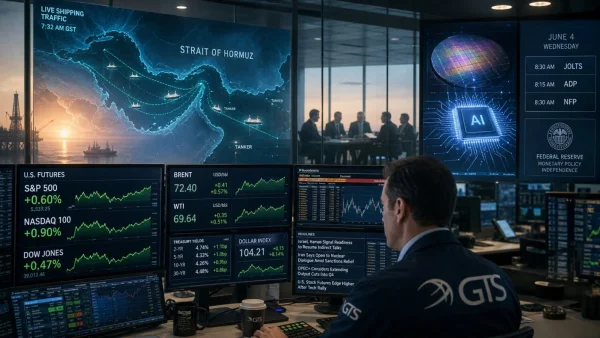
It has been a case of tit-for-tat for a few days, but Washington and Tehran have put a stop to it for the moment and are talking again. A U.S. official put it plainly: vessels can make their way through, even if we aren’t seeing normal volumes yet.
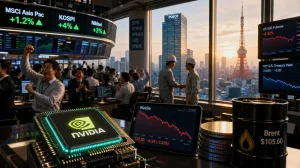
There is still some supply-side jitters, and you can see it in the price of oil. In early European trading, Brent for August was 0.6% higher at $72.40, and WTI for September put in a 1% gain to $69.64.
Then again, the selloff from last week is a reminder of how fast a risk premium can disappear. Brent gave up 10.6 per cent for a third week running once it became clear shipments through the strait were at their most since the trouble with Iran and Israel in February.
You only have to look at what happened Thursday with the hit on a Qatar-affiliated tanker to see why people are on top of every story. The U.S. and Iran both made their moves in what was the heaviest spillover since the truce. That is the kind of thing that makes you pay attention.
Futures and the opening playbook
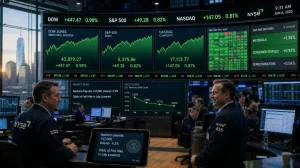
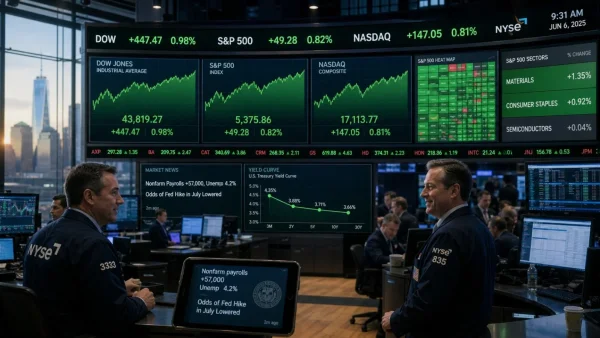
As the mood has lightened, so have the futures. S&P 500 contracts were 0.6% in the plus column in Europe, the Dow 0.3%, and the Nasdaq 0.9% on the back of some good tech action.
They were a little more reserved before that. We saw the S&P 500 up 0.46 per cent, the Dow 0.31, and the Nasdaq 0.29 as they read the room on the war front.
For 2026, the S&P 500 is already up over 7 per cent, no small feat after a June like that. If the geopolitical side of things keeps mellowing, the S&P and Nasdaq could be done with their five-day skid.
Shortened week, data-heavy calendar
We won’t be in the markets Friday for the holiday, so the macro stuff comes at you in a hurry. Tuesday brings the job openings and turnover figures, and Wednesday is for ADP and Challenger.
Thursday is when you get the nonfarm payrolls and the weekly claims. The Fed has been in the news this month and there is talk of a hike; a strong number could have everyone piling on for more tightening.
AI trade faces a reality check
If you want to know where the heat is, look at the semis. The Philadelphia SE index is 85 per cent off its low in late March, and that kind of run has to be put to the test eventually.
Micron put in some big numbers on Wednesday and propped up the sector, but the Nasdaq Composite still took a 4 per cent hit for the week. There’s a measured kind of optimism in the air as investors weigh in on what AI can put in their pocket.
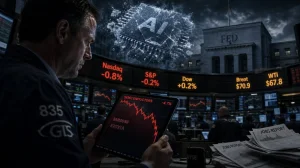
You could see it in premarket: any stock with ties to AI infrastructure was in the green, Nvidia not an exception at 1.2%. It’s a nice lift for a would-be tech rally, but don’t be fooled – we’re still one earnings miss or a move in bonds away from second-guessing.
Rates, dollar and commodities
In Asia, Treasury yields ticked up, with the front end in the lead. The message is that the market is still pricing in a Fed with its foot on the gas. The two-year yield is at 4.103% (up 1.6 bps) and the 10-year has inched to 4.377%.
Not so last week. We had a softer close when short-dated yields and oil both came down. On Friday, the 10-year U.S. note gave back 2.15 basis points to 4.371%, as if to say the inflation jolt is wearing off.
The dollar took a step back with the jobs report on the horizon; the DXY is at 101.278, down 0.1% from 101.800 on Wednesday. Bitcoin is up 0.7% to $60,006, having put some distance between itself and the 21-month low of $58,075 we saw last Thursday.
Gold, on the other hand, has ceded some ground. With risk off and the talk of energy-driven inflation quieting, New York futures are 0.4% lower at $4,078.30. Eurozone bonds are no stronger, the 10-year Bund yield at 2.859%.
Global crosscurrents
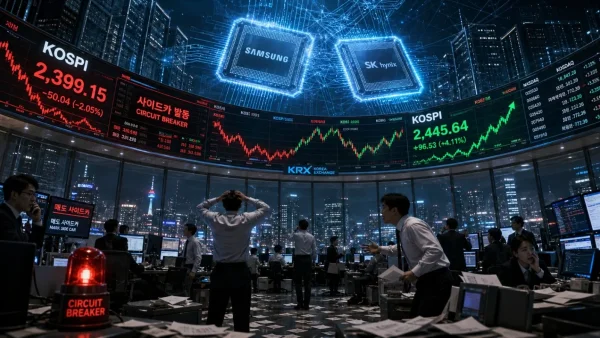
It was a mixed bag in Asia, with all eyes on the chip makers. South Korea’s Kospi wound up 0.2% in the red after a choppy day. SK Hynix was down 1.7% and Samsung 4.8%, despite touting a $1.3 trillion plan.
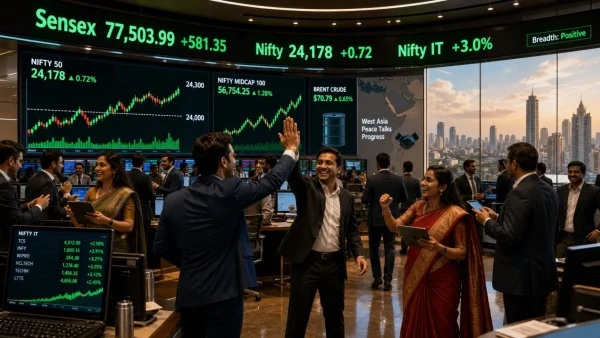
Elsewhere, the Nikkei in Japan was 0.15% higher, Hong Kong’s Hang Seng 1.95% and China’s Shanghai 1.2%. You get the sense of some risk-on, but only in the places where you won’t be tripped up by near-term wobbles in the chip space.
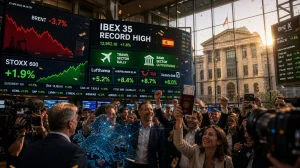
Europe was underwhelming at the open and divided. The Stoxx 600 didn’t go anywhere as the gains in semis were offset by banks and autos. Germany’s DAX put in 0.2% on the strength of SAP, while France’s CAC 40 was 0.2% in the hole.
Over in the UK, the FTSE 100 was even, with software doing the heavy lifting. ASML was 0.5% better, which was enough to nudge the AEX in Amsterdam. Spain’s IBEX 35 was 0.3% off after some unkind inflation numbers, and Italy’s MIB was 0.1% up.
What’s on the docket
For the moment, it’s about geopolitics, the labour market and who’s leading the charge. Now that peace talks are back on and shipping is supposed to be normal, it comes down to whether the numbers from the Fed and the companies line up.
Here’s what we have our eye on for Monday and the rest of the week:
– Iran-U.S. dialogue and things in the Hormuz
– Brent staying over $72
– JOLTS, ADP and NFP to tell us what the Fed will do
– Any more drama with AI chips
– The Friday holiday, which has a way of thinning out the room
The hard part is positioning. If you want a real recovery, you need oil to sit still, the dollar to hold and for tech to show some life outside the usual AI suspects.
Then there’s the matter of the bulls. They’ll be looking for a jobs report that cools things down without making it seem like growth is in trouble. If Thursday’s data is right in that sweet spot, the fear of rates might subside and we could see some appetite for risk.
Futures are saying they’re hopeful, but with good reason to be. What happens next is up to the headlines out of the Gulf and the tone of the employment numbers. That will be how Wall Street makes its case for the first week of July.