You have a firm line from the US to Tehran running up against some new cross-border hostilities, and it’s left both the markets and regional security in a nervous state. When US aircraft made their mark on Iranian positions and Iran put some heat on the countries where we have troops, President Donald Trump was blunt: he said Iran had dilly-dallied too long over negotiations and would be ‘paying for it’.
Energy and security ripple effects
Brent crude, for all intents and purposes the world’s benchmark, was trading at over $91 a barrel on Wednesday – a 25% jump since this war of words turned physical. The numbers are there because of the risk you run shipping through the Strait of Hormuz, which Iran has let on it can shut down if it wants to.
Ever since the 28th of February and the strikes on Iran, you can feel the jolt in the global economy. We’re seeing higher energy bills and pricier food, all while the push for a ceasefire is being worn down by one side or the other lashing out.
Trump’s escalatory messaging
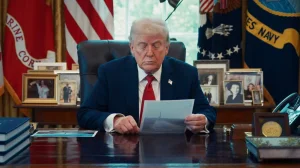
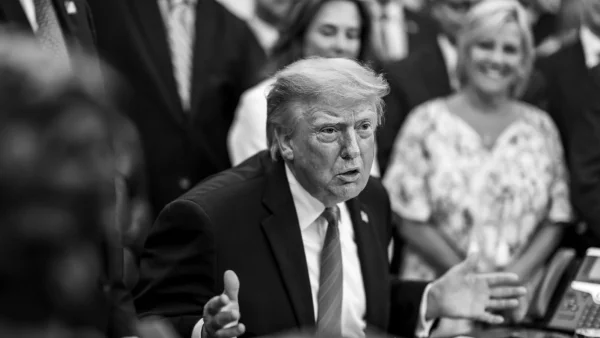
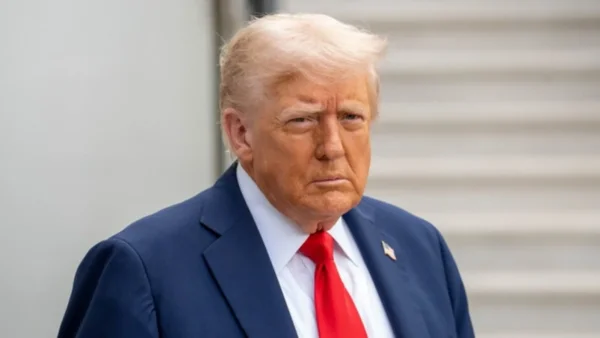
In his own words, Trump put it on the table: Iran ‘took too long to negotiate a deal that would have been great for them, now they will have to pay the price’. He didn’t hold back, calling the country ‘the Bully of the Middle East’ and its military ‘a complete and total mess’.
He went on to say we are getting ready for more hits on their power plants and bridges. A US naval blockade is a ‘STEEL WALL’, he insisted, and that Iran is doing ‘ZERO’ in the way of oil business and is ‘quickly becoming a FAILED NATION’. You won’t find an independent source to back those up, however.
What the militaries did
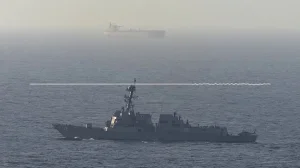
According to US Central Command, our forces carried out some strikes on June 9th. They were in response to what was reported as the loss of an Army AH-64 Apache off the coast of Oman the day before. CENTCOM says they used precision munitions close to the Strait of Hormuz for these latest moves.
‘We targeted air defence, ground control and radar,’ is how the military put it. ‘It was a proportional answer to what has been done to U.S. forces and commercial vessels in the area,’ CENTCOM said.
Iran has put on the record that it was hit around Bandar Abbas and Qeshm Island, but they haven’t put a number on the damage. Foreign Minister Abbas Araghchi decried the US move as a breach of their sovereignty and made a point of their right to defend themselves, in kind.
Regional retaliation and air defenses
Then came word from Tehran of some activity in Kuwait, Bahrain and Jordan. In Jordan, they put down five missiles that, according to Iran, were for the Muwaffaq Salti Air Base where the F-35s are. No one was hurt, and they have experts looking at the pieces.
Bahrain and Kuwait say they made short work of the incoming fire. It’s the second time in a week we’ve seen this kind of tit-for-tat put the ceasefire to the test, after Iran and Israel had their moment on Monday.
Ceasefire strain and political calculus
There is talk of headway, but Trump has been in a mood to be as much of a realist as an optimist, warning of a full-scale war if things don’t change. For its part, Iran has put up with a lot of bombing, in the hope that holding the cards on the Strait of Hormuz gives them some clout.
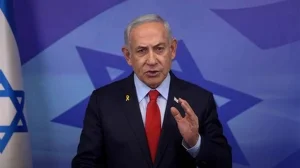
On the other side of the equation, you have Prime Minister Benjamin Netanyahu with some big plans: to see the end of the theocracy in Iran, its nuclear ambitions, and Hezbollah in Lebanon. That doesn’t leave much room for a middle ground.
What to watch next
If you read the room, it’s going to be a rough few days with the kind of hard talk and counter-strikes you’d expect. We’ll see if the pressure of the military arm is what puts a deal over the line or blows it up.
Here is what to keep an eye on:
– More US strikes on infrastructure
– Iran hitting back at bases in the area
– Any trouble near the Strait of Hormuz
– Brent moving past $91
– How the air defences and civilians are faring
– If the ceasefire can hold up
Time will tell if the posturing leads to some give-and-take or just more of the same. For those in the market, on the water, or living in the region, the bill is coming due.