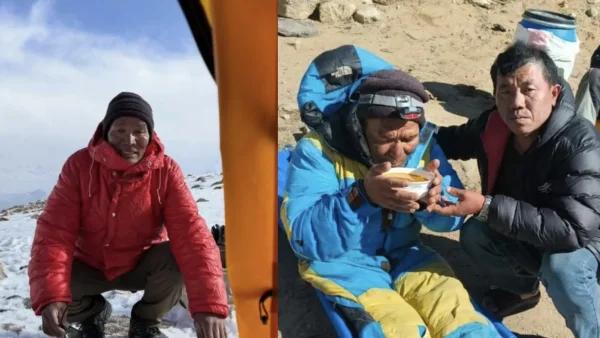
For a guide as well-put-together as Dawa, who has been put in trust by climbers for years, being out there for close to a week was a shock. Word of his survival has been a relief to base camp and up and down the mountain, but it has also made some hard questions come to the fore: on safety, on how we respond, and on what we put our guides through.
Those who put him in the chopper say they came across him near the Khumbu Icefall, not far from base camp. Before that, he was thought to be in the Crampon Point area, putting in a hard fight to get down with nothing but thin air, frostbite and a good measure of dehydration to contend with.
What happened on Everest
If you believe the reports, Dawa and a Pole he was with made for the top on May 28 in the middle of the spring run. They were last in the Yellow Band, over Camp III. The client made it back. Dawa didn’t. We put some helis up and for a while, they couldn’t find a thing.
Then the season started to wind down and we were taking the route apart, and you could feel the tension. Come Thursday, a crew from the Sagarmatha Pollution Control Committee was on the job when they saw him making his way down the icefall, says Pemba of 8K Expeditions. They got him to where he was safe, put some water in him, and had him in the air.
Who is Dawa Sherpa
Most of you will know him as 'Hillary Dawa‘. Hailing from Okhaldhunga, he is one of the more seasoned high-altitude types in Nepal. He has shepherded people through the rough parts of Everest for as long as I can remember and has a name for his mettle when things get tough.
He is with Himalayan Traverse in Kathmandu and was with this Polish climber for the push. You don’t have to look far in the community to see the respect he is given for the way he has our backs on a peak like this.
Why this survival matters
To make it for days in the death zone, with no oxygen and the cold right in your face, is not something you do without some means. Some in the business are calling this one of the most unputdownable Everest stories we have had in a while.
It has put the spotlight back on how we handle a rescue and the lot of the Sherpas, who take on the lion’s share of the risk. They are the ones fixing the ropes, moving the gear, and showing clients the way through the tight spots. No Dawa, and you don’t have an expedition.
A season under pressure
We have had over 1,000 on the summit this May – the most ever. And we were behind the eightball to start with; a slab of ice above camp took two weeks to get out of the way, so everyone was on a tighter schedule than usual.
Dawa and his man were some of the stragglers as we were packing up. Rescuers will tell you there was a lag in getting a team together and an earlier flyover turned up nothing.
Key takeaways for climbers and readers
This one should make a few things plain for those of us on or around Everest:
– You can be experienced, but the mountain doesn’t care
– Put Sherpa safety first
– A quick, well-run search is what you need
– Have some regard for the local call
Everest is 8,849-metres (29,032-feet) up. Hillary and Tenzing Norgay were the first to put in on it in ’53. Dawa has put in his own kind of story on these same slopes. It is a testament to what you can stand, and a reminder of how unforgiving it is.
While he is in the hospital, you can see the tributes coming in from all over. What we want to see is that the feeling of today leads to some firmer ground when it comes to the men and women of the Sherpa workforce who make it all happen.