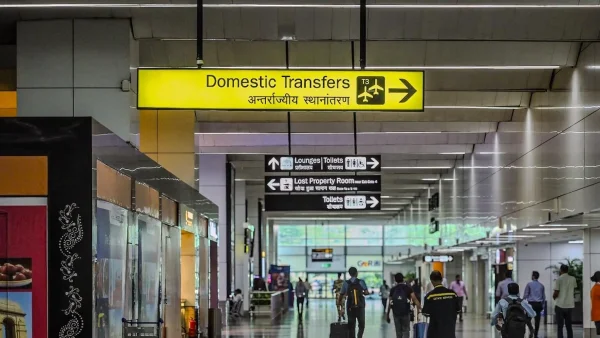
Over-100 flights delayed at Delhi’s Indira Gandhi International Airport (IGIA) due to some technical glitch in the Air Traffic Control (ATC) system. The airport operator confirmed the problem, severely disrupting flight operations. Leading carriers also issued travel advisories to inform passengers affected by the situation.
There was acknowledgment of an issue by the AAI, pointing to a technical problem with the Automatic Message Switching System (AMSS) that supports ATC data. Controllers had to process flight plans manually, causing the delays. Technical teams were immediately dispatched to fix the system failure and restore normalcy at the earliest.
The advisory issued by the airport was just before the onset of the rush-hour departures, informing passengers about a technical snag in the ATC system. The airport gave assurance that active cooperation with all stakeholders, including DIAL, would be undertaken to tackle the issue on an immediate basis. Passengers were asked to keep in touch with their airlines regarding updates on their flights.
The breakdown of the AMSS, which delivers altimetry data to the Auto Track System (ATS) for preparing flight plans, forced the controllers to prepare flight plans manually. The manual flight plan preparation is extremely tiring and delays operations to the extent that the backlog causes an almost 50 to 55-minute average delays in many departures.
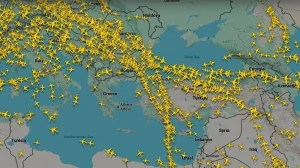
Flight tracking data showed 513 flights being delayed on Thursday alone; since the morning, another 171 have been delayed. Airlines, such as IndiGo, Air India, and SpiceJet, reported operational disruptions at Delhi and parts of northern India. The Indira Gandhi International Airport (IGIA), with more than 1,500 flight movements daily, suffered disruptions owing to the delay of over 100 flights.
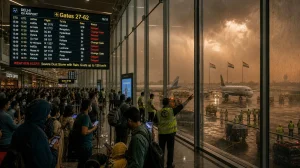
All the delays only added to the confusion felt by the passengers at the airport. Congestion at boarding gates escalated fast as flights were being held back, and arrivals started to pile up. Airlines advised passengers to keep their patience and monitor their flight status during this period.
The incident marks another in the series of operational challenges faced at IGIA-ATC: An investigation into a near-miss incident in 2023 identified heavy workload on the ATCOs as a contributory factor. Repeated system malfunctions accentuate the need for high aviation infrastructure that is resilient to service interruptions as the air traffic volumes increase and the competitiveness of the major airports stiffens.
Stakeholders are reassessing redundancy measures, recovery mechanisms, and stakeholder coordination between the airport operator, ATC service provider, and the airlines to avoid such widespread disruptions in the future. Attempts are being made to simultaneously resolve the technical glitch at the earliest while the airlines tweak schedulers and reroute aircraft in order to reduce the inconvenience to passengers.