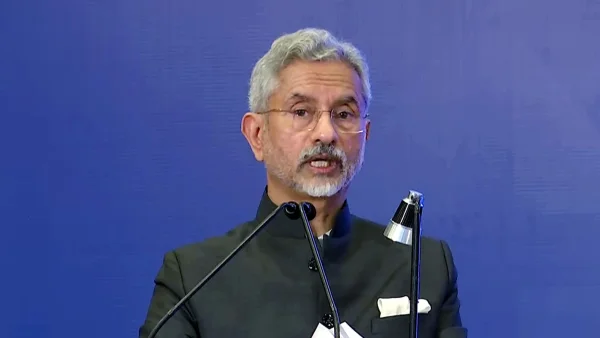
At the Raisina Dialogue, Jaishankar said that India’s growth ‘cannot be stopped’ and that India itself will decide how fast it grows and what shape that growth takes. He said this after a US person in government suggested that the US would not let India become an economic competitor in the same way as China.
India’s message about growth which it controls itself
Jaishankar presented India getting better as coming from the strengths of the country and long-lasting basics. He said the growth of countries is decided by the countries themselves, putting stress on the ability of a country to act and take responsibility.
He made clear that what India does will be decided by its organisations, people, and policy choices, not by mistakes from other places, or by second-guessing. The minister did not name any country while making this point.
This way of thinking shows a constant theme in diplomacy: independence in economic and foreign policy. India is showing it will do what it needs to do to get its development aims done, while managing work with other countries on its own terms.
What started this: the US official’s comment about economic competition
The comment that caused the reply came from US Deputy Secretary of State Christopher Landau, who said that the United States would not do the same things with the economy as it did in the past which allowed China to grow into a competitor. Landau showed US policy as putting the interests of people in the US first when deciding how to be involved in the economy.
He said Washington would aim for fairness for its people and avoid what he described as earlier mistakes of allowing the economy to be free. His comments referred to a larger discussion about balancing competition and working together in world trade and technology.
Jaishankar’s reply did not directly name Landau but made clear that India will not let what others say decide how it grows. The exchange shows that more and more attention is being given to how large powers make economic work with others in the 21st century.
What this means for the relationship between India and the US
The exchange shows both that India and the US agree on things and have tension in their relationship. Both capitals want more trade and to work together in strategy, but different priorities on being competitive and industrial policy can cause problems.
India wants more access to markets and to work together on technology but is against any way of seeing things that treats its growth as a tool for world politics. This position could make talks harder where the economic interests of a country clash with larger strategic aims.
People who are diplomats and make policy will likely focus on what really happens: investment, making supply chains stronger, and moving technology. Managing what each side expects will be important to keep a practical partnership going.
India at the centre of the discussion about the Indian Ocean
At the same meeting, Jaishankar also showed how important India is, both geographically and in the economy, in the area of the Indian Ocean. He said that the ocean is specially named after one country because India is at the centre of it, meaning India has a duty to lead development in the area.
He said that working together in the Indian Ocean must be backed by resources, being committed, and projects which can be done. India sees its growth as a good thing for the area which can make chances for countries near it.
The minister suggested that countries working with India would share in the good things from its economic growth. This way of acting links growth within the country to diplomacy in the area and working together on buildings and services.
What this means for economy and strategy
In terms of strategy, Jaishankar’s comments make clear again that India likes to be involved in a way which is carefully decided. New Delhi wants to make ties bigger without giving up control over important policy tools or seeming to take on a model completely.
In terms of economy, the message gives comfort to people in the country that policy for growth will put the strengths of the country first. It shows that India will look for technology, investment, and access to markets while keeping control of rules and development.
For countries working with India internationally, the exchange is a reminder to balance what is real in politics with respect for India’s ability to act. Future talks will depend on making value for people in India while agreeing with larger strategic aims.