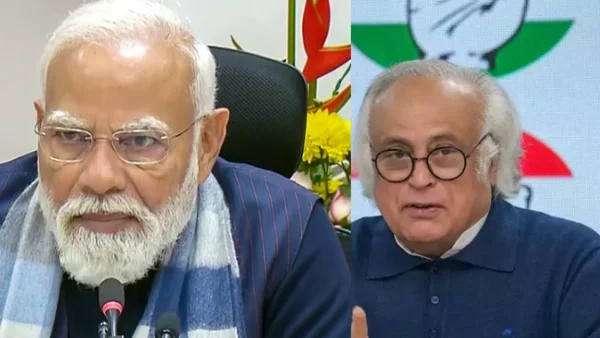
On Monday, Congress levelled the charge at Prime Minister Narendra Modi that he is too devoted to Israel and called for a change of direction in how we handle West Asia. They are making this call with a view to the US-Iran accord that may come to pass on June 19th, and they say a fairer foreign policy is what is needed to look after India’s interests, be it in energy or the value of the rupee.
A push for course correction
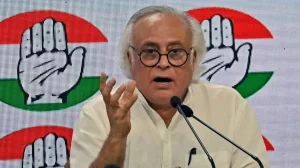
For Jairam Ramesh, the general secretary of the party, this is an inflection point. He sees a US-Iran move to put an end to hostilities as an opening for India to step in with some balance. “Even an interim understanding is something to be hopeful of,” he said, as long as everyone, Israel included, is on board with it. Ramesh has no quarrel with word that Washington and Tehran will put pen to paper in Geneva on the 19th; in fact, he would like to see it lead to something more lasting. But he is firm that the national interest is better served by the kind of equilibrium the government has not been showing.
Talks and timelines
It was Pakistan’s Shehbaz Sharif who made the announcement: a peace deal is done between the US and Iran, and there is a formal ceremony in Switzerland on June 19th to mark it. According to him, both have put an end to military action, right across the board in places like Lebanon. He also gave credit to Qatar for their part in the talks.
Economic stakes for India
Congress is drawing a straight line from the upheaval abroad to risk here at home. Ramesh concedes that if the Strait of Hormuz is left unimpeded, it will be a relief for India. But he cautions that you don’t just put aside structural issues in a day.
He puts it down to problems that were there before the war in West Asia – which, in his telling, got under way only two days after the PM was in Israel. The rupee has been hard-pressed for a year or more, and the chasm between the supply and demand for dollars is only getting wider. Then there is the matter of private investment, the lifeblood of GDP, which has been anemic for years. Ramesh ties that back to a lack of demand, and in turn to the fact that real wages have been flat for a decade. On top of that, you have an atmosphere where tax and investigative agencies have been given free rein, and it does not make for good investing.
Trade and MSME worries
Ramesh is also on the record about the government’s inaction on the flood of imports from China. That has put us in the red in terms of the trade deficit and put the livelihoods of job-creating MSMEs in jeopardy. In the party’s view, you can’t expect any let-up from outside to fix what is wrong inside. So to be clear on where we stand, here is what Congress is flagging up: – We need to keep the energy routes in the Strait of Hormuz open – There has to be a revival in private investment and in what people actually take home in wages – Put a stop to the trade imbalances with China that are hard on MSMEs – Make sure there is some predictability when it comes to tax and enforcement
Regional balance and rising challenges
The party is sounding the alarm on a tougher strategic reality for India. Take Pakistan: after being put in its place following the 2008 Mumbai attacks, it is now in a position of some influence, regionally and beyond. You have to be measured in your diplomacy in such an environment. And with China so well ensconced in Pakistan’s strategy, as Ramesh puts it, it is a test for our foreign policy. It becomes all the more so if New Delhi is seen as having made up its mind in favour of one side in West Asia.
The Israel question and India’s stance
What you have at the heart of the Congress case is the government’s no-questions-asked backing of Israel. Ramesh is not going to hold his breath for Modi to have a change of heart, but he is saying that we have to be more balanced for the sake of our own interests and for the sake of humanity.
Even with a signing on the 19th and a lull in the fighting, he says we have to be about our business in a way that looks after our economy and our neighbours. A ceasefire has to be one that sticks, and all sides have to be held to their word.
What to watch next
All eyes are on the 19th for the signing. Should the deal be for real and the Hormuz stays open, we might see some calm in shipping costs and fuel, and that would do some good for the import bill.
But Congress is quick to add that the government should not think an external truce means the internal work is done. They want to see policies that put money in workers’ pockets, give investors some certainty and protect our small businesses, while we get our house in order with West Asia.