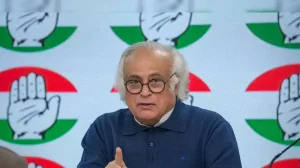
It is the second anniversary of the current dispensation and the Congress has come out with a 75-page ‘promise versus reality’ paper to turn the national discourse away from empty rhetoric. It is their way of holding the government to account on the ground – in terms of growth, prices, jobs and democratic health.
This is what the Congress wants you to take from the document:
– All the talk of growth, but jobs are hard to come by
– The number of free LPG cylinders has been cut from 12 to 9 and now 4
– Since 2014, you can see the rise in the price of everyday items
– MSMEs are still feeling the after-effects of demonetisation
– We have slipped in the gender gap rankings
Congress makes it about the household, not the headlines
Rajeev Gowda and Amitabh Dubey of the Congress say that for all the fanfare, the cost of living hasn’t gone down. Ujjwala is where they have made their case most forcefully. Gowda claims that in spite of what was put on the table, LPG aid has been whittled away: 12 cylinders last year were made into 9, and you are left with 4 today.
Then there is the matter of price hikes. Dubey puts it at 123 per cent for LPG since 2014. Petrol is up 44 per cent, diesel 73. You don’t even get a break on the essentials; milk has seen a 71% jump and pulses 84 per cent.
The party is making this out to be a policy U-turn that has hit women and the home hard. The whole point of Ujjwala was so a woman wouldn’t have to put up with bad cooking practices, Gowda says, yet the rollback was made on a day that was supposed to be about carrying on as before.
A closer look at jobs, MSMEs and the gender gap
In the dossier, the Congress argues the so-called aspiration economy is running out of steam. Take the numbers from Gowda: 18.4 per cent of urban youth can’t find work, and of every ten unemployed graduates, only one in a hundred will have a permanent salaried position after a year.
They also point to where we stand on gender. India has tumbled in the Global Gender Gap Index, from 108 to 131, which in Gowda’s view is a sign of the workforce being closed off to women. For a country that is counting on its young population, it is something to be wary of.
And there is the MSME sector. Some 40,000 of them have been put out of business in the last fiscal, a strain Gowda ties back to demonetisation. When you see the kind of job-creating power in these firms, the fact that they are closing down raises questions about how well they can weather the storm and get credit.
Putting the lie to some of the growth figures
When it comes to the government’s big economic talking points, the Congress has some pushback.
According to Dubey, Narendra Modi put forward the case that India would be the world’s third biggest economy and hit a $5 trillion mark by 2024. The truth, he says, is quite the opposite: we have underperformed, with the economy dipping under $4 trillion and India now in sixth place.
The party has not been won over by the latest figures on growth. While there is talk of a 7.7 per cent GDP, Dubey is of the view that we are still not hitting our numbers. He puts it down to a lack of confidence from those with capital – foreign money is walking out and Indian industrialists are putting their money to work in other countries.
Then there is the rupee, which has been at the heart of what Congress is putting out there. In one of its posts, the party made the point that we have gone from being the fourth to the sixth largest economy, with the rupee's softness to blame. It’s a way of making currency an issue.
Dubey also put a fine point on the matter of self-reliance by looking at energy. With LNG output down 25 per cent and urea production in a tailspin, he says the country is being made to feel the effects of what is happening in the world. For all the talk of being tough, the vulnerabilities are there.
Democracy, infrastructure and education allegations
It is not just about the numbers. Gowda has been on about the democratic side of things, calling it a “tragedy” for the people that 6.5 crore voters have been done away with. The party’s line is that you can’t have clean elections when you are deleting voters on this scale.
When it comes to the ground level, Dubey has some hard words for the so-called smart cities – he can’t see them. Trains, he says, are packed to the hilt, late and not safe. And as for the heat and pollution, he holds the government to account for having to choose between good optics and the environment.
To make his case on rail safety, he has the NCRB data to back him up: 22,413 lives lost on the tracks. There have been 31 big accidents in 2024-25 alone, and yet the Kavach system is only on 2 per cent of the lines.
Education was the final piece of the puzzle for the dossier. Dubey is not mincing words about the paper leaks and the CBSE’s OSM system, which he says has meddled with students’ prospects. With 89 leaks and 48 re-exams on the record, he is calling for Education Minister Dharmendra Pradhan to step down.
Why this critique matters now
What you have with the Congress is a strategy to show that from LPG to jobs to the railways, the voter’s day-to-day reality is more important than any high-flying target. Two years into the Modi 3.0 era, they want the balance sheet to be judged on whether people can put food on the table and if our institutions are in order.
There is a credibility war going on. They say the government is too fond of a good story; the Congress wants to have it out with hard data. You can tell by the way they are harping on exact percentages and headcounts.
Now it is a matter of who can make the case for cause and effect. The Congress has put some weight behind its claims. If the public latches onto these figures, this anniversary could be more than just a formality – it could be a shift in how we talk about policy.