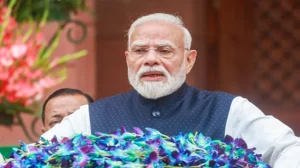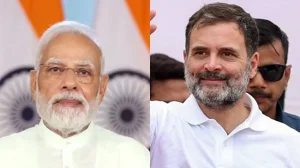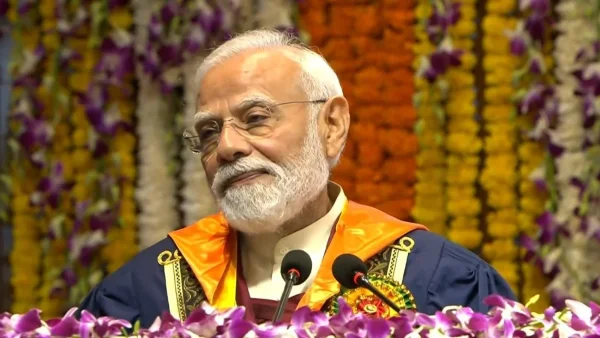
Prime Minister Narendra Modi attended IIT Delhi’s 57th Convocation on August 8, 2026, where he addressed graduating students and presented honours. He also inaugurated the ‘Param Pragya’ AI-powered supercomputing facility at the institute.
But alongside the ceremony, reports from students on social media have raised questions about the security arrangements and restrictions imposed across the campus.
Some students reportedly complained of repeated ID checks and metal-detector screenings. There were also reports that medal recipients were given detailed instructions about how to approach the stage and follow protocol while receiving honours from the Prime Minister.
The controversy, therefore, is not simply about whether security was necessary.
It is about how security is implemented—and whether students should have to bear disproportionate inconvenience for a VIP visit.
Security Is Necessary—But Should Students Pay the Price?
A Prime Minister's visit inevitably requires heightened security.
There is no reasonable argument against protecting the country’s head of government.
But IIT Delhi is primarily an educational and research institution, not a political rally venue.
If students are repeatedly stopped, searched, restricted from moving around campus or forced to reorganise their schedules, the administration should ask:
Could the same security objective have been achieved with less disruption? That is the legitimate question.
And Then Came the “How Much Should You Bow?” Controversy
Social-media posts claimed that students receiving medals were instructed about how to approach dignitaries and how far to bow while receiving their awards.
That particular claim should be treated cautiously unless IIT Delhi or the students involved provide direct confirmation.
However, ceremonial rehearsals themselves are not unusual.
IIT-related convocation guidelines have previously required graduating students to attend rehearsals and receive instructions on the procedure and protocol of the ceremony. For example, IIT Delhi’s published 2025 convocation instructions required rehearsal attendance and noted that the rehearsal was used to ensure students understood the ceremony procedure. (IIT Delhi Convocation)
So the real issue isn’t:
“Why was there a rehearsal?”
The better question is:
Did the protocol remain a normal ceremonial instruction—or did it become excessive deference toward a political dignitary? Those are two very different things.
Students Worked for the Degree—Not for a VIP Photo Opportunity
This is the heart of the controversy.
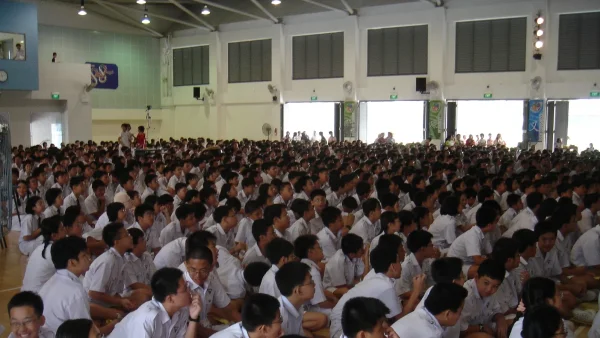
Students graduating from IIT Delhi have spent years studying, conducting research, completing projects and preparing for one of the most important days of their academic lives.
The convocation should therefore remain fundamentally about their achievement.
The presence of a Prime Minister can make the event historic.
But it shouldn’t make the students feel like supporting characters in someone else’s event. Security vs Student Convenience: There Is a Middle Ground The administration doesn’t have to choose between:
Zero security
and
Campus lockdown.
There is a middle path.
1. Create a clearly defined security zone
The VIP movement route and venue can be secured without imposing unnecessary restrictions on unrelated parts of the campus.
2. Inform students well in advance
Students should receive clear information about:
Entry points
Security checks
Restricted areas
Timings
Transport changes
Hostel access
Academic disruptions
3. Avoid unnecessary repeated checks
Security checks should be rigorous where necessary, but duplication should be minimised wherever possible.
4. Protect academic schedules
Classes, laboratories, research work and examinations should be disrupted as little as possible.
5. Keep ceremonial protocol proportionate
Students should know how to receive their degrees or medals efficiently. But ceremonial instructions should preserve their dignity and avoid turning an academic ceremony into an exercise in political reverence.
The Sarcasm Writes Itself
Imagine spending years preparing for IIT.
Years of exams.
Assignments.
Research.
Sleepless nights.
Finally, graduation day arrives.
And then:
“Congratulations! Now please report for security check number 1.”
Then check number 2.
Then check number 3.
Then:
“Please stand here.”
“Don’t go there.”
“Follow this route.”
“And remember exactly how much you’re supposed to bow.”
At this rate, the students might reasonably ask:
“Are we graduating from IIT or appearing for a VIP-security entrance examination?”
But Let’s Not Turn Every Security Measure Into a Political Controversy
There is another side to this story.
The Prime Minister is a high-security constitutional authority.
Security agencies cannot simply operate according to convenience.
Previous IIT convocation guidelines themselves show that rehearsals, identity verification, restrictions on electronic devices and detailed ceremony protocols are not inherently unusual. (IIT Delhi Convocation)
Therefore, criticism should focus on excessive or unnecessary measures, if established—not on the mere existence of security.
The Bigger Question: Who Owns the Campus for the Day?
This incident raises a broader question about public institutions.
When a VIP arrives, should an institution effectively reorganise itself around the VIP?
Or should the VIP visit be designed around the institution’s primary purpose?
At IIT Delhi, that purpose is:
Education. Research. Innovation. Students.
The Prime Minister’s visit should enhance the occasion—not overwhelm it.
What Should IIT Delhi Do Now?
If students genuinely experienced significant inconvenience, IIT Delhi should publish a clear account of the arrangements.
The institute could explain:
What restrictions were imposed?
Which were required by security agencies?
How long did they remain in force?
How many students were affected?
Were classes or research activities disrupted?
What feedback was received from graduating students?
What changes will be made for future VIP visits?
That would turn a social-media controversy into a useful institutional review.
Final Take
There is nothing wrong with protecting the Prime Minister.
There is nothing inherently wrong with rehearsing a convocation ceremony.
And there is nothing unusual about ceremonial protocol.
But security should not become an excuse for unnecessary disruption, and protocol should not become a substitute for dignity.
The graduating students should remain at the centre of their own convocation.
Because they spent years earning those degrees.
The Prime Minister was the chief guest. The students were the reason the ceremony existed. And perhaps that is the simplest rule for future VIP visits:
Secure the guest. Respect the students. Keep the institution functioning.
Anything beyond that deserves to be questioned.