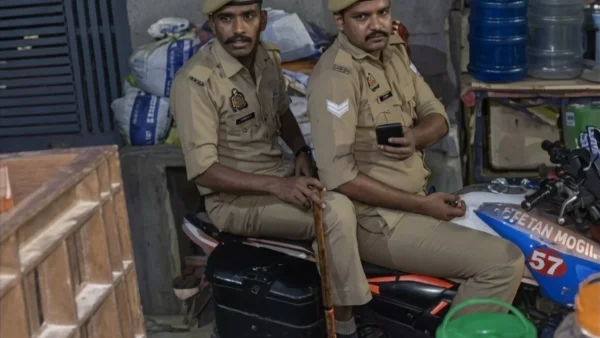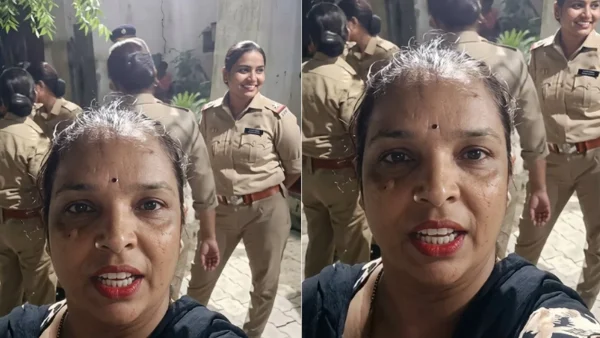
A video reportedly from Singahi police station in Lakhimpur Kheri, Uttar Pradesh, is drawing attention on social media after a woman alleged that police brought her and her daughter from their home at around 8 PM and kept them at the station until late at night.
The allegation becomes more serious because the woman claims that the dispute connected to the incident is already before a court. She further alleges that when she attempted to record what was happening, police personnel took away her mobile phone and mistreated her.
These claims have not, by themselves, established police misconduct. The police version and an official inquiry are essential. But the video raises a question that goes far beyond one police station:
When a citizen enters a police station, are they entering a place of protection—or a place where the balance of power is entirely against them?
The Real Issue Is Not Simply “Why Were They Called?”
Police can legitimately call people for questioning or investigation when the law permits it.
The issue is how that power is exercised.
If the mother and daughter were merely required to assist an investigation, authorities should be able to explain:
Why were they brought to the station?
Who ordered or authorised their appearance?
Why were they allegedly kept there for several hours?
Was their presence properly recorded?
What was the legal status of the proceedings?
Why was the woman’s phone allegedly taken?
Were proper safeguards followed?
These are questions that should be answered with records, CCTV footage and official documentation—not merely statements from either side.
If the Matter Was Already in Court, Why the Police Station?
This could be one of the most important aspects of the case.
A dispute being before a court does not automatically prevent police from investigating a separate criminal allegation arising from it. But if police intervention is connected to a matter already under judicial consideration, the exact legal basis for the intervention becomes particularly important.
The public deserves to know whether the police were:
investigating a genuine offence,
or
being used to exert pressure in a dispute.
Only an examination of the underlying case and police records can establish that.
The Phone-Snatching Allegation Needs Answers The woman’s claim that her mobile phone was taken after she attempted to record the incident also deserves scrutiny.
There can be legitimate circumstances in which police restrict recording—for example, where it interferes with an investigation or involves protected information.
Under what authority was it taken, by whom, and was the seizure documented? If the phone was taken simply to stop a citizen from documenting alleged police conduct, that would raise a much more serious accountability concern.
A Police Uniform Gives Power—Not Unlimited Power
Police officers have responsibilities ordinary citizens don’t have.
They can investigate offences, question people and exercise coercive powers within the law.
That authority is necessary for maintaining public order.
But the principle should be simple:
The power to enforce the law must always remain subject to the law.
A citizen should not have to wonder whether complaining to the police could itself turn into an ordeal.
Where Is the Accountability Mechanism?
If allegations against police personnel emerge, the first response should not be to dismiss them as “viral-video drama.”
Senior officers should examine the evidence.
CCTV footage
Station cameras could establish when the mother and daughter arrived, who interacted with them and when they left.
Station diary
Official entries can establish why they were brought in and what happened during their stay.
Call and communication records
These may help establish who directed officers to contact or bring them to the station.
The alleged phone seizure
If confirmed, authorities should establish the legal basis and documentation.
Statements of witnesses
Independent witnesses can help corroborate or contradict the allegations.
This is how an allegation should be resolved—with evidence.
The Dangerous Normalisation of “Police Power”
Perhaps the most worrying aspect of incidents like this is what happens when citizens begin believing that a police officer’s uniform automatically ends the conversation.
“Don’t question us.”
“Don’t record us.”
“Just sit there.”
That mentality, if it exists, is dangerous.
Police authority is supposed to make citizens feel safer, not smaller.
And when a mother is sitting in a police station with her daughter late at night, the expectation of professionalism should be even higher.
Sarcasm Aside: The Police Station Is Not a Waiting Lounge
Imagine the scene:
A citizen comes seeking justice.
She waits.
She waits some more.
Officers continue with their routine.
And the citizen is left wondering:
“Am I here for help—or am I the one being punished?”
If the allegations are proved, that would be an unacceptable inversion of the police’s role.
The institution created to protect citizens cannot become an institution citizens are afraid to question.
What Should the UP Government Do?
If the allegations are found credible, the response should go beyond a warning.
The government and senior police leadership should consider:
An impartial inquiry into the incident.
Preservation and examination of station CCTV footage.
Verification of station diary entries.
Examination of the alleged phone seizure.
Accountability for officers found to have violated procedure.
Clear instructions regarding treatment of women and other vulnerable persons at police stations.
A mechanism through which citizens can complain about police misconduct without fear of retaliation.
Most importantly, the inquiry should be transparent enough to restore public confidence.
The Bigger Question: Who Watches the Watchmen?
The police cannot be expected to function without authority.
But authority without accountability creates a dangerous imbalance.
A citizen may have limited knowledge of the law, limited resources and no institutional power.
A police officer has a uniform, official authority and access to the machinery of the state.
That is precisely why safeguards matter.
The stronger side in a power relationship carries the greater responsibility to behave lawfully.
Conclusion: Citizens Shouldn’t Need Courage to Enter a Police Station
The allegations surrounding the Singahi police station video still require verification.
But the questions it raises are legitimate.
If the mother and daughter were lawfully called for an investigation, authorities should explain the circumstances.
If they were unlawfully detained, harassed or prevented from exercising their rights, those responsible should face consequences.
Because a police station should represent law, protection and accountability.
Not fear.
Not humiliation.
And certainly not a place where a citizen has to ask:
“If the people who are supposed to protect me are the ones I am afraid of, then who exactly am I supposed to turn to?”