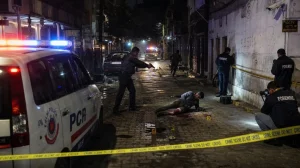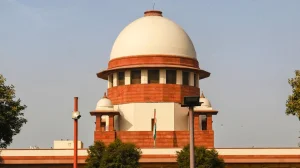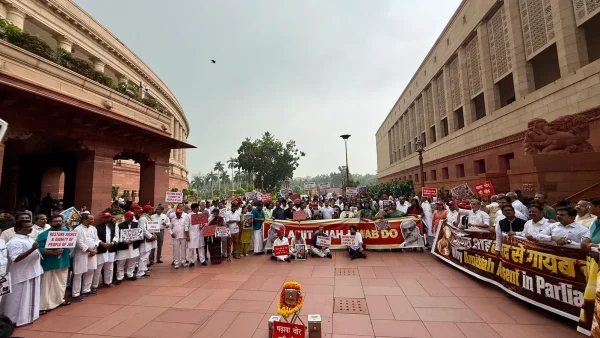
A Supreme Court hearing has brought renewed attention to the controversial use of pellet guns during a student protest in Delhi, raising fundamental questions about police powers, crowd control, and the limits of force in a democratic society.
During the proceedings, counsel appearing before the Court reportedly argued that extensive research into Delhi Police regulations dating back to 1967 did not reveal any standing order or official regulation explicitly authorising the use of pellet guns by the Delhi Police during protests.
The submission has sparked a wider debate over whether such force was legally sanctioned and whether existing crowd-control protocols are adequate.
The Supreme Court has indicated that it intends to examine the issue closely and consider laying down clearer guidelines on the use of pellet guns.
What Happened in Court?
During the hearing, the petitioner’s counsel submitted that:
Research into Delhi Police standing orders from 1967 onwards did not identify any provision specifically authorising pellet guns.
Pellet guns were introduced in Jammu and Kashmir as part of crowd-control measures under different circumstances.
A 2011 Standard Operating Procedure (SOP) prepared by a task force headed by the Union Home Secretary and a 2016 high-powered committee discussed pellet guns in certain contexts.
However, according to the submission, no Delhi Police standing order authorising their use against protesters had been located.
The lawyer argued that if such an authorisation exists, it should be placed before the Court.
If no such order exists, the Court was asked to examine the legal basis on which pellet guns were allegedly used.
These submissions reflect the arguments made before the Court and are yet to be adjudicated.
Why Is the Legal Question Important?
The controversy is not only about whether pellet guns were used.
It is about whether the use of force was backed by a clear legal framework.
Police powers are generally governed by:
Statutory law.
Police manuals.
Standing orders.
Standard Operating Procedures.
Judicial precedents.
When potentially dangerous force is used during public demonstrations, authorities are expected to demonstrate that such action is authorised by law and follows established procedures.
The Court’s examination seeks to clarify whether those requirements were met.
What Are Pellet Guns?
Pellet guns are weapons that discharge multiple small projectiles.
They have been used in certain parts of India as a crowd-control measure.
Human rights organisations have repeatedly expressed concern that pellet projectiles can cause serious injuries, including permanent damage to the eyes and other organs.
Supporters of their use have argued that pellet guns were introduced as an alternative to live ammunition in situations involving violent public disorder.
Critics counter that the risk of severe and irreversible injury makes their deployment highly controversial, particularly during civilian protests.
Students, Protests, and the Use of Force
The alleged use of pellet guns against students has intensified public debate.
Student demonstrations have long been a part of India’s democratic tradition.
At the same time, police have a legal responsibility to maintain public order, protect public property, and prevent violence.
The challenge lies in ensuring that crowd-control measures are necessary, proportionate, and consistent with the law.
The Supreme Court’s scrutiny reflects this balance between maintaining order and protecting constitutional rights.
Government’s Likely Position
The Union Government and Delhi Police are expected to present their responses before the Court.
Authorities generally maintain that police personnel act according to operational requirements and applicable legal provisions while dealing with law-and-order situations.
The Court will consider submissions from all parties before reaching any conclusions.
The Opposition’s Criticism
Opposition leaders have criticised the alleged use of pellet guns, questioning whether less harmful crowd-control methods could have been employed.
Some have demanded explanations from the Prime Minister and the Union Home Minister regarding the incident.
They argue that students exercising their democratic right to protest should not face measures capable of causing permanent injuries.
The government has not accepted these political allegations, and the matter remains under judicial consideration.
Could This Lead to New Rules?
One significant outcome of the hearing may be the formulation of clearer judicial guidelines.
According to the proceedings, the Supreme Court has expressed interest in examining:
Whether pellet guns should be used for crowd control at all.
Under what circumstances their use may be legally justified.
Whether specific operational protocols should be prescribed.
How accountability should be ensured when force results in serious injuries.
Any guidelines issued by the Court could have implications for policing practices beyond this particular case.
A Question Beyond Politics
The issue extends beyond political disagreement.
It concerns the relationship between the State and its citizens.
Police officers are expected to maintain law and order, often in difficult and rapidly changing circumstances.
Citizens, including students, have constitutional rights to peaceful assembly and expression, subject to reasonable restrictions under the law.
The legal system seeks to ensure that both public safety and individual rights are protected.
The Bigger Question
The Supreme Court hearing has transformed a single incident into a broader constitutional debate.
If the use of pellet guns was authorised, the Court may seek to examine the legal framework governing their deployment.
If no such authorisation exists, questions regarding legality and accountability are likely to become even more significant.
Ultimately, the case is about more than one protest.
It is about defining the limits of State power, ensuring that law enforcement operates within the bounds of the law, and maintaining public confidence that measures used to control demonstrations are lawful, proportionate, and subject to judicial oversight.
As the Court continues its hearing, the central question remains:
When force is used against protesters, what legal safeguards exist to ensure that the response is necessary, proportionate, and accountable?