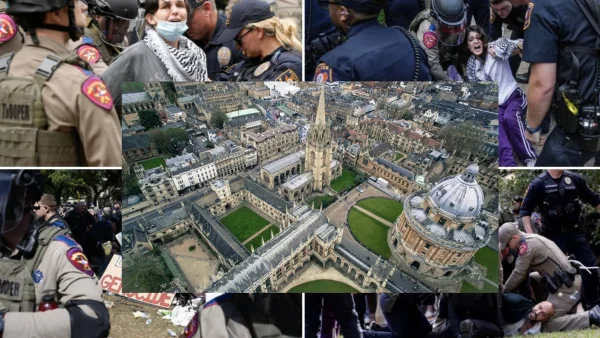
A combined investigation, using information gained from Freedom of Information requests, shows that twelve UK universities (including Oxford) have paid a private investigation company to monitor student protests, particularly those relating to Palestine. The universities reportedly spent hundreds of thousands of pounds on looking at information that is publicly available and assessing the risks connected to demonstrations on campus.
Allegations of Campus Monitoring Extend Across the UK
Several important universities are said to have used Horus Security Consultancy Limited to gather and examine details about protest groups. The company is reported to have collected information from places everyone can see, like social media, and then created security reports about what they believed were dangers on campus.
From January 2022 to March 2025, the universities spent at least £443,943 on these services. The University of Oxford, Imperial College London, University College London, King’s College London, the University of Sheffield, the University of Leicester, the University of Nottingham, and Cardiff Metropolitan University are all included.
Reports from inside the universities supposedly mentioned particular students who were protesting and teachers. While what happened wasn’t against the law, how much and how often the students were watched has raised big questions about being able to speak freely, privacy, and how far universities should go when dealing with protests.
Who Is Horus Security Consultancy?
Horus Security Consultancy was started in 2006 by Jonathan Whiteley, who used to be in intelligence for the British Army. The company describes itself as an investigation firm that specializes in looking at publicly available information. They give their clients warnings and evaluations about safety and how their reputation might be affected.
The leaders of Horus Security Consultancy’s parent company include Tim Collins, a former Colonel, who has connected pro-Palestinian protests to possible interference from outside countries. He has also said that stricter action should be taken against people from other countries who take part in protests. Horus states that they act ethically and legally.
How the Monitoring Worked
The investigation shows a system where students’ posts on social media and anything they’ve publicly posted online were put together into daily reports. Universities could pay around £900 a month for regular ‘encampment updates’ which gave a summary of protest plans, how many people turned out, and how tense things were on campus.
In June 2024, a PhD student at the London School of Economics who supported Palestine was noted in an update. This update mentioned a social media post she’d made the day before. She knew universities monitored protesting, but was surprised by how much and how systematically it was done.
In 2023, a Palestinian-American teacher at Manchester Metropolitan University was assessed for a potential terrorist threat before giving a scheduled talk. This was done because of rules from the UK’s Prevent program, which requires universities to look at risks connected with visiting speakers. Security was present at the event, but the university didn’t find anything to connect the teacher with banned organizations, so the talk went ahead.
The University of Bristol allegedly gave Horus a list of protest groups to watch in October 2024. These included pro-Palestinian and animal rights groups, and they then received regular updates. Seven universities wouldn’t say what was in their reports, saying it was confidential or it would affect their business dealings.
Universities Defend Their Approach
Imperial College London says they don’t secretly watch students and only use Horus to find possible security issues using information that is already public. They stressed they don’t focus on people because of their political beliefs or if they’re protesting within the law.
The University of Sheffield says they use outside services to ‘scan the horizon’ – meaning to try and predict large protests and keep people safe. They say they don’t target individual students, stop lawful protesting, or share student information with the company.
Oxford, UCL, King’s College London, Leicester, and Nottingham were among several other universities that didn’t respond to requests for a statement at the time of the investigation. Some universities did say that any monitoring was of public information, not private details.
Rights and Data Protection Questions
Gina Romero, a UN official who reports on the freedom to protest and associate, has warned that using artificial intelligence to collect and analyze student information, even if it’s from public sources, creates serious legal and moral problems. She says the amount of information collected can get beyond what the public can check and what individuals have agreed to.
Jo Grady, the head of the University and College Union, criticized the spending, saying it was a disgrace for universities to spend so much money watching their own students. She believes universities should focus on talking to students and their well-being instead of creating intelligence-style reports.
Romero says this atmosphere has made some student protestors fearful, and she has heard reports of them being mentally exhausted and burned out. People who support the protestors say that even just watching public information can discourage people from speaking up.
What Comes Next for Students and Institutions
Because of these revelations, people are now asking for more openness about how universities assess protest risks, choose outside investigation companies, and deal with student information. More specific rules, someone independent to oversee things, and regular checks could help restore trust without putting safety at risk.
Following the law will remain most important. Universities must balance their duties under the Prevent program and their need for security with laws about protecting information and the right to free speech. Universities are also being pushed to explain when they use information from open sources, how it is kept, and who is allowed to see it.
As protesting on campus continues, universities will probably look at their risk plans again. The problem is to protect the right to protest whilst preventing harm, and to use methods that are appropriate, open, and don’t make protesting or academic discussion look bad.