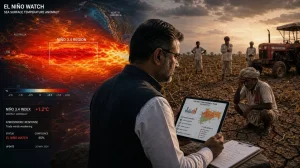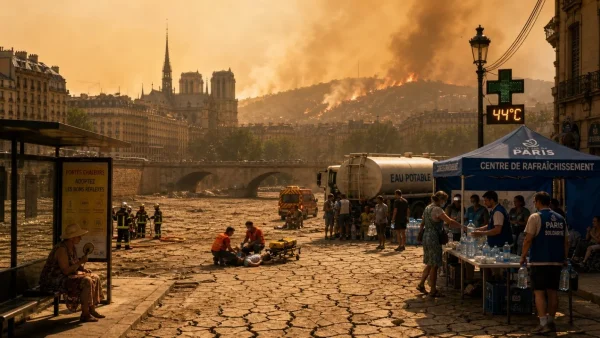
By the time summer officially started, the Indo-Gangetic Plain was already extremely hot. In 2024, Uttar Pradesh had its longest period of very high temperatures since 2010, and Delhi went over 35 degrees Celsius in the first week of March. This isn’t just about climate change; it’s about the government failing to manage things, which is turning our cities into heat traps.
Invisible populations, visible risks
The scientific facts are very clear and worrying, the consequences are happening now, and the people with the fewest options for coping are the ones who will suffer the most.
Urban heat is rising faster than systems can cope
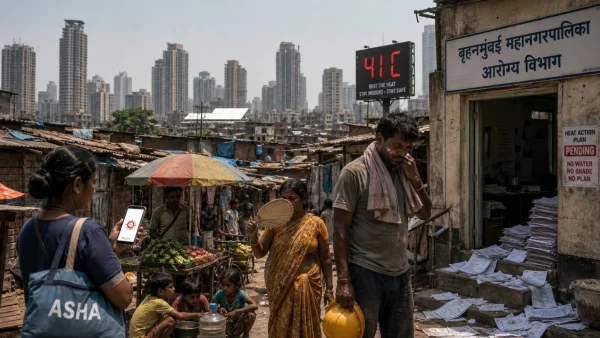
Mumbai had heat warnings as some neighborhoods reached 40 degrees Celsius. In Indian cities generally, the ‘urban heat island’ effect means temperatures are regularly higher than in the countryside around them. Recent studies suggest city land temperatures could go up by 45% more than in rural areas.
Cities can design out danger, but data must guide it
These differences are important. Whether you’re in shade or sun, near brick or trees, or in a building with good airflow or a tin roof can determine if someone’s body can cool down at night. Workplaces and homes that don’t keep heat out make it impossible to recover from the heat.
From 2000 to 2020, different organizations recorded deaths related to the heat in different ways. The India Meteorological Department said 10,545 people died, the National Disaster Management Authority said 17,767, and the National Crime Records Bureau said 20,615. Because illnesses made worse by the heat aren’t always included in the numbers, experts think the real number of deaths is much, much higher.
Heat action plans must centre the most exposed
More and more people are being exposed to the heat because of urbanization. The number of people moving from the countryside to cities went from 51.6 million in 2001 to 78.2 million in 2011. The number of people living in slums increased from 52.4 million to 65.5 million during the same years, and this is putting more people into overcrowded, poorly equipped communities that are under a lot of heat stress.
A 2025 report by the Council on Energy, Environment and Water says that about 57% of Indian districts (where over three-quarters of the population live) are considered to be at high or very high risk from extreme heat. This risk is a combination of how likely a heatwave is, how many people are exposed to it, and how easily they will be harmed by it.
In Delhi, urban planner Rashee Mehra says the official numbers don’t count everyone. The government says 11-15% of people live in slums, but she thinks it’s closer to 30%. She adds that these slums only take up 0.6% of the city, while 2% is used for parking cars. Because they aren’t in official figures, they don’t receive the protection they need.
UP’s month-long heat test exposed design gaps
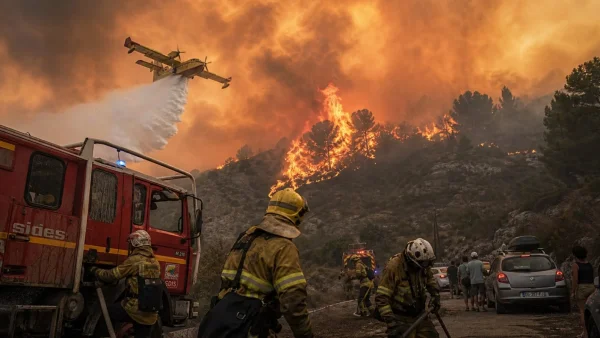
Throughout Uttar Pradesh in the summer of 2024, temperatures were above 40 degrees Celsius for a whole month. All over the country, over 44,000 cases of heatstroke were reported and people watching things independently reported hundreds of deaths that weren’t in the official numbers.
Uttar Pradesh has a Heat Wave Action Plan. In 2024, the state started a three-level alert system in all 75 districts, based on the temperature (yellow for 36-40 degrees Celsius, and red for above 41 degrees Celsius). Though it looked good on paper, the alerts didn’t lead to people being protected quickly enough.
Warnings exist, but they do not reach workers
A training session in Lucknow in July 2024 showed what was missing: actually carrying things out and getting help to people. People like ASHA workers (community health workers), block health officers, and village leaders didn’t have specific instructions, jobs, or things to say regarding the heat. A red alert that only reaches the district office isn’t a warning; it’s just a notice.
Funding rules that sideline heatwaves
The main disaster funds in India, the State Disaster Response Fund and the National Disaster Response Fund, are run by the Disaster Management Act of 2005. Heatwaves aren’t on the list of officially recognized disasters. And that fact affects everything else that happens. States are only allowed to use up to 10% of their State Disaster Relief Fund (SDRF) money for disasters they declare on a local or state level. And they won’t don’t get any help from the National Disaster Relief Fund (NDRF) specifically for heat. For a state with a lot of people (more than 240 million) and many districts (75), that 10% limit doesn’t really help much, it’s more of a restriction.
The problem isn’t a lack of scientific understanding, it’s about money. Reporting heat-related deaths would mean paying 400,000 rupees to the family of each person who died, and this creates a bad situation where authorities might be tempted to say fewer people died from the heat than really did. At the same time, about 57% of India’s districts (where 76% of the population lives) are at high or very high risk from the heat.
The India Meteorological Department gives out yellow, orange, and red warnings and now has a “Heat Index” that includes humidity in the forecast. Uttar Pradesh uses these as a base for its own heat warnings. The system exists on paper, but in reality it doesn’t often get to the people who are making decisions at 7 AM.
Humidity across the plains of North India (the Indo-Gangetic Plain) has gone up by as much as 10% in the last ten years. Studies show that when the temperature is above 32°C and the humidity is over 60%, it causes a very dangerous strain on the body. Yet, when the public is told about the heat, it’s still mostly just the temperature that’s mentioned.
The loss of income is serious. For every one degree the average temperature goes up, people doing informal jobs earn 16% less each day. During the worst of the heat waves, they earn 40% less than on a typical day. Construction workers, people selling things on the street, those working at brick kilns, and farm workers are all suffering this loss of money without much complaint.
After the very bad 2010 heat wave (with over 1,300 more deaths than usual), Ahmedabad city in Gujarat made India’s first heat plan. Since then, many cities have copied that plan. The first versions of these plans were very focused on the technical side – alerts, advice, and messages to the public – but they didn’t often offer ways to protect informal workers who are outside all the time.
But this is changing. Newer plans that are being developed for 2025 are more based on what communities actually need. The National Disaster Management Authority wants informal workers to be more officially recognized. Delhi’s 2025 plan says that informal settlements need a continuous supply of water, shade, and places to get cool.
However, heat is still not officially recognized as a disaster on a national level. Because of this, money for dealing with it is spread out and it’s not totally clear who is responsible for what. For a long time, health departments have had to take the lead in responding to heat because they are the ones dealing with the most obvious effects. This has meant dealing with the problem as it happens, instead of building up a more lasting ability to cope with the heat at people’s homes, workplaces, and schools.
How cities are planned and built affects how hot they get. Planting trees, using cooler materials for roads, and making sure buildings are well insulated and have good airflow can all reduce the heat. White roofs are good because they reflect sunlight, and “district cooling” can lower temperatures in an area. But, many cities still have problems with having enough green space, having clear planning and zoning rules, and providing even basic services.
Mehra believes that city planning needs to see and make a priority of those who are easily overlooked. The poorer areas of cities (slums, illegally built settlements, and places where people have been resettled) need to be at the heart of city plans. She also says that the way people of different religions and castes live near each other is important and creates a special weakness in planning, and that this can’t be ignored if the planning is meant to deal with the heat.
The details of how things are done are important. Heat warnings should be sent out before people start work, not after. There should be a system to get a message to people early in the morning (before t9 AM) on red-alert days, with clear instructions about how often to rest, drinking enough water, and having access to shade and cooling places.
The window for excuses has closed
Heat is often described as a disaster you can’t see. But in Indian cities, you can see it now in things like higher electricity bills and long lines at clinics. Heat affects all of us, but the disasters we are having now are caused by people. The question isn’t whether we should do something, it’s whether we’ll do something before the next red alert is issued.
Three fixes that can save lives next summer
In the long run, being safe from the heat means people being able to stay cool where they live and work, and not just managing to survive the worst weeks. The science is clear. It’s the way the government works that isn’t. Every summer that we don’t fix these problems is a decision made by those in charge, and the people who are least able to handle the effects are the ones paying the price.
The Indo-Gangetic Plain does not lack data. It lacks design choices that match the data. Three steps can be implemented without waiting for another crisis:
– Embed alerts within ASHA, ANM, and panchayat networks
– Notify heatwaves as a Tier-1 disaster nationally
– Make IMD’s Heat Index a standard public tool