The UN has put out a warning: brace for near-record heat on an annual basis through 2030. It’s an issue of public health, cost of living and whether our systems are up to the task. As for the World Meteorological Organization, they have their eyes on a new high before 2031, and the 2026-2030 window is in danger of putting us past 1.5C.
What the UN forecast means now
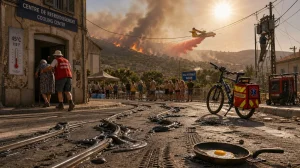
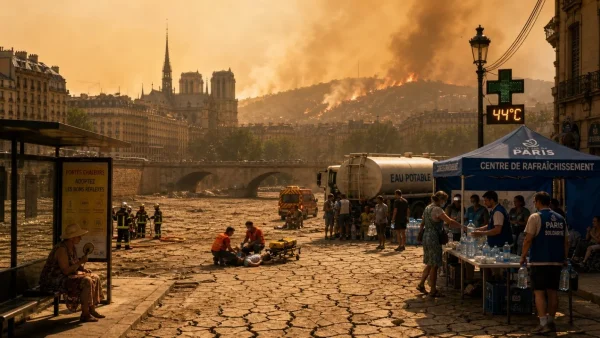
You can see it in Western Europe. A heat dome has put Britain and France in the middle of some of the harshest Mays on record, making climate numbers a part of your day-to-day. The UN agency will tell you that all 11 of the hottest years have come since 2015, and there is no sign of that run ending.
This isn’t just one opinion; the report was put together with the Met Office and draws on 13 institutes. They make a direct line from the kind of record heat we’re seeing to the way we burn coal, oil and gas, which in turn brings on more of the same: floods, droughts, and waves of heat.
The probabilities that raise the stakes
There are some hard numbers in the WMO’s outlook that those in government or business can’t look past. We are close to the Paris Agreement red lines, and the odds are good we’ll see 1.5C above the 1850-1900 average get broken more often than not.
These are the figures you should be watching:
– 75 percent chance the 2026-2030 average goes over 1.5C
– 91-percent likelihood of at least one year passing 1.5C by 2030
– 86 percent chance 2024 won’t be the last of the warmest
– We’re in for 1.3C to 1.9C in any given year from 2026-2030
– Under one in a hundred for a year to hit 2C
Temporary breaches, permanent risks
When the Paris talks set their limits, they were thinking in terms of long-term, 20-year trends. So if we have a blip over 1.5C, it doesn’t mean we’ve failed. But we do expect to be on the other side of that line more and more.
‘(1.5) is not some kind of cliff we are going to go over,’ says Melissa Seabrook with the UK Met Office. ‘For every 0.1 of a degree, the impact is that much worse.’
El Nino and the next record
Then there is the question of El Nino. ‘We have one coming in late 2026, so 2027 is prime to be the next record year,’ according to Leon Hermanson, who heads up the WMO’s Global Annual-to-Decadal Update.
It’s happened before. The last El Nino had a hand in 2023 being the second-hottest, and 2024 made it to the top of the list at roughly 1.55C over pre-industrial levels. You can count on El Nino to make an appearance every two to seven years or so. It’s with us for nine to 12 months at a time, and in that period it has a way of turning the world’s winds, pressure and rain on their head.
Then there is the WMO’s take on what’s in store: over the next few years, we’re looking at temperatures 1.3C to 1.9C higher than in the late 1800s. Put last year in context – one of the top three warmest ever – and you see the global near-surface temperature was 1.43C up on the 1850-1900 mark.
Arctic acceleration and regional shifts
The Arctic is going to heat up at a much steeper rate than the rest of the globe. With less ice and snow to put a reflector on the sun, warming there is on track to be 3.5 times as fast. The numbers for the next five northern hemisphere winters put them 2.8C above 1991-2020 levels, up from 1.2C for the 2020-2025 period.
Summer sea ice will keep giving ground, and as Seabrook put it, it’s a self-perpetuating cycle: the more the ice goes, the more the surface soaks up the heat, and the faster it melts.
It’s not just about the thermometer, though. Rain is going to have to find new patterns. The WMO is calling for some wet spells in the Sahel, up in Europe, and in Alaska and Siberia from May to September in the 2026-2030 window, while the Amazon should be on the drier side.
Lives, food and fires
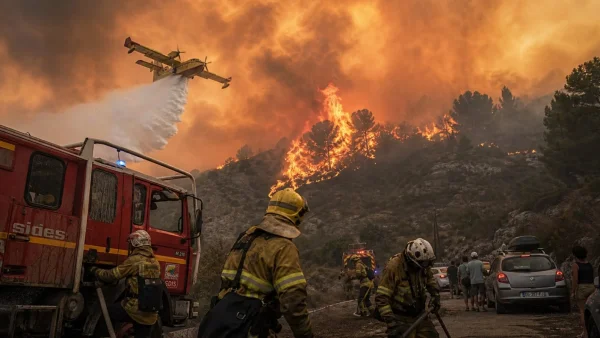
When you have a full year or more of 1.5C-plus conditions, you open the door to weather that defies what we have plans for. “Many people will die, we are in for some serious food price shocks and you’ll see more ferocious wildfires,” says Friederike Otto of Imperial College London.
In the Amazon, a combination of unseasonable heat and aridity is a recipe for trouble. Seabrook is concerned the area could go from being a carbon sink to a source, making things worse.
Where the pressure is building
All the signs are pointing in the same direction. We’re seeing record May heat in Europe, Arctic winters running hot and the Amazon drying out, which is a warning sign for the climate and for those who live there.
The WMO has its eye on a few places for some anomalies:
– A wetter-than-usual Sahel
– The same for northern Europe
– And for Alaska and Siberia
– But the Amazon is expected to be drier
What comes next
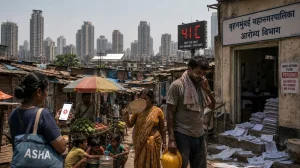
Simon Stiell, the UN’s top climate official, doesn’t mince words: we are putting out the fire with one hand while humanity is still churning through “colossal” quantities of fossil fuels with the other. He points to the baking in Europe and India as proof. “We are already paying a huge price” for the kind of extreme heat, storms and droughts we are seeing.
A new high for the hottest year is a before-2031 probability, according to the WMO. There is also a good chance the 2026-2030 average will put us over 1.5C. We may well cross that line again and again.
For those in charge, the time to act is running out. The data is clear: we have more records and more volatility coming. The stakes are only getting higher, and our response needs to be in proportion.