The Pentagon is taking a much stronger position with Iran, with this broad blockade and a promise to enforce it on all ships, no matter where they’re from. High ranking defense people have said the U.S. is still ready to go back to fighting if the ceasefire talks don’t work out.
Scope and Terms of the Maritime Blockade
Defense Secretary Pete Hegseth (according to what he said at a Pentagon meeting) said the U.S. will continue the blockade for as long as needed. It includes ships going to or from Iranian ports and doesn’t care what country the ship is registered to.
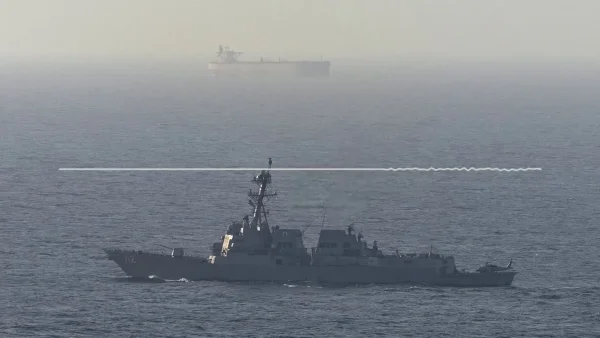
General Dan Caine, the top person at the Joint Chiefs of Staff, explained how the blockade will be enforced. He said American forces will stop ships, tell them to turn around, and if they don’t, will use force against them. This will happen in Iran’s own waters and in international waters.
Caine also said this operation is focused on Iran’s ports and coastline, and isn’t a formal closing of the Strait of Hormuz. He made it clear the U.S. military will actively search for any ship flying an Iranian flag, or any ship that they suspect is helping Iran in any way.
Military Posture, Deterrence, and Strategic Messaging
Hegseth indicated the U.S. military can quickly begin large-scale fighting again if the diplomatic efforts fail. He said Iran has a "golden opportunity” for peace, or they can choose a path that will lead to more attacks on things like power plants and energy supplies.
The Pentagon is watching what the Iranian military is doing, and their attempts to fix things they’ve damaged. They are also saying the U.S. is getting into a stronger position than before, with better intelligence and continuing to build up their forces with something called Operation Epic Fury.
Hegseth said the U.S. would be happy if its allies helped to keep the waterway safe. He also said China has told the U.S. they won’t send weapons to Iran during this ceasefire period, but this hasn’t been confirmed by anyone else at the meeting.
Control of Sea Lanes and the Strait of Hormuz
The Pentagon is trying to show that Iran doesn’t control the Strait of Hormuz (a very important route for the world’s oil), despite what Iran says. Hegseth said stopping normal commercial ships is like piracy, not control, and the U.S. Navy is already doing a good job of directing shipping with far fewer ships than it has available.
However, even as the Pentagon tries to discourage Iran, there’s a big risk of things going wrong. Stopping ships in international waters is always a difficult situation, and each time a ship is stopped there’s a chance things will quickly get a lot worse. Officials say the point of all this is to keep the ceasefire going and to encourage Iran to reach an agreement.
Legal and Diplomatic Considerations
A naval blockade is right on the edge of what’s allowed by international law, and is usually considered an act of war. U.S. officials say this operation is only to stop materials from getting to the Iranian military and that they will give warnings and use increasing levels of force.
There are still questions about who authorized this, what kind of proof will be needed to stop a ship, and how ships from neutral countries will be treated. Allies will have to decide if joining in is worth the legal risks, and insurance companies and shipping lines will want a clear explanation of the rules of engagement so they can limit how much trouble they could get into and how much risk they’ll be taking.
Economic and Energy Market Implications
If Iran's ports are disrupted for any length of time, it will put a strain on how goods are shipped around the world. Even without officially closing the Strait of Hormuz, more inspections, ships being sent a different way, and checks to make sure everything is following the rules can slow down the flow of oil (both raw and refined), and the things used to make plastics, and it will make the cost of shipping and insurance go up.
The energy markets will consider not only the immediate risk to the supply of oil, but also the chance that attacks will start again on important facilities that have two uses (military and civilian). People who trade and transport oil will have a complicated set of rules to follow, because enforcing the blockade extends to international waters and includes ships from other countries that are accused of helping Iran.
Shipping companies, oil refineries, and companies that provide money for commodities are likely to be more careful about checking things out, add clauses about war risk to their contracts, and stop calling at ports that are very dangerous. And if allies join in with the enforcement, the area that needs to be checked could get bigger, increasing the economic impact even without a full-scale war.
Ceasefire Diplomacy and Uncertainties Ahead
U.S. officials say Iran still wants to continue the ceasefire, but have warned they aren’t going to be patient forever. The Pentagon says the blockade is a way to keep pressuring Iran while the talks are happening, and that the U.S. military will be ready to support the negotiations.
Hegseth also said (in a separate statement) that one of Iran’s leaders is “thought to be hurt and still alive,” but didn’t give any proof. This shows how unclear information is about what’s happening on the battlefield, and that there’s a lot of misinformation happening alongside the actual fighting and the naval operation.
For now, Washington thinks that clearly enforcing the blockade, talking to allies, and making a believable threat of more attacks will force Iran to reach an agreement. Whether this will calm things down or make Iran more stubborn will depend on how strictly the blockade is enforced and how Iran decides to act.