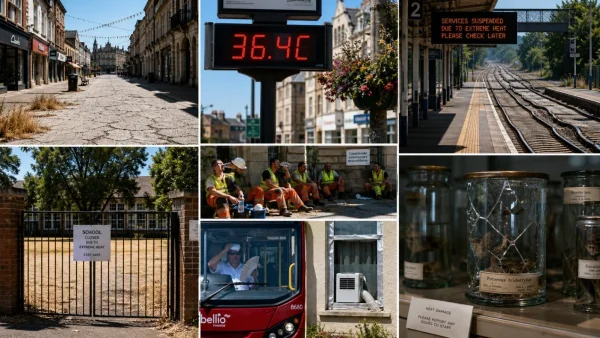
We are in uncharted heat territory now. The Met Office has put a number to it: 36.4C in Yeovilton, Somerset, making for a fresh June high. You could say it was only a matter of time after Wednesday’s peak in Gosport, but this is a heatwave that is upending routines and calling for quick thinking in the home, at work and in public services.
New record, new risks
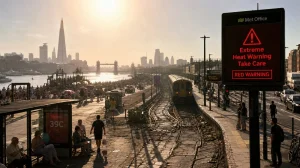
There is a red flag for extreme heat over swathes of central and south England and Wales through to just before midnight (2300 GMT) on Thursday. This makes two months running where the UK has put down some new numbers, something you can put down to climate change ratcheting up the intensity of these spells.
When the heat was at its worst, hundreds of schools had to close, at least in part, because a lot of them are in older stock that doesn’t handle it well. Rail operators have been one step ahead, pulling in some services to spare the tracks and lines from the strain and telling people to think twice before they need to get on a train.
Transport and power under strain
The grid operator put out a word of caution for Wednesday: with demand and the load on the system, supply could be tight. It isn’t just the trains. Buses have had to make do with safety protocols for their staff, and you’ll see contingency plans in place on building sites and any other work being done in the open.
How the temperature milestones unfolded
It was a day of rising figures on Wednesday. The Met Office clocked 35.7C by Gatwick, then 35.8C in Wiggonholt, not far west of the capital. But the day’s top was in Gosport, to the east, at 36.1C.
Then on Thursday, the bar was raised once more. A 36.4C in Yeovilton is the new standard for the month. Not long ago, the 35.6C from 1976 was what you measured up to; this week has put an end to that.
Households and workers under pressure
For Yana Markevich in London, living in a flat without air-conditioning is no fun. She has put in a petition to make it easier to install one – still a rarity in the UK – and for now has made do with a portable unit and some well-sealed windows to keep the warmth at bay.
Harrison Hammond, an electrician on a site, says his 29-year-old self has been told to make sure he is drinking, wearing a hat and lathering on some sun cream. Unions are making noise about better protections as things get hot in tight or exposed spaces.
Unite is on to the bus companies about cabs that can go over 40. “If you’re in a cab that’s hotter than it is outside, you are at risk,” is the line from the union, and they want firms to do something about it now.
Culture and collections at risk
It’s not just a case of an uncomfortable journey. Tannis Davidson, curator at UCL’s Grant Museum of Zoology, is keeping an eye on the heat. After a jar gave in last year, she may have to decant some of the specimens as a precaution. “You have to protect our cultural heritage,” she says.
What authorities and advocates are calling for
You can hear it in the policy talk. Even as he has stepped aside and will be until there is a new PM, Keir Starmer has pointed to the heat as a sign of how big a problem climate change has become.
Campaigners want to see us move faster. Greenpeace is telling the government to let go of fossil fuels, and the Climate Change Committee put out a report on Wednesday saying we have to get on with the switch to electric and heat pumps if we are to hit our 2030 goals. They don’t want to see 1976’s summer beat by anything like this again.
Here is what is being put out to the public in the wake of the heatwave:
– Don’t travel unless you have to; rail is being scaled back
– Make sure your workers have water, a break and some shade
– Put cooling first in the places and homes that need it most
What comes next
The red warning is in play until 2300, so expect the Met Office to have more to say as the mercury does what it does. For the moment, it is about minding the store and making sure transport, schools and the power system can stand up to it. The real question is whether we can adapt and cut emissions in time for the next one.