On paper, the story is straightforward. The film will have you re-live the crash that took the lives of Dominic Russo and Davion Flanagan, leaving only Shirilla standing. She was found guilty of 12 felonies and put away for 15 years; there is no contesting that.
Why the omissions matter for viewers
What has people talking since it came out on May 15th is what didn’t make the cut. The documentary makes its case with some good footage and court records, showing how an accident was made into a double-murder. But if you are on the internet, you are looking at the blanks.
The seizure conversation that will not go away
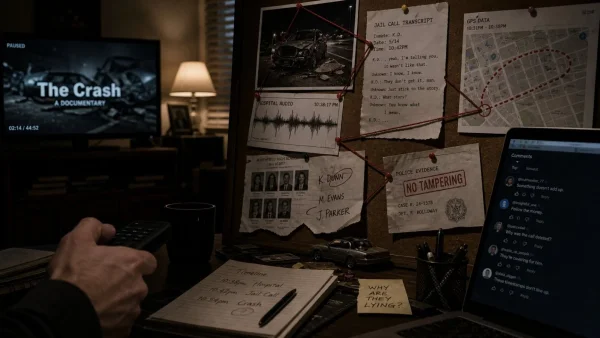
Take the medical episode. Shirilla and her family say that’s what led to the collision, not ill will. It’s a central part of her story, yet the details are thin on the ground in the film. Other pieces of coverage have latched onto a piece of hospital audio where she can be heard asking her mother if they should let the police know about a pre-crash seizure. The Crash alludes to it, but for someone trying to figure out her state of mind, it doesn’t go far enough.
What the call added
Then there is a jailhouse phone call with her mother that has come up in the news. It’s more of an emotional scene than anything else-she talks of not wanting to be with the other inmates, of maybe living off the grid one day, of never having kids of her own. It doesn’t answer the medical question, but it puts a finer point on what the show chose to put before us and what it didn’t.
The ‘dry run’ route claim and what investigators inferred
You won’t find much in the way of the GPS data here, either. In the course of the investigation, they put her phone near the scene days before the actual event. Some in law enforcement called it a dry run, a way for her to get to know the road. The film will tell you the evidence is there, but you’ll have to read between the lines for the rest of it.
Reputation at school and a theory police ruled out
Other true-crime series have gone after the kind of character work this one has. Former schoolmates have described her as hard to be around, even keeping a list of who she had a problem with and why. None of that is in the Netflix version, which is content to stick to the trial. Same with the matter of the car being tampered with. Police put that to rest, but you have to watch something else to hear about it.
Two threads from other programmes stand out for viewers comparing narratives:
– Classmates described her as aggressive and difficult
– Some alleged a list targeting people she disliked
– Police considered possible car tampering
– Investigators found no evidence of interference
What comes next for the conversation
The courts have had their say, but the web is still churning. When you have omissions like these, you are left with the big ones: Was it premeditated? Did she have a medical issue? What else was at work? The Crash has given us the opening. We are going to have to find the rest of the story for ourselves.