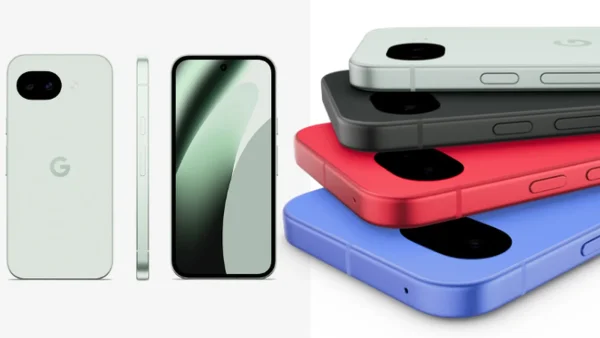
Google seems to be making a bigger improvement to its top-end phones than it appears. Recent information from leaks indicates the Pixel 11 Pro and Pixel 11 Pro XL will have Face ID under the screen and a soft Pixel Glow to show notifications, plus they’ll be more efficient and connect to networks more easily, and they’ll probably be shown off in August.
Why these changes matter
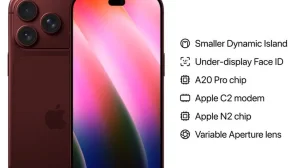
If this is correct, Face ID under the screen will allow secure unlocking by recognizing your face without a notch or hole in the screen, giving you more of the screen to see. The sensors would be under the screen itself, aiming for a cleaner appearance but still being quick and working well to unlock the phone. It hasn’t been officially confirmed, but this shows Google is seriously improving the design.
Pixel Glow is also reportedly a new feature using LEDs to notify you. It’s a gentle light on the back of the phone to tell you about alerts without lighting up the whole screen. Pictures that have leaked don’t show exactly where the light will be, which suggests Google wants to keep the look a surprise.
Displays and design updates
The Pixel 11 Pro is expected to have a 6.3 inch LTPO screen, and the Pixel 11 Pro XL is going to be bigger at 6.8 inches. Both are likely to use Samsung M16 OLED screens, which should have brighter, more accurate colours and use less power.
The changes to how the phone looks are not expected to be huge, including a totally black section for the cameras. The phone’s shape will probably be similar to before, and the improvements will be more about the screen’s quality and making the front-facing sensors fit in more smoothly.
Power and connectivity upgrades
The phones will likely use Google’s Tensor G6 chip, and it’s said to be made with a 2nm process. This should give a significant boost to performance and efficiency compared to last year’s Tensor G5 which was based on a 3nm process. Another possible big change is a MediaTek M90 modem, which would replace the Samsung Exynos modems that earlier Pixel phones had.
These two things working together suggest the phones will run more smoothly and have a more reliable 5G connection. When you actually use them, this could mean apps opening faster, the phone not getting as hot, and fewer times when you lose your signal while you’re travelling.
What it means for day-to-day use
Here are the headline takeaways for potential buyers:
– Cleaner screen with under-display Face ID
– Alert glows without waking the display
– Sharper, more efficient M16 OLED panels
– Potentially stronger 5G with MediaTek M90
Cameras, memory and storage
The cameras are expected to be the same as last year: a 50-megapixel main lens, a 48-megapixel ultra-wide lens, and a 48-megapixel telephoto lens that can zoom 5x. The fact that these are familiar suggests Google will focus on improving the software that controls the camera, rather than making huge changes to the camera hardware itself.
Both models are rumoured to have 16GB of RAM. They’re also expected to have storage from 256GB to 1TB, which is good for people who have a lot of pictures, videos and other files, and who use the phone’s artificial intelligence features.
Battery and charging
The Pixel t1 Pro is said to have a 4,870mAh battery, the same as the previous version. The Pixel 11 Pro XL is expected to have a bigger battery than the 5,200mAh battery in the last version, meaning the bigger model should last longer between charges.
Both phones will almost certainly support Qi2 wireless charging. Qi2, which was first used with the Pixel and series, brings the magnetic alignment and accessory compatibility of MagSafe to Pixel phones.
Launch window and price outlook
According to Rincon de Mellis on X (formerly Twitter), Google plans to show the Pixel 11 series in August, around the same time as last year. We don’t know the price yet, but the leak says that because the cost of memory has gone up, the price might also go up. Google hasn’t officially said anything about the phones, so the plans could still be altered.
Right now, the important thing is the direction Google is going. Face ID under the screen, Pixel Glow and M16 OLED screens indicate a cleaner design, easier-to-see notifications and better efficiency. If everything else is correct, the Pixel 11 Pro line could be noticeably more intelligent without getting rid of the things people already enjoy about them.