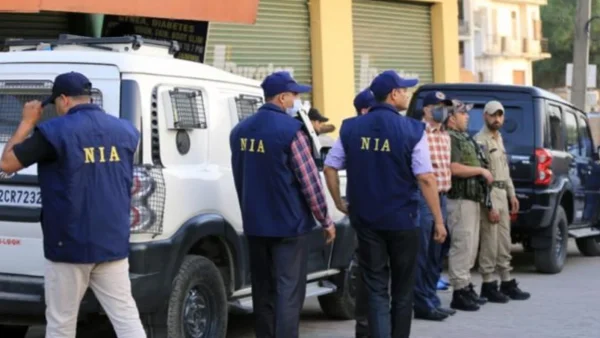
You could say this consumer camera is key to making sense of the Pahalgam plot. The NIA has put it in their file on the Baisaran incident: a US-made GoPro, with roots in China, was taken from a LeT cell that was wiped out some weeks after. For the investigators, the gadget is a way to look at the kind of cross-border support that makes forays into J&K possible.
The GoPro was put in evidence after an encounter in the Dachigam forests back in July, and it has given officials something to follow up on aside from the actual carrying out of the attack. They are looking at the supply side of things – how a piece of off-the-shelf tech made its way over a border and into the hands of an outlawed group.
Device trail points to China
In order to get to the bottom of where the camera came from, the NIA went to GoPro Inc in the US for some sales data. We have been told by those in the know that the company’s records show it was in the first instance shipped to a distributor in China.
We don’t have a Mutual Legal Assistance Treaty with China, so any request for proof has to be done through diplomacy. At the same time, there is a question of whether ties to the Pakistani military may have been what put these kinds of devices in the way of groups in Kashmir.
It is a side track to the main case, but one that is meant to put a finger on any soft spots or collusion in the kind of shadowy networks that put money and hardware in the field.
Chargesheet and investigation status
The NIA has put together a chargesheet naming six people and Lashkar-e-Taiba, the three who were killed among them. It gives you the run-down of the Baisaran op, but it is not the end of the story.
‘The document lays out what happened in Baisaran, but we have more to do,’ one senior official put it. ‘We are on to the procurement side to see how a commercial item with a paper trail to China ended up with a terrorist outfit in Jammu and Kashmir.’
Investigators’ near-term priorities
Here is what the camera has put on the to-do list:
– A review of the sales history with GoPro Inc
– Following the distribution in China
– Making use of diplomatic avenues in lieu of an MLAT
– Looking into any links to the Pakistani military
The Pahalgam attack and the response
On April 22, 2025, 26 were left dead in the Baisaran meadows, mostly visitors, in what was one of the worst hits the area has seen in a while.
India made its move with Operation Sindoor in the early hours of May 6-7, going after terror camps in Pakistan with connections to the LeT and Jaish-e-Mohammed. It was all over by May 10 when New Delhi agreed to a truce put forward by Islamabad.
Encounter in Dachigam and recoveries
Army special forces put an end to the three men in the Dachigam woods on July 28. They were Faisal Jatt (Suleman), Habeeb Tahir (Chottu) and Hamza Afghani.
The GoPro was among the items pulled from the scene and is now the focus for tracking the network. There is also the matter of some AK-47s from the Baisaran site and another one from outside Srinagar; they too are of Chinese make.
If you can make the connection, the camera is a forensic link between the nodes on either side of the border. Proving it would show where the system is weak in arming these groups and give you hard evidence for court down the line.
From here it is a matter of some technical and diplomatic legwork: checking with foreign parties, vetting the middlemen and seeing if the weapons and the camera tell the same story. The NIA figures the device can be the key to mapping out the whole setup that made the Pahalgam job happen.