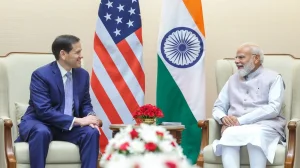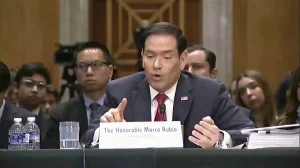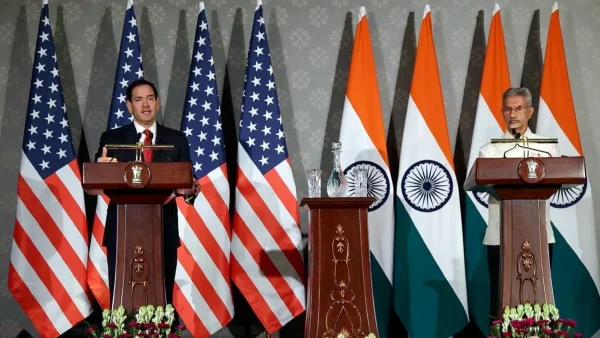
Speaking from New Delhi, Rubio set out to counter the story of a surge in anti-India animus here in the States. In a joint presser, he made his case that you can’t define a nation by its outliers. For the Indian students, workers and firms who are watching to see where things stand, his words were meant to be some reassurance on safety and the way forward for ties with Washington.
When put on the spot about some of the vitriol and attacks on Indians, Rubio was direct: ‘Every country in the world has stupid people.’ He was firm that you shouldn’t let those kind of episodes cloud the fact that Indian-origin communities are doing very well in this country.
Rubio reframes racism debate
‘The United States is a very welcoming country,’ Rubio said, putting it out there that we are still open to and made better by those who come in. He spoke of how America has been put to good use by people from all over who put down roots and get to work.
He didn’t deny that you will hear some slurs, online or in public, as you do in any place, but he chided anyone for reading too much into the fringes. It was a message for the Indian public as much as for a diaspora that has been on edge over some of the headlines.
Indian diaspora’s role and investments
Rubio has no doubt that Indian-Americans are one of the top-tier communities in the US in terms of respect and success. You see them in charge in business, tech, medicine and public life. He put it simply: the Indian community in the US is extraordinarily well off.
Then there is the matter of money. He pointed to the $20 billion-plus that Indian firms have put into the US. ‘We want that number to continue to increase,’ he said, and for good reason – those capital flows and the way we do business together are what hold the partnership up.
Visa changes and migration context
On the subject of J1, F1 and H-1B visas, Rubio was quick to say the reworking of the immigration system is a worldwide modernisation. It’s not aimed at India. The new rules are for everyone and should be seen in the light of what’s in our national interest.
He put the reforms in perspective with the numbers: 20 million or so have come in over the line in recent years. There will be some hiccups and friction as we make the transition, he warned, but we’re after a system that works and can be sustained.
In short, here is where Rubio stands on the issue:
– This is a global change, not one for India alone
– We are still a country that welcomes immigrants
– The end game is a more workable system
– Some rough edges are to be expected in the meantime
What it means for applicants
If you’re an Indian student or professional, you can expect some near-term ambiguity, but down the road, things should be clearer. The way he put it, India isn’t being made an example of, even if the rollout of these rules is a bit of a bumpy ride.
Diplomatic setting and optics
All of this followed some talks in New Delhi between our delegations on everything from defence and trade to energy and security. To Rubio, the relationship with India is a global one, not just a regional concern.
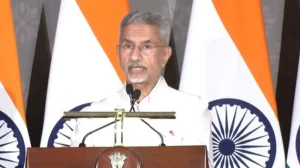
You could see a small smile from External Affairs Minister S. Jaishankar when the question on racism came up, but the Indian side let it go at that. Jaishankar has been calling it a full-on strategic partnership with interests that line up in every sector.
With the Quad Foreign Ministers’ Meeting with Japan and Australia on the horizon, Rubio’s visit has been about sending a signal. The public show of support for the diaspora and on immigration is to make sure we are talking about what we have in common, not the odd provocation.