It was Marco Rubio who put it on the table, saying India is on the hook for USD 500 billion in American goods over a five-year period. Congress has made no bones about the fact that they see this as a hazard to the rupee and a heavy lift for those in agriculture and business, not to mention how little has been said about it.
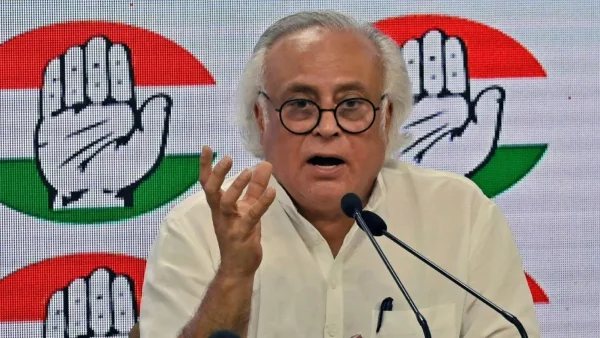
You have to look at what Rubio put out on X to understand the row. He made a point of thanking his diplomats and put the focus on energy, tech and farming. Jairam Ramesh of the Congress doesn’t mince words: he calls it a dangerous, anti-people move by a PM who is more interested in coddling an old friend than being held to account.
Ramesh has put a macroeconomic spin on it. With India’s current run rate of US imports at USD 52.9 billion in FY26, he says you have to do the math on what Rubio is implying – we’d be doubling down. And with the rupee having given up 12 per cent in the last year, it’s a concern.
Opposition frames economic and policy risks
There is a dissonance, Ramesh points out, between the push for these kinds of import numbers and the Prime Minister’s own exhortations for people to be frugal with fuel and travel to put some money in the foreign exchange kitty. A sudden influx of goods, he says, will only put more strain on the currency and undercut us at home.
Then there is the matter of timing. Ramesh says the whole thing was put together in a hurry when the PM was under fire from Rahul Gandhi in Parliament. The government has made one-sided concessions that put farmers and industry in the lurch, and now the whole edifice is in question after the US Supreme Court threw out the tariffs from the Trump days.
He makes the case of Malaysia: why haven’t we done the same and called time on the agreement? He would like to see the Modi government back out of it, as some have.
The five questions Congress wants answered
Ramesh has made it his business to put the onus on the Prime Minister to set the record straight. In a number of posts, he has laid out where he sees problems with the plan and the fallout, from a standpoint of prudence and sovereignty.
Put simply, these are the questions the opposition is putting to the government:
– Why not walk away from the deal once the US Supreme Court ruled?
– What is the logic in going for record imports when we are being told to conserve forex?
– Are we to expect the 12 per cent slide in the rupee to get worse?
– Why does Washington make the first move in making things public?
– Is the Adani case in any way connected?
He also brought up the Adani situation. Last week, the Trump administration let go of the fraud charges in the solar scam, where it is said Mr Adani paid off USD 265 million in bribes. Ramesh is asking if we are trading import favours for some leniency for what he calls the Modani empire – something the government has been quiet on so far.
Why Rubio’s statements keep leading the news
Congress has been making a habit of it.
Ramesh was the one to draw attention to a 5:37 PM post from May 10, 2025 (IST), in which it was Rubio who put out the word on the ceasefire that put an end to Operation Sindoor, and he made sure to give President Trump his due for it.
Then on May 21 of next year, Ramesh noted another instance: once more, it was Rubio breaking the news that the Venezuelan president would be in India the following week, ahead of any word from New Delhi or Caracas. Ramesh says this is a pattern, one he sees in the way stories are told about the wind-down of Russian oil and gas, the Indo-US trade, and other matters of state.
For the opposition, the beef is with the process, not so much the diplomacy itself. Their question is simple: why is it that we hear about India’s foreign policy moves in Washington DC before the Prime Minister or S Jaishankar have a chance to say anything?
Signals from both capitals amid the outcry
Amid the noise online, Modi put in an appearance to reiterate that India and the US will keep working together for the greater good. It was a broad statement of intent, leaving the nitty-gritty of the purchase at the heart of the row unaddressed.
When he got to New Delhi, Rubio had a sit-down with Modi and, for President Trump, put out an invitation to the White House for the near term. In his view, India is the linchpin of what Washington is up to in the Indo-Pacific.
Rubio also made time for Jaishankar on Sunday to say there’s no let-up in the relationship. In the same post where he laid down the $500 billion figure, he took a moment to thank @USAmbIndia Sergio Gor and his team for their hard work on behalf of the American people and the President.
What the numbers imply and what comes next
Take Rubio at his word and you’re looking at a plan for India to nearly double its yearly imports from the US, from the $52.9 billion mark we see in FY26. The Congress party has some misgivings about that kind of ramp-up in energy, tech and agri; they think it could put a crimp in the current account and make life hard for home-grown industry.
The rupee is part of the equation, too. Ramesh pointed to a 12 per cent drop in value over the last year and wondered if more import pressure would only make it worse. He sees a disconnect between being told to hold on to your foreign exchange and then being asked to make record buys.
But it’s as much a political issue as an economic one. Ramesh can’t understand why New Delhi didn’t get in front of these things, be it the ceasefire or the visit from Venezuela. He feels the government has an obligation to put the record straight for Parliament and the public.
How the government handles this from here will set the tone. A proper read-out on whether there is a firm deal in place, and what it means for our own sectors, would go a long way. Some clarity on the legal standing of any trade pact in light of the Supreme Court’s recent verdict would be in order as well, as would an explanation for how this squares with the talk of cutting back on fuel and travel.
Right now you have two sides of the story. You have Rubio’s assurance that all is well in the partnership and the Congress’s demand for a change of course. Until New Delhi puts some shape to the $500 billion plan, the heat isn’t going to die down.