You could say India is mulling over an interim arrangement with the Eurasian Economic Union. It would be a way to open up markets in the near term, even as the wider free trade conversation is far from simple. On the Russian side, they’ll tell you New Delhi has been making some bold asks, so a step-by-step plan for certain products is being looked at.
What is on the table
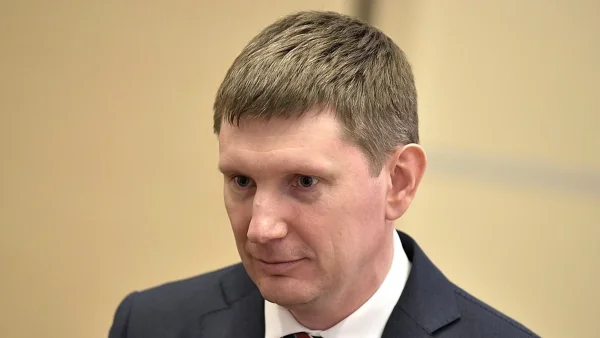
There is no rush to sign off on a wide-ranging free trade pact. The idea is to have a provisional zone for a set of goods. Maxim Reshetnikov, Russia’s minister for economic development, has called the negotiations what they are: complicated. He says India’s position is ambitious, and a more narrow deal makes for a sensible compromise.
It’s a setup that allows for some give-and-take on the items that matter most and to put in place some good will quicker than if you were to do a blanket tariff change. For India, it is a measured way to make some inroads without giving up any ground on the bigger picture.
Why this matters now
Things are moving in the Eurasian bloc. In Astana at the Supreme Eurasian Economic Council, President Vladimir Putin made it clear that after closing out pacts with the likes of Mongolia, the U.A.E. and Indonesia last year, the liberalisation dialogue with India has been ratcheted up.
As the EAEU is on a roll with new partners, New Delhi has to be strategic about its timing. An early, if modest, move can let India have a say in how things are done in a bloc where Russia, Kazakhstan, Belarus, Kyrgyzstan and Armenia are in lockstep on trade.
India’s bargaining power and market stakes
Both sides will point to the size of the Indian economy to explain why they are being so methodical. Reshetnikov has put it down to the fact that there is more at stake and the interests are more tangled, which is why a short list of products is the only way to start.
The numbers don’t lie. When they put pen to paper on the Terms of Reference for formal FTA talks in August 2025, they were looking at a bilateral trade figure of USD 69 billion for 2024 – a 7 per cent jump on the year before.
They had their first round of talks in November. A temporary pilot of sorts leaves room to make some deeper concessions down the line, especially where one side or the other has to do some more homework with their own people.
Here is where we are:
– An interim zone for a handful of product lines
– Ambitious demands from India, by all accounts
– 2024 trade at the USD 69 billion mark
– 7 per cent growth from the prior year
– The opening round was in November
Competitive context and implications
A piece-meal deal with India shows the EAEU can be nimble; they have been expanding their circle while vowing to be thorough with every new FTA. For India, it means you can lower some tariffs where it counts without being tied to a full agreement too soon.
In a way, it is a trial run for customs and standards. If the model holds up, you can build on it. If not, the fact that it is only for a time keeps the risk in check.
EAEU snapshot
Put simply, the EAEU is the union of Russia, Belarus, Kazakhstan, Kyrgyzstan and Armenia. They formed in 2015 to have a common market and to iron out some of the barriers between them.
Because they can come to the table as one, how India goes about the scope and order of these talks is going to define the FTA in the end.
What comes next
From what officials are saying, nothing is being left to chance. There is more work to be done on the technical side of product lists and safeguards before an interim zone is a done deal.
Should they come to an understanding, you can expect to see a small, stop-gap free trade zone first, and the larger FTA once the hard part is over with.