You could say the pact is being put to the test. Washington’s man in Delhi has been hinting we’ll have a resolution in the weeks and months ahead. The push to get this over with is no accident; it’s the result of some policy moves on the US side and a lot of back-and-forth.
Why the talks are moving now
There was a bit of a shake-up from the courts that made this a matter of strategy. When the Supreme Court nixed all reciprocal tariffs, it took away one of Washington’s favourite tools for getting what it wants out of a negotiation. So they had to change course.
To make up for it, US officials put a 10 per cent duty on everything coming in under Section 122 of the Trade Act, effective from Feb. 24 for 150 days. That’s as high as you can go with an emergency tariff like that. At the same time, they’ve opened up two probes under Section 301 to look into things like industrial overcapacity and how key exporters treat their workers. If those investigations show any damage to American interests, there’s no cap on the duties that can be levied.
New Delhi has put in its answers to both of those federal inquiries, and now both sides are in a hurry to put together a package that gives some hard-edged commercial certainty.
Ambassador’s pitch: speed, scale, and certainty
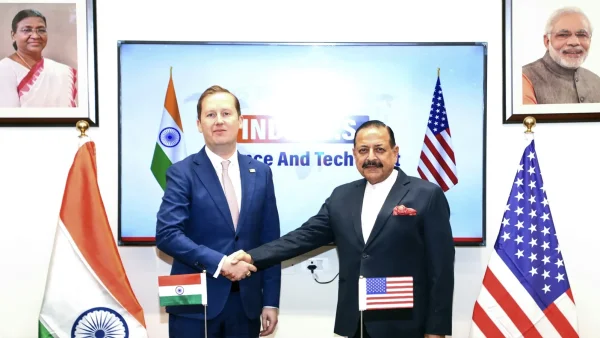
Sergio Gor, the US Ambassador, put it like an inflection point. “We have an interim agreement to be finalised,” he said, touting the benefits for business on either side of the ocean. He sees it as a way to shore up supply chains and get some new money flowing. And he was clear on what President Trump wants: to make sure there are good opportunities for US companies and the people who work for them.
Gor didn’t mince words about the speed of it all. They’ve been at this for 18 months; compare that to the 19 years it took to do the EU-India thing. The point is, we’re moving.
High-level choreography to close the gap
They’re piling on the travel to keep the ball rolling. An Indian team was in D.C. last month to put the finishing touches on some of the details, and a US contingent is on the books for next month.
Piyush Goyal, the Union Commerce and Industry Minister, has given us the word on the American side of the house. The top US negotiator for the BTA won’t be in the party with Secretary of State Marco Rubio, but he is set to come.
Rubio is in for four days of official business from May 23. It’s his first time here and he’s meant to put some political muscle behind the cooperation on trade, defence and energy while the technical folks tie up the loose ends.
Strategic positioning against a changed global backdrop
All of this is happening with the India-EU FTA in the rearview mirror. They put pen to paper in January 2026 on what some are calling the mother of all deals, even though they started talking in 2007. It’s a reminder that you can actually get these complicated things done. What’s at stake for Washington and New Delhi goes beyond a few tariff lines or some housekeeping. They are after a say in how supply chains, standards and capital move, right when both of their systems are being put through the wringer to make room for new laws and industrial policy.
They have been laying the groundwork for this. The joint statement from February 7 was meant to be a guide for the negotiators to put the final touches on the chapters of an interim deal and work out the nitty-gritty of enforcement.
Negotiation mechanics and leverage recalibration
With the reciprocal tariffs off the table, the two capitals have had to get creative. You have the Section 122 duty, for instance. It’s a stopgap, not something to be here to stay; it will run its course in 150 days unless someone finds another way to keep it in place. Then there is Section 301, which can be used as long as the numbers back it up. That kind of duality is why there is a rush to put some teeth into a bilateral agreement-so firms aren’t left guessing while one measure runs over another.
India has its own angle. In the face of active probes, they are playing both sides: protecting what they have and making sure they have a foot in the door where US demand is inelastic and supply lines are in flux.
The road from interim pact to broader agreement
You hear officials from both countries talk about an interim pact that eases the immediate tension and builds trust for a more expansive Bilateral Trade Agreement down the road. It’s a way to bank some early victories while the harder parts of the deal are sorted.
Why it matters for markets
Gor makes his case with hard numbers: open up markets, put up fewer roadblocks, and give people some peace of mind. When you have that, investors perk up and you see growth across the board. It’s good for India as well. Fewer red tape and a clearer rulebook means projects don’t drag on, and you get better cooperation on the ground.
Timetable signals and what comes next
The schedule is full for a reason. An Indian team made a play in Washington in April to put some edge on the text. Now the Americans are coming over next month to tie up any loose ends left by the February framework.
When Rubio comes to town for four days starting May 23, he’ll be there to put a top-level seal on things while the technocrats do the heavy lifting. Put simply, if the plan is followed, you could have an arrangement in place in the weeks and months ahead.
What businesses should watch
Washington’s change in tune has made for some unease. This deal is supposed to be the answer to that, with clear rules on everything from tariffs to who has access to what. For a company, it’s a matter of doing the math: how much are you going to be hit by the 10 per cent under Section 122 in the 150 days we have? And what are the Section 301 probes going to mean for your bottom line?
With timelines tightening, executives are parsing for signposts. Based on official statements and the current track, the following themes matter most:
– Market access clauses and their scope
– Transition from interim pact to a broader BTA
– The 150-day Section 122 tariff window
– Outcomes of the two Section 301 investigations
– Provisions boosting supply chain resilience
But it’s also about the day-to-day. Firms want to see if they can get approvals faster and have to wade through less. Those are the changes that put money in the pocket.
Bottom line
In a sense, the negotiators are trying to put a year and a half of haggling into a sprint. With the big players at the table and the teams in motion, a US-India deal is looking to come in quicker than some thought. If the interim piece is put in place as promised, it sets the stage for a much larger reordering of how these two economies do business. We’ll see in the next month if the talk turns into something that moves the market.