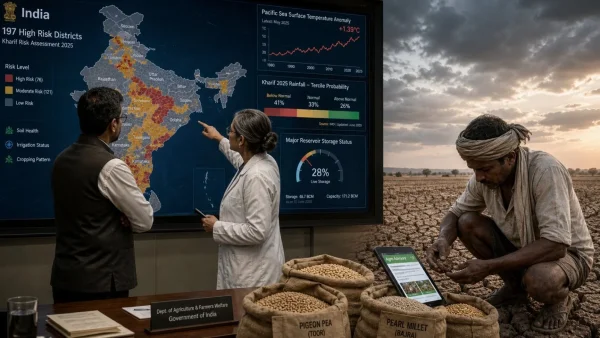
The writing is on the wall for a sub-par southwest monsoon as El Nino firms up, so India has put its guard up. The agriculture ministry is prepping for 197 vulnerable districts. Now that kharif sowing is in full swing, there’s a bit of a rush to have the right plans in place before the key window for rain is gone.
El Nino strengthens as monsoon advances
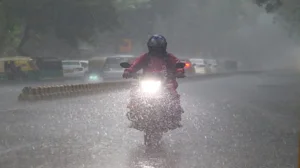
The India Meteorological Department is on record saying El Nino will only get more pronounced come monsoon time. All this while the monsoon itself, which put in an appearance in Kerala on June 4th, is making its way into other states.
Then you have NOAA, which made it official on June 11, 2026: we are in an El Nino in the tropical Pacific and it could turn into a moderate or strong one. Their numbers put the odds at 63 per cent for sea-surface temperatures to go over 2 degrees, and with that comes the possibility of some weather mayhem.
IMD was already calling for below-normal monsoon rains in 90 per cent of the long-term average. They see a 60 per cent likelihood of a short season, and when that happens, you can count on it to dry things out, put a dent in the drought map and put pressure on irrigation.
We’re talking about a long-period average (1971-2020) of 868.6 mm. If you get 90 to 95 per cent of that, it’s below normal; anything under 90 is what they call a deficient year.
Ministry shifts to district-first action
The Union agriculture ministry doesn’t want to see any harm to the crops in the ground or the ones about to be put in, so they’ve called for a quick rework of the old district plans. They’ve put the onus on the states, ICAR and agri universities to have new, El Nino-specific blueprints on their desk by the 20th of June.
One senior put it plainly: some of these plans are a decade old and have to be brought up to speed. The new playbooks will be there to walk farmers through it, should the rains in August let them down – and that’s a make-or-break month for a lot of kharif produce.
In the meantime, a task force from several ministries is looking at where El Nino will land hardest on major crops, what else a farmer can turn to, and if they need to bring in some imports to cover. The 14 or 15 of them on the team should have something to show in ten to fifteen days.
They are also thinking past kharif. A protracted lack of rain can have a ripple effect into rabi and even the following year. Fertiliser supply is another headache they’ve put on the table if the dry weather holds on.
Where the risk is highest
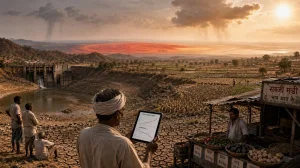
If you ask the ministry, 150 to 200 districts need to be on higher alert. That’s based on what IMD is telling us and what we see on the ground. The Marathwada-north Karnataka area is where the projections are most downbeat, but there’s no shortage of concern in Rajasthan, Gujarat, MP, Chhattisgarh and swaths of eastern UP, Bihar and Jharkhand.
It’s not just about the rainfall figures. Officials will tell you they are factoring in everything from how much of a district is irrigated to the kind of soil and water you can pull from the ground, to see where a bad monsoon could mean real trouble for a farm.
You won’t find many places left unscathed, with the exception of bits of Telangana and some of the south coast. The word from policymakers is that they can put the 197 high-risk districts on a war footing at a moment’s notice.
Water storage and the calendar crunch
What’s in the reservoirs is what matters in a thin monsoon year, for rabi or otherwise. As of April 30, 2026, the 166 across the country were sitting on 71.082 billion cubic metres, or 38.72 per cent of what they can hold.
Fast forward to May 14 and you see a dip to 63.232 billion cubic metres. That’s 34.45 per cent of capacity, and some 8 BCM down the drain in a matter of two weeks. You’d be hard-pressed to call the May 14th storage figures a disappointment; in fact, they were some 24 per cent above what you’d expect for the time of year.
Still, it’s a tight schedule. Should the rains in June and July come up short, we’ll have to make do with what’s in the reservoirs. That’s why putting out the right word on when to sow, what to plant and how to irrigate is so important.
IMD’s take on the forecast
The numbers from the IMD’s Monsoon Mission Coupled Forecast System, their go-to for long-range predictions, are flagging moderate to strong El Nino for the season. The department has put out a statement that it will be on top of any changes in ENSO patterns and will keep us in the loop with monthly briefings.
That kind of data is what district planners rely on. For 2026, they’re using a tercile probability model to get a handle on where rainfall is most likely to be in the lowest tier, so the advice given is in line with what’s happening on the ground, not just some national mean.
On the ground: the contingency plan
What you see in the way of preparedness is an effort to hold down water use, keep yields steady and, by extension, farm revenues. There’s also an attempt to hedge your bets across different crops and timing, since in many parts of the country, August is what will decide the kharif harvest.
According to officials, the guidance will be doled out in stages and made to fit the district. We’re talking about changing sowing dates, moving to different varieties or, if you can, some protective irrigation.
For now, the authorities are getting ready to put these in place:
– Drought-hardy crop types
– More millets and pulses, which don’t drink as much
– A steady stream of weather-driven agro-advisories
– Better water management in the field
– Adaptation plans for the area
Pulses, oilseeds and the import question
A soft monsoon at this point is no good for India’s push to wean itself off pulse and oilseed imports. With seed already in the hands of farmers and some 90 per cent of the acreage for these being rainfed, they are at the mercy of the weather.
So the task force is looking at two options at once. One is to show farmers how to make do with something more robust if the sowing window slams shut or the soil stays dry. The other is to have a list of where to source from abroad if home-grown supplies run thin.
El Nino isn’t always a one-way street
Don’t let anyone tell you a strong El Nino is an open-and-shut case for the agri sector. History doesn’t bear that out. In 2002, a mild one left us with a 21 per cent shortfall in rain; in 2015, a very potent one only saw a 13 per cent deficit.
Then there is the matter of resilience. You have better crop management and more varieties that can stand up to drought and heat. Food output has been at record levels in recent years for all the weather has thrown at us. Take 2023-24: we put out 332.30 million tonnes of food grain, up 2.4 million on the prior year. 2024-25 was even higher, at 357.73 million.
Where the risk really is: localised trouble and prices
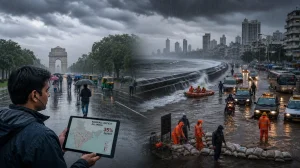
The problem with El Nino is that even with a fine national total, you can have hot spots of crisis. A hyperlocal drought can ruin a harvest in one corner, and a bit of heat at the wrong time can be costly.
We saw it in 2022 with the wheat during the February-March heatwave. Rice has its own issues with pests and disease when it gets too warm.
When those kinds of things happen, you end up with less of a particular commodity on the market and the price follows. The idea is to head that off with faster advisories and some well-placed imports.
In the coming weeks
There are a few things to keep an eye on. The first is the revised district plans due the 20th of June, which should put the forecasts into practice. Then there’s the make-or-break August rains for the kharif. And of course, the IMD will be telling us whether the odds are in our favour or not.
All told, you have a 63 per cent likelihood of sea-surface temps going over 2 degrees and a 60 per cent of a below-par monsoon. It’s down to how well we adapt at the district level to see how much of a hit we take.