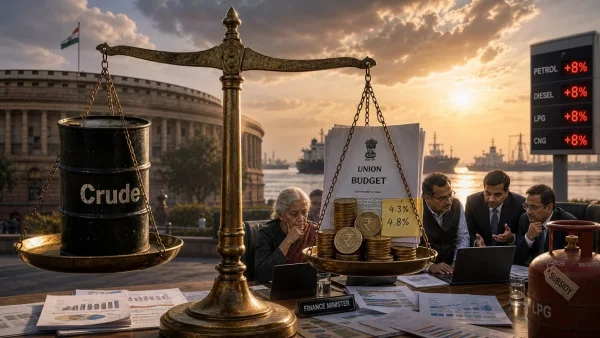
New Delhi is getting ready to put up with a wider deficit to soften the blow of an oil shock linked to the war in Iran. In a way, it could be a rewrite of the near-term rulebook. Bloomberg News had it on 12 June 2026 that the country might let the number go as high as 4.8% of GDP, which is more than the 4.3% they were aiming for this year.
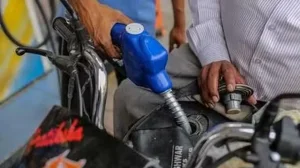
It is the kind of move you expect when public finances are under the strain of pricier fuel and a rework of the subsidy side of things. State-run outlets have hiked petrol and diesel by some 8% already. On top of that, the government has cut the allowance on household cooking gas to ease the load.
Energy shock forces fiscal flexibility
You can’t get much more exposed than India. As the third biggest oil taker in the world, we bring in roughly 90% of our crude. The supply has been constricted and costs have followed since the Strait of Hormuz was shut down, and that makes for a tougher budgetary problem.
Then there is the farm sector to consider. One official put it out there that the tab for fertiliser is set to be 20% higher this fiscal. That is another expense to deal with when you aren’t sure what kind of revenue is coming in.
The new deficit math and what it signals
Bloomberg, with an inside source, says the powers that be may be fine with the gap opening up by 50 basis points to 4.8%. The 4.3% mark for the year that started in April is the benchmark, so any variance is notable.
Put simply, a fiscal deficit is what you have left over when your income doesn’t cover your outlays. A bigger one means you have to borrow and make hard calls on spending. We will have to wait until later in the year for officials to get a better read on non-tax take and how much the subsidies will run to, before they do a full review, per Bloomberg.
What the government is weighing now
If you want to stop the slippage, you look at the numbers in the various ministries. The report says that is on the table. They are also turning the dials on prices and subsidies in ways that will be felt at home and at the pump.
From what we have seen in the reports, here is what is in motion:
– An 8% or so increase on petrol and diesel
– Less of a handout for cooking gas in the home
– Some trimming of ministry budgets
– A re-evaluation of the overall position down the line
Why this matters for India’s policy path
Being open to a steeper deficit is a no-nonsense way to handle energy prices in the short term, rather than holding the line on consolidation. When you are a major importer and the supply side is shaky, you make these trade-offs to avoid a spillover from inflation and runaway subsidy costs.
Reuters has not been able to put a stamp on the Bloomberg story yet and has asked the finance ministry for its side of it. The fact that there is no word right away is a sign of how much is still up in the air as they try to have their cake and eat it too – discipline and shock absorption.
The road ahead: decisions tied to oil and revenues
What happens next comes down to two things: where global crude is heading post-Hormuz and how fast the non-tax money is coming in. If the price of energy does not come down, the pressure on the bottom line will be with us for a while and we will have to be more selective with our spending.
For the time being, the 4.8% figure is more of a ceiling for how far they can stretch, not a destination, according to Bloomberg. It all depends on the ebb and flow of the oil market and the rest of the ledger as the year goes on.
Bottom line, India is in a watch-and-wait mode. The challenge is to muffle the impact of expensive fuel without losing face on medium-term goals. We should have a clearer picture when the next review comes around later this year.